Abstract
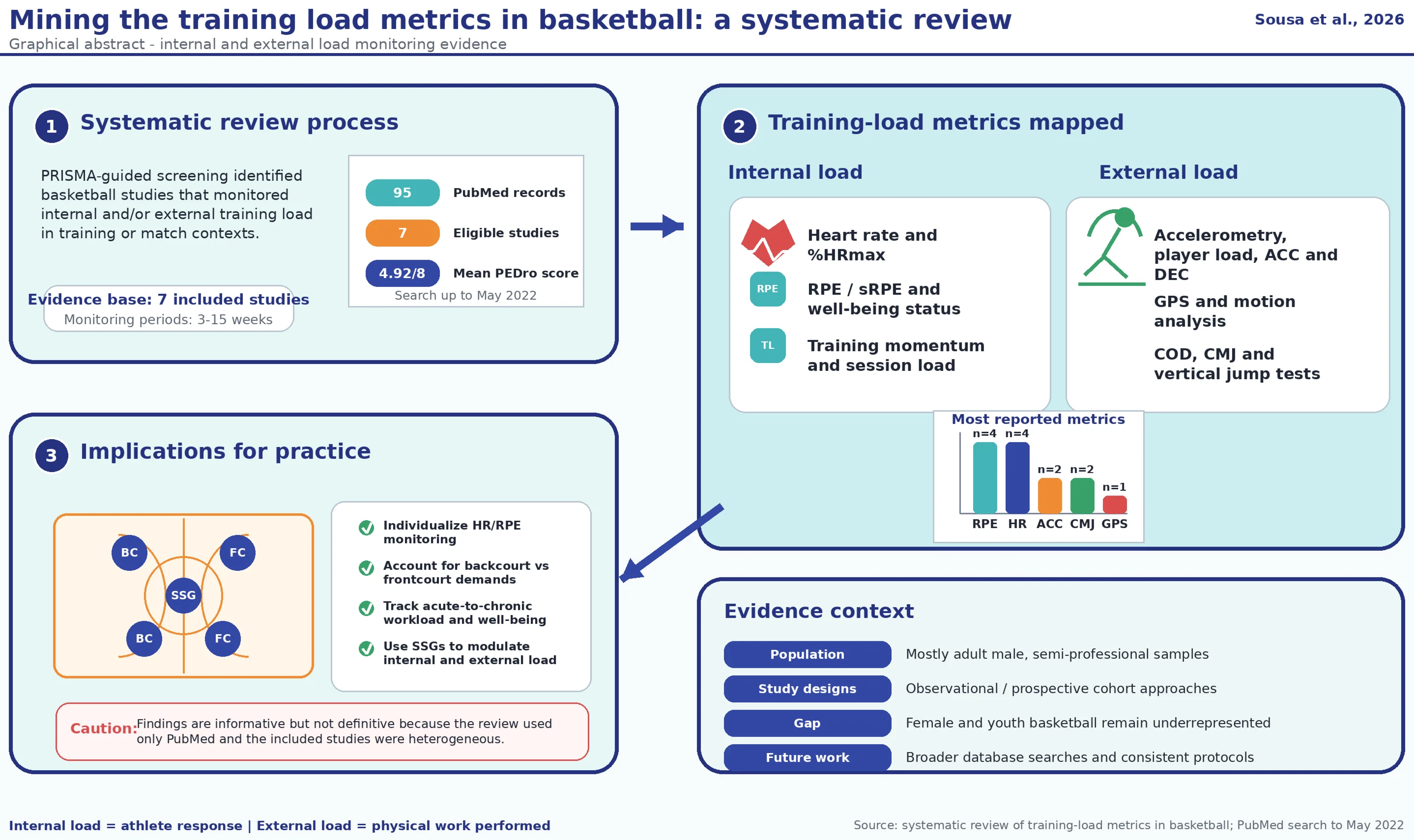
This systematic review aimed to analyze the internal and external training load metrics used in basketball training and competition. A systematic search following PRISMA guidelines was conducted in the PubMed database from the earliest record to May 2022, and methodological quality was assessed using the Physiotherapy Evidence Database (PEDro) scale. A systematic search of the PubMed database identified 95 records, from which seven studies met the inclusion criteria. Internal load was primarily quantified using peak heart rate (HR) during 3×3 matches (%HRmax, 1), HR monitoring ( 3), training momentum ( 1), and rating of perceived exertion (RPE, = 4). External load metrics included changes of direction and peripheral fatigue ( 1), vertical jumps ( 2), motion analysis, and GPS tracking ( 1). The most commonly applied training load measures were RPE, HR-based monitoring, and time-motion analysis. These findings provide valuable insights for optimizing workload management in basketball. Coaches can use individualized training approaches considering positional demands, integrate small-sided games to manipulate load, and apply wearable technology for real-time monitoring. Additionally, injury prevention strategies should incorporate acute-to-chronic workload ratios. However, it must be acknowledged that the restricted use of PubMed as the sole database severely limited the comprehensiveness of the review, and therefore the conclusion that only seven studies exist should be interpreted with caution. Further research is needed on female and youth players to enhance evidence-based monitoring strategies across different populations.
1. Introduction
Basketball is a team sport marked by frequent and dynamic interactions both within and between players, requiring a blend of technical, tactical, physical, and anthropometric components [1-3]. For coaches, the use of strategies to track athletes’ responses to training stimuli is essential for effectively managing both training and competition [4]. Monitoring training load offers objective data to guide training adjustments, aiding in the precise periodization of physical preparation and reducing the likelihood of overtraining [5], 6]. Consequently, numerous methods have been developed to monitor internal and external training load in team sports [7], [8].
Internal training load refers to the physiological stress experienced by the athlete in response to a training stimulus, such as perceived exertion, heart rate, or biomechanical data [9-11]. External training load, on the other hand, measures the physical effort imposed, independent of the athlete’s internal response – for example, training duration, distance covered, running speed, and body accelerations [12].
Monitoring strategies should be tailored to each sport, considering its specific performance demands [13]. In basketball, time-motion analyses highlight the importance of high intensity. These intermittent actions require sport-specific movements like dribbling, positioning, and cutting, placing unique physical and physiological demands on players [4], [14]. Therefore, evaluating the effectiveness of training load models within basketball settings is necessary to ensure proper monitoring practices [13]. Offensive and defensive drills during practice elicit similar physiological and physical responses, although competitive games are significantly more demanding [15]. Tools such as accelerometers and heart rate monitors can help distinguish between the demands of practice and actual competition [8], [9].
Internal training load responses have been widely documented in isolated training sessions [8] and games [16]. While studies like that of Manzi et al. [6] offer new insights into internal load models, comparisons between internal and external load in basketball are still lacking [13]. The measurement of external training load is justified by its association with internal responses [13], and these two types of loads are often described as dose (external) and response (internal) [12]. The limited research on external load models in basketball may be due to challenges associated with popular monitoring tools used in other sports [13]. Time-motion video analysis is labor-intensive [17], while GPS technologies face signal issues and accuracy limitations in indoor environments [15], [18], [19].
Accelerometry has emerged as a practical alternative, overcoming many of these drawbacks and proving effective for monitoring external load in team sports [20]. Tri-axial accelerometers have been developed to assess load by calculating the vector magnitude of acceleration changes across three planes of motion [15]. Since basketball involves full-body movements in multiple directions – forward, backward, lateral, and vertical – accelerometer-based models are considered well-suited for external load monitoring in this sport [15], [20]. Edwards [21] introduced a heart rate zone-based model that estimates training load based on time spent within predefined HR zones. This approach has since been applied in sports like Australian football [22], rugby [23], and soccer [24].
There is currently a lack of research on training load among basketball players at different competitive levels [25], [26], and no systematic reviews have been conducted to analyze and compare training and game loads, despite the clear need for such assessments [27], [28]. Internal training load models that incorporate perceptual [29] and physiological measures remain the most widely used in team sports [11]. Training load monitoring is vital for effective periodization, understanding cumulative training effects, and optimizing athlete development [30]. Recognizing seasonal variations and the relationships between different metrics is key to selecting the most effective monitoring strategies [31]. Accordingly, this systematic review aims to offer a comprehensive overview of internal and external training load metrics in basketball, explore their application in both training and competition contexts, and discuss their implications for performance monitoring and enhancement.
2. Methods
2.1. Literature search strategy
The Preferred Reporting Items for Systematic Reviews and Meta-Analyses (PRISMA) guidelines and the Population-Intervention-Comparators-Outcomes (PICOS) design were followed to conduct this systematic review [32], [33]. The literature search was based on the PubMed search databases, which include topics relevant to training load in basketball. While PubMed includes a large number of biomedical and sports medicine publications, this choice restricted the scope of the review. Other sport-specific databases (e.g., SPORTDiscus, Scopus, Web of Science) were not included, which may have limited the retrieval of potentially relevant studies. The following search strategy was defined: (1) population: basketball players; (2) intervention: training load; (3) outcomes: training strategies used; and (4) study design: observational studies, clinical trials, and randomized controlled trials (RTCs). The following keywords were used for revealing publications: “training load” and “basketball”.
2.2. Selection criteria
The studies included in this review followed the following inclusion criteria: (1) monitoring of training load in basketball players; (2) studies with internal and/or external training load investigation procedures; (3) studies that included the monitoring of training load in training sessions and/or games; (4) studies that demanded physical and physiological demands from their subjects; and (5) articles with procedures, data collection, instruments, and results. Exclusion criteria encompassed: (1) books, documents, meta-analyses, analytical papers, and systematic reviews. Initially, titles and abstracts were screened according to these criteria, and irrelevant studies were excluded. Full-text selection was carried out to confirm eligibility based on inclusion and exclusion criteria. The literature search was performed between April and May 2022. One author searched independently, and a second author reviewed the process to ensure accuracy. Any disagreements in the selection process were resolved with input from a third reviewer. The selection process did not give preference to specific authors or journals.
2.3. Quality assessment
Regarding the quality assessment of the included studies, the Physiotherapy Evidence Database (PEDro) scale [27] was independently performed by two authors with subsequent inter-observer reliability analysis (Kappa index: 0.91; 95 % IC: 0.90-0.92). The mean quality score of all the included studies was 4.92, ranging between 3 (lowest quality) to 7 (highest quality) points of the maximum score of 8 in the qualitative assessment.
2.4. Study coding and data extraction
The data extractions of the included articles were performed according to the following information: (1) study design and complete sample level and pattern, and gender; (2) methodological approaches: monitoring periods, training load measures/metrics, and utilized device; (3) outcomes: study purpose, results, applications, and practices. Data were drawn according to study purpose, periodization structure, results, and applications.
3. Results
3.1. Search results and study selection
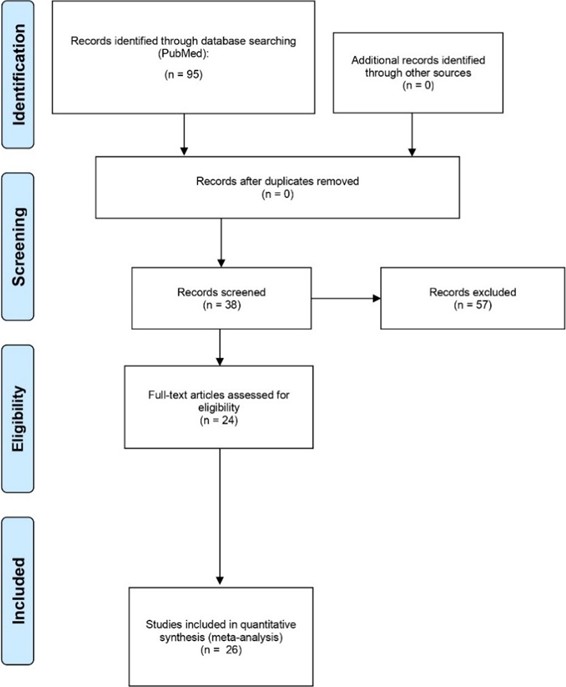
A total of 95 articles were found by searching the PubMed search database. No articles from complementary sources were recognized with the potential to be implemented in the review. Subsequently, the type of articles intended (observational, clinical trials, and RTCs) were selected and 57 articles were eliminated. A total of 38 articles were analyzed based on title and full text according to the inclusion and exclusion criteria. No article was eliminated after analysis. After the screening procedures, 7 articles were included in the present systematic review. A detailed representation of the screening procedures is presented with a flow diagram shown below.
Fig. 1PRISMA flow diagram
3.2. Participant characteristics
The reviewed articles were published between 2017 and 2021. All included articles presented a quasi-experimental approach based on observational and prospective cohort design. The included studies were conducted in elite/professional ( 2), semi-professional ( 4) and university ( 2) basketball. One article observed more than one professional basketball bracket. Four articles focused on the adult player population and one article focused on the youth population. Two articles did not specify the age of the participants. The geographical location of the populations studied in the reviewed studies were Australia ( 2), Italy ( 1), United States ( 3) and Lithuania ( 1). The study samples ranged from 6 to 28 participants. One study did not specify the number of participants. All articles were conducted on male basketball players, except one on female players. A total of 78 adult and youth basketball players were analyzed for this systematic review. Highlighting that one article did not mention the number of participants including female players. The mean for age and anthropometric data (weight and height) in the included studies was 21.2 years, 87.25 kg, and 1.92 m, respectively.
3.3. Data organization
Results are presented in subtopics: (1) analysis of training load distribution in weeks (mesocycle) and/or season phases; (2) analysis of cumulative training load and match load distribution in weeks (mesocycle) and/or season phases; and (3) analysis of the relationships between internal and external load measures in quantifying cumulative training load. Seven studies analyzed training data, and three articles integrated training data with game load. The monitoring period in the included studies ranged from 3 to 15 weeks. The match-play included ranged from 4 to 37 games. Four articles analyzed only internal load measures, one article assessed only external load, and two studies assessed both measures. Quantifications of training load in the included studies were based on internal and external load measures/metrics. The studies that quantified internal loads were based on peak heart rate (HR) during 3×3 matches, calculating as a percentage of maximum HR (%HRmax) ( 1), heart rate ( 3), training momentum ( 1), RPE ( 4). Still, external load measures were quantified with changes of direction and peripheral fatigue ( 1), vertical jumps ( 2), motion analysis, GPS ( 1).
The methodological approaches of the reviewed articles were based on GPS systems ( 1), countermovement test ( 1), repeated direction change test ( 1), CMJ (jump performance with countermovement) ( 1), sRPE ( 4), and yo-yo intermittent recovery test ( 1). Internal loading based on heart rate (HR) measurements was reported in 4 studies ( 4), one of which was based on maximal HR ( 1). In two studies, HR values were obtained using chest heart rate (HR) monitors (T31, Polar Electro, Kempele, Finland) affixed at the xiphoid level. All HR data were recorded on the microsensor device worn by each player. In addition, in 4 studies, internal load measures were reported with perceived exertion scales (RPE).
To aid in the interpretation of the evidence, we provide a summary table (Table 1) that describes the key characteristics of the seven included studies, including population, competitive level, sample size, monitoring duration, training load metrics used, and principal findings. This visualization highlights the considerable heterogeneity across studies.
Table 1Summary of included studies
Study | Population/ competitive level | Sample size | Monitoring period | Training load metrics | Key findings |
Berkelmans et al. (2018) | Semi-professional | 6 players | 6 weeks | HR, HRmax, SHRZ | Differences in HRmax determination influence training load outcomes |
Conte et al. (2018) | University | 12 players | 10 weeks | sRPE, well-being | In-season variation; sRPE correlated with well-being status |
Ferioli et al. (2018) | Professional | 10 players | 7 weeks | sRPE, COD, vertical jumps | COD and jump performance are linked with cumulative load |
Heishman et al. (2020) | Division I | 12 players | 5 weeks | CMJ, accelerometry (ACC, DEC) | External load monitoring is feasible with IMU sensors |
Sansone et al. (2020) | Semi-professional | 9 players | 4 weeks | %HRmax | HR-based methods provided individualized load assessment |
Kraft et al. (2020) | Semi-professional | 14 players | 3 weeks | sRPE, Edwards HR method | Perceptions of exertion aligned with HR-based indices |
Williams et al. (2021) | Semi-professional | 15 players | 15 weeks | RPE, PL, IMA | Position-specific demands; backcourt vs. frontcourt differences |
Abbreviators: ACC – accelerations; CMJ – counter-movement jumps; COD – change of direction; HR – heart rate; HRmax – maximum heart rate; IMA – inertial movement analysis; IMU – inertial measurement unit; PL – player load; RPE – rating of perceived exertion; SHRZ – summated-heart-rate-zones; sRPE – session rating of perceived exertion | |||||
Across the seven included studies, sample sizes ranged from 6 to 28 participants. Of the six studies that reported sample size, a total of 78 male players were monitored. One study did not report participant numbers, and only one study included female players, without providing a detailed breakdown of sample characteristics. Monitoring periods varied considerably (from 3 to 15 weeks), and competitive levels ranged from university to professional settings. Internal load was most frequently monitored through RPE (4) and HR-based indices (4), while external load was assessed and GPS tracking. The diversity in approaches underscores the methodological heterogeneity of the evidence base.
3.4. Data extraction: relationships between weekly internal and external load
The data extraction process focused on examining the relationships between weekly internal and external training loads. A total of seven studies investigated these relationships within the context of training load quantification. Among them, four studies focused solely on internal load metrics, one examined external load parameters exclusively, and three explored the interplay between internal and external loads.
Table 2Data extraction of the reviewed studies in accordance with the relationships between weekly internal and external load
Study | Observation cohort | Training load metrics | Methodology (Device specification) | |||||
Monitoring period | TS | TS/ wk | MP | Internal load | External load | Internal load | External load | |
Berkelmans et al. (2018) | 6 wk | 12-24 ST | 2-4 | 2 | HR HRmax SHRZ | ND | Polar H7 monitor belt (Polar Electro, Finland) | ND |
Conte et al. (2018) | 10 wk | 41 ST | ND | 15 | sRPE Accumulated training load | ND | CR-10 Borg scale Well-being questionnaire | ND |
Ferioli et al. (2018) | 7 wk | ND | 12 | ND | sRPE | COD Vertical jumps | CR-10 Borg scale | COD testing Portable force platform (Quatro Jump, Kistler, Winterthur, Switzerland) |
Heishman et al. (2020) | 5 wk | 22 ST | 3-4 | ND | ND | CMJ ACC DEC | ND | IMU sensors (OptimEye T6, Catapult Innovation, Melbourne, Australia) |
Sansone et al. (2020) | 4 wk | 9 ST | ND | 4 | %HRmax | ND | Polar H7 monitor belt (Polar Electro, Finland) | ND |
Kraft et al. (2020) | 3 wk | 236 ST | ND | ND | sRPE | ND | Edwards HR Method | ND |
Williams et al. (2021) | 15 wk | ND | ND | 18 | FC RPE | PL IMA | CR-10 Borg scale | Microsensors/tri-axial accelerometers (OptimEye s5, Catapult Innovation, Melbourne, Australia) |
Abbreviators: ACC – accelerations; CMJ – counter-movement jumps; COD – change of direction; CR-10 –DEC – decelerations; HR – heart rate; HRmax – maximum heart rate; IMA – inertial movement analysis; IMU – inertial measurement unit; MP – match-play; ND – not described; PL – player load; RPE – rating of perceived exertion; SHRZ – summated-heart-rate-zones; sRPE – session rating of perceived exertion; TS – training sessions; TS/wk – training sessions per week; Wk – week(s) | ||||||||
All seven studies analyzed training load over mesocycle periods ranging from 3 to 15 weeks. The number of training sessions observed across studies varied between 5 and 247 sessions, with weekly training frequency ranging from 2 to 12 sessions. One study did not report the number of sessions per week. The follow-up durations across the included research ranged from 3 to 15 weeks, with match-play exposure ranging from 4 to 37 games.
Independent variables used to analyze weekly training load distribution included mesocycle structure ( 6), training modality or subcomponents ( 3), player position ( 1), and specific training load indicators ( 7). Table 2 outlines the methodological frameworks adopted by the studies reviewed.
4. Discussion
The present systematic review aimed to provide a comprehensive overview of the internal/external training load metrics used in basketball training/competition. The results of the analyzed studies were organized into weekly analyses of load distribution and relationships between internal and external loads. Importantly, the heterogeneity of the included studies must be recognized as a central finding of this review. The seven studies varied considerably in terms of competitive level (elite, semi-professional, university), sample size, monitoring period (ranging from 3 to 15 weeks), and training load metrics employed (HR-based measures, RPE, accelerometry, vertical jump testing). This diversity makes it difficult to establish direct comparisons or unified conclusions. Rather than concluding which metrics are definitively “the most applied,” the review highlights the range of methods explored within this limited body of literature. Metrics such as RPE, HR-based models, accelerometry-derived indicators (ACC, DEC, PL, IMA), and neuromuscular tests (CMJ, COD) have all been applied. Their frequency of use in the available studies reflects emerging trends rather than established consensus. Coaches and practitioners should therefore interpret these findings as indicative of possible approaches rather than prescriptive best practices.
Therefore, the present discussion was conducted following the independent variables of age group, match-related contextual factors, periodization structures (mesocycle, and/or season phases), playing positions, weekly schedule format (week of 1, 2, and 3 games), and training load indicators. This comprehensive analysis provides insights into how these variables influence training load, highlighting practical applications for coaches and practitioners in adapting training regimens to the specific needs of basketball players. The main results showed that mesocycles present a load variation and a variation along the season phases, influenced by the type of training, playing positions, age group, training mode, and contextual factors. For example, understanding these variations can help optimize workload management to improve performance and reduce injury risk, especially during critical phases of the season. This evidence had previously been reported for other team sports [12], [35]. The training load monitoring strategies were semi-professional contexts, followed by elite and university contexts. The studies were conducted on adult and youth male basketball players, and any application to female basketball contexts has been reported. This highlights a significant research gap, emphasizing the need for more studies focusing on women’s basketball to ensure equitable insights across genders. Women’s basketball training load monitoring continues to be under-explored compared to men’s basketball [36], [37], [38].
The training load variables presented in this systematic review are commonly used in several team sport environments such as basketball, specifically the perceived exertion (e.g., RPE, sRPE) [37]. These metrics provide valuable, accessible tools for coaches to monitor and adjust training loads, especially in resource-limited settings. It was significantly correlated with two HR-based methods in professional basketball players and in football, showing to be more significant with external accelerometry markers [20]. Berkelmans et al. [39] stated that individualized HRmax based on field-based tests supplemented have the greatest accuracy in heart rate response when calculating the summated heart rate zones. The training load indices based on sRPE are also linked to injury risk and fatigue status in women’s basketball players [36], [40]. Also, well-being status should be considered when monitoring the training load [4], [41]. Total weekly training and acute-to-chronic workload ratio demonstrated high week-to-week variation (i.e., spikes up to 226 % and 220 %, respectively) [41]. Such variations underline the importance of closely monitoring acute workload spikes to prevent overtraining and injury, especially in athletes transitioning between competition and rest phases. According to Scanlan et al. [9], elite basketball players performed significantly more total movement changes and experienced greater activity workloads (i.e., jogging and running) [9]. Players’ starting status also represents a key independent variable for training load, considering that starting players experienced a higher total weekly and similar well-being status compared with non-starter players [41]. Multicollinearity has been reported for perceived effort and heart-based measures [37], [12].
A position-specific preparation has been emphasized by several authors [1], [42], [43]. Williams et al. [43] reported that the backcourt positions experienced similar demands amongst training and games, reporting greater demands across all variables during games than training for frontcourt basketball players. These findings suggest that tailored training programs are essential to meet the distinct physical demands of different positions, potentially enhancing performance during competition. Moreover, short-term fluctuations in performance should be equally considered to promote longer-term improvements [44]. In youth basketball, the specificity of the positions must consider the players’ maturation conditions [1], [42] and the training periodization [30], [31]. Specific training tasks, such as small-sided games (SSG) with differential tactical aims and regimes, can influence external and internal demands in basketball [45]. These results are in agreement with previous reports in training load monitoring [46], [47].
The ability to rapidly change direction and jumping performance are key components in basketball [43]. Neuromuscular physical performance composes important information for better training planning that is more effective in improving player performance [48]. Studies conducted on the topic used COD testing in basketball players, and their results did not allow definitive conclusions to be drawn [44]. According to Ferioli et al. [48], the preparation period may induce negligible changes in the vertical jumps (i.e., CMJ), when there is an improvement in the ability to sustain repeated COD efforts. Otherwise, Heishman et al. [42] described insignificant differences between the guard and forward/center positions. These inconsistencies point to the need for further studies exploring neuromuscular adaptations in basketball players across positions and performance levels.
Current research established a window of opportunity for training monitoring the following considerations: 15 weeks, at least 247 overall training sessions, and 2 to 12 training sessions per week. The literature considers that effective monitoring should consider at least one week of continuous control of the training load [5], [12], [49]. This highlights the importance of adopting consistent monitoring protocols, ensuring actionable insights for coaches to optimize load management.
The present review has some limitations that should be acknowledged. Firstly, the low number of studies directly addressing external training load metrics in basketball limits the ability to generalize findings across different competition levels, genders, and age groups. Secondly, most studies included in the review focused on male players, leaving female basketball largely underrepresented. Most critically, the review relied solely on PubMed as a search source. PubMed, while comprehensive for biomedical literature, does not index a wide range of applied sport science research commonly found in databases such as Scopus, Web of Science, and SPORTDiscus. This narrow database selection likely contributed to the identification of only seven eligible studies, meaning the present synthesis cannot be considered fully representative of the available evidence. Consequently, the conclusions drawn should be interpreted with caution, and the finding that only a limited number of studies exist may reflect search constraints rather than a true absence of research. Additionally, methodological heterogeneity among the included studies, particularly in the use of different training load metrics, impairs direct comparison between findings. Additionally, the exclusive use of the PubMed database in the systematic search process may have contributed to the limited number of studies identified, as other relevant databases might contain complementary evidence. Finally, the review did not consider contextual factors such as psychological or environmental influences on training load, which could provide additional insights into load monitoring. Future research should address these gaps to improve the understanding and practical application of training load metrics in basketball.
5. Conclusions
The present systematic review provides information on training loads in basketball players. Current research suggests that variation in perceived exertion, HR-based measures and time motion analysis were de most applied training load metrics to quantify internal and external load in Basketball. Most of the data have been taken from studies for semi-professional, adult, and male basketball players. However, given the restricted database coverage and the limited number of included studies, these findings should be interpreted with caution. Broader database searches are recommended for future systematic reviews to ensure a more comprehensive synthesis of the available literature.
The findings of this systematic review highlight key practical applications for basketball coaches, sports scientists, and practitioners in optimizing training load management. Internal (e.g., HR, RPE) and external (e.g., accelerometry, GPS) training load metrics can be effectively used to tailor individualized conditioning programs, minimizing the risk of overtraining and injuries. Position-specific demands should be considered, as backcourt and frontcourt players experience different physiological and mechanical loads, necessitating tailored training approaches. Monitoring acute-to-chronic workload ratios and well-being indicators can enhance injury prevention strategies and recovery management. The integration of small-sided games (SSGs) provides a sport-specific method for modulating external and internal loads while maintaining game-like intensity. Furthermore, the current literature highlights the need for more research on female and youth basketball players to establish evidence-based monitoring strategies for these populations. Wearable technology, such as inertial measurement units (IMUs) and heart rate monitoring systems, offers valuable real-time feedback, improving load optimization and player performance. Future studies should aim to refine periodization models and explore multi-sport comparisons to enhance training load management in basketball and other team sports.
\
References
-
J. Arede, S. Cumming, D. Johnson, and N. Leite, “The effects of maturity matched and un-matched opposition on physical performance and spatial exploration behavior during youth basketball matches,” PLOS ONE, Vol. 16, No. 4, p. e0249739, Apr. 2021, https://doi.org/10.1371/journal.pone.0249739
-
D. Mancha-Triguero, J. García-Rubio, J. Calleja-González, and S. J. Ibáñez, “Physical fitness in basketball players: a systematic review,” The Journal of Sports Medicine and Physical Fitness, Vol. 59, No. 9, Oct. 2019, https://doi.org/10.23736/s0022-4707.19.09180-1
-
J. Sampaio, B. Gonçalves, N. Mateus, Z. Shaoliang, and N. Leite, “Basketball,” in Modelling and Simulation in Sport and Exercise, Routledge, 2018.
-
A. Scanlan, B. Dascombe, and P. Reaburn, “A comparison of the activity demands of elite and sub-elite Australian men’s basketball competition,” Journal of Sports Sciences, Vol. 29, No. 11, pp. 1153–1160, Aug. 2011, https://doi.org/10.1080/02640414.2011.582509
-
V. Lyakh et al., “Periodization in team sport games – a review of current knowledge and modern trends in competitive sports,” Journal of Human Kinetics, Vol. 54, No. 1, pp. 173–180, Dec. 2016, https://doi.org/10.1515/hukin-2016-0053
-
V. Manzi, S. D. ’Ottavio, F. M. Impellizzeri, A. Chaouachi, K. Chamari, and C. Castagna, “Profile of weekly training load in elite male professional basketball players,” Journal of Strength and Conditioning Research, Vol. 24, No. 5, pp. 1399–1406, May 2010, https://doi.org/10.1519/jsc.0b013e3181d7552a
-
L. J. Boyd, K. Ball, and R. J. Aughey, “Quantifying external load in Australian football matches and training using accelerometers,” International Journal of Sports Physiology and Performance, Vol. 8, No. 1, pp. 44–51, Jan. 2013, https://doi.org/10.1123/ijspp.8.1.44
-
C. Foster et al., “A new approach to monitoring exercise training,” The Journal of Strength and Conditioning Research, Vol. 15, No. 1, p. 109, Jan. 2001, https://doi.org/10.1519/1533-4287(2001)015<0109:anatme>2.0.co;2
-
J. L. Fox, A. T. Scanlan, and R. Stanton, “A review of player monitoring approaches in basketball: current trends and future directions,” Journal of Strength and Conditioning Research, Vol. 31, No. 7, pp. 2021–2029, Jul. 2017, https://doi.org/10.1519/jsc.0000000000001964
-
S. González-Espinosa, A. Antúnez, S. Feu, and S. J. Ibáñez, “Monitoring the external and internal load under 2 teaching methodologies,” Journal of Strength and Conditioning Research, Vol. 34, No. 10, pp. 2920–2928, Oct. 2020, https://doi.org/10.1519/jsc.0000000000002799
-
J. A. Nunes, E. C. Costa, L. Viveiros, A. Moreira, and M. S. Aoki, “Monitoring internal load in basketball,” Revista Brasileira de Cineantropometria e Desempenho Humano, Vol. 13, No. 1, pp. 67–72, 2011, https://doi.org/10.5007/1980-0037.2011v13n1p67
-
J. E. Teixeira et al., “Monitoring accumulated training and match load in football: a systematic review,” International Journal of Environmental Research and Public Health, Vol. 18, No. 8, p. 3906, Apr. 2021, https://doi.org/10.3390/ijerph18083906
-
A. T. Scanlan, N. Wen, P. S. Tucker, and V. J. Dalbo, “The relationships between internal and external training load models during basketball training,” Journal of Strength and Conditioning Research, Vol. 28, No. 9, pp. 2397–2405, Sep. 2014, https://doi.org/10.1519/jsc.0000000000000458
-
N. Ben Abdelkrim, S. El Fazaa, and J. El Ati, “Time-motion analysis and physiological data of elite under-19-year-old basketball players during competition,” British Journal of Sports Medicine, Vol. 41, No. 2, pp. 69–75, Nov. 2006, https://doi.org/10.1136/bjsm.2006.032318
-
P. G. Montgomery, D. B. Pyne, and C. L. Minahan, “The physical and physiological demands of basketball training and competition,” International Journal of Sports Physiology and Performance, Vol. 5, No. 1, pp. 75–86, Mar. 2010, https://doi.org/10.1123/ijspp.5.1.75
-
A. Moreira, M. R. Mcguigan, A. F. Arruda, C. G. Freitas, and M. S. Aoki, “Monitoring internal load parameters during simulated and official basketball matches,” Journal of Strength and Conditioning Research, Vol. 26, No. 3, pp. 861–866, Mar. 2012, https://doi.org/10.1519/jsc.0b013e31822645e9
-
S. J. Edgecomb and K. I. Norton, “Comparison of global positioning and computer-based tracking systems for measuring player movement distance during Australian football,” Journal of Science and Medicine in Sport, Vol. 9, No. 1-2, pp. 25–32, May 2006, https://doi.org/10.1016/j.jsams.2006.01.003
-
J. L. H. Davó, P. M. Jiménez, and R. S. Solana, “Comparison of six weeks eccentric overload training between bilateral and unilateral squat in basketball players,” European Journal of Human Movement, Vol. 40, pp. 111–121, 2018.
-
R. Duffield, M. Reid, J. Baker, and W. Spratford, “Accuracy and reliability of GPS devices for measurement of movement patterns in confined spaces for court-based sports,” Journal of Science and Medicine in Sport, Vol. 13, No. 5, pp. 523–525, Sep. 2010, https://doi.org/10.1016/j.jsams.2009.07.003
-
D. Casamichana, J. Castellano, J. Calleja-Gonzalez, J. San Román, and C. Castagna, “Relationship between indicators of training load in soccer players,” Journal of Strength and Conditioning Research, Vol. 27, No. 2, pp. 369–374, Feb. 2013, https://doi.org/10.1519/jsc.0b013e3182548af1
-
S. Edwards, “High performance training and racing,” in The Heart Rate Monitor Book, Feet Fleet Press, 1993, pp. 113–123.
-
W. B. Sheehan, R. Tribolet, R. Spurrs, J. Fransen, A. R. Novak, and M. L. Watsford, “Simplifying the complexity of assessing physical performance in professional Australian football,” Science and Medicine in Football, Vol. 4, No. 4, pp. 285–292, Oct. 2020, https://doi.org/10.1080/24733938.2020.1745264
-
T. J. Gabbett and D. G. Jenkins, “Relationship between training load and injury in professional rugby league players,” Journal of Science and Medicine in Sport, Vol. 14, No. 3, pp. 204–209, May 2011, https://doi.org/10.1016/j.jsams.2010.12.002
-
I. Akubat, E. Patel, S. Barrett, and G. Abt, “Methods of monitoring the training and match load and their relationship to changes in fitness in professional youth soccer players,” Journal of Sports Sciences, Vol. 30, No. 14, pp. 1473–1480, Aug. 2012, https://doi.org/10.1080/02640414.2012.712711
-
D. García-Santos, J. Pino-Ortega, J. García-Rubio, A. Vaquera, and S. J. Ibáñez, “Internal and external demands in basketball referees during the U-16 European women’s championship,” International Journal of Environmental Research and Public Health, Vol. 16, No. 18, p. 3421, Sep. 2019, https://doi.org/10.3390/ijerph16183421
-
A. J. Petway, T. T. Freitas, J. Calleja-González, D. Medina Leal, and P. E. Alcaraz, “Training load and match-play demands in basketball based on competition level: A systematic review,” PLOS ONE, Vol. 15, No. 3, p. e0229212, Mar. 2020, https://doi.org/10.1371/journal.pone.0229212
-
E. Stojanović, N. Stojiljković, A. T. Scanlan, V. J. Dalbo, D. M. Berkelmans, and Z. Milanović, “The activity demands and physiological responses encountered during basketball match-play: a systematic review,” Sports Medicine, Vol. 48, No. 1, pp. 111–135, Oct. 2017, https://doi.org/10.1007/s40279-017-0794-z
-
A. Vaquera, J. A. Rodríguez, J. G. Villa, J. García, and C. Ávila, “Physiological and biomechanical qualities of young players in the EBA League,” European Journal of Human Movement, Vol. 9, 2002.
-
H. Alexiou and A. J. Coutts, “A comparison of methods used for quantifying internal training load in women soccer players,” International Journal of Sports Physiology and Performance, Vol. 3, No. 3, pp. 320–330, Sep. 2008, https://doi.org/10.1123/ijspp.3.3.320
-
J. Kiely, “New horizons for the methodology and physiology of training periodization,” Sports Medicine, Vol. 40, No. 9, pp. 803–805, Sep. 2010, https://doi.org/10.2165/11535130-000000000-00000
-
V. B. Issurin, “New horizons for the methodology and physiology of training periodization,” Sports Medicine, Vol. 40, No. 3, pp. 189–206, Mar. 2010, https://doi.org/10.2165/11319770-000000000-00000
-
J. J. Malone, A. Jaspers, W. Helsen, B. Merks, W. G. P. Frencken, and M. S. Brink, “Seasonal training load and wellness monitoring in a professional soccer goalkeeper,” International Journal of Sports Physiology and Performance, Vol. 13, No. 5, pp. 672–675, May 2018, https://doi.org/10.1123/ijspp.2017-0472
-
D. Moher, A. Liberati, J. Tetzlaff, and D. G. Altman, “Preferred reporting items for systematic reviews and meta-analyses: the PRISMA statement,” Journal of Clinical Epidemiology, Vol. 62, No. 10, pp. 1006–1012, Oct. 2009, https://doi.org/10.1016/j.jclinepi.2009.06.005
-
C. G. Maher, C. Sherrington, R. D. Herbert, A. M. Moseley, and M. Elkins, “Reliability of the PEDro scale for rating quality of randomized controlled trials,” Physical Therapy, Vol. 83, No. 8, pp. 713–721, 2003.
-
D. J. Harper, C. Carling, and J. Kiely, “High-intensity acceleration and deceleration demands in elite team sports competitive match play: a systematic review and meta-analysis of observational studies,” Sports Medicine, Vol. 49, No. 12, pp. 1923–1947, Sep. 2019, https://doi.org/10.1007/s40279-019-01170-1
-
L. Anderson, T. Triplett-Mcbride, C. Foster, S. Doberstein, and G. Brice, “Impact of training patterns on incidence of illness and injury during a women’s collegiate basketball season,” The Journal of Strength and Conditioning Research, Vol. 17, No. 4, p. 734, Jan. 2003, https://doi.org/10.1519/1533-4287(2003)017<0734:iotpoi>2.0.co;2
-
J. A. Kraft, M. C. Laurent, J. M. Green, J. Helm, C. Roberts, and S. Holt, “Examination of coach and player perceptions of recovery and exertion,” Journal of Strength and Conditioning Research, Vol. 34, No. 5, pp. 1383–1391, May 2020, https://doi.org/10.1519/jsc.0000000000002538
-
M. Reina, D. Mancha, and S. J. Ibáñez, “Is training carried out the same as competition? analysis of load in women’s basketball,” (in Spanish), Journal of Sport Psychology, Vol. 26, No. 1, pp. 9–13, 2017.
-
D. M. Berkelmans et al., “Influence of different methods to determine maximum heart rate on training load outcomes in basketball players,” Journal of Strength and Conditioning Research, Vol. 32, No. 11, pp. 3177–3185, Nov. 2018, https://doi.org/10.1519/jsc.0000000000002291
-
T. Edwards, T. Spiteri, B. Piggott, J. Bonhotal, G. G. Haff, and C. Joyce, “Monitoring and managing fatigue in basketball,” Sports, Vol. 6, No. 1, p. 19, Feb. 2018, https://doi.org/10.3390/sports6010019
-
D. Conte, N. Kolb, A. T. Scanlan, and F. Santolamazza, “Monitoring training load and well-being during the in-season phase in national collegiate athletic association division I men’s basketball,” International Journal of Sports Physiology and Performance, Vol. 13, No. 8, pp. 1067–1074, Sep. 2018, https://doi.org/10.1123/ijspp.2017-0689
-
A. D. Heishman, B. D. Daub, R. M. Miller, E. D. S. Freitas, and M. G. Bemben, “Monitoring external training loads and neuromuscular performance for division I basketball players over the preseason,” Journal of Sports Science and Medicine, Vol. 19, No. 1, pp. 204–212, Jan. 2020.
-
M. N. C. Williams, V. J. Dalbo, J. L. Fox, C. J. O. ’Grady, and A. T. Scanlan, “Comparing weekly training and game demands according to playing position in a semiprofessional basketball team,” International Journal of Sports Physiology and Performance, Vol. 16, No. 6, pp. 772–778, Jun. 2021, https://doi.org/10.1123/ijspp.2020-0457
-
P. G. Montgomery, D. B. Pyne, W. G. Hopkins, and C. L. Minahan, “Seasonal progression and variability of repeat-effort line-drill performance in elite junior basketball players,” Journal of Sports Sciences, Vol. 26, No. 5, pp. 543–550, Mar. 2008, https://doi.org/10.1080/02640410701654298
-
P. Sansone et al., “Physical and physiological demands and hormonal responses in basketball small-sided games with different tactical tasks and training regimes,” Journal of Science and Medicine in Sport, Vol. 22, No. 5, pp. 602–606, May 2019, https://doi.org/10.1016/j.jsams.2018.11.017
-
J. E. Teixeira et al., “Effects of chronological age, relative age, and maturation status on accumulated training load and perceived exertion in young sub-elite football players,” Frontiers in Physiology, Vol. 13, Mar. 2022, https://doi.org/10.3389/fphys.2022.832202
-
J. E. Teixeira et al., “Quantifying sub-elite youth football weekly training load and recovery variation,” Applied Sciences, Vol. 11, No. 11, p. 4871, May 2021, https://doi.org/10.3390/app11114871
-
D. Ferioli, A. Bosio, J. C. Bilsborough, A. La Torre, M. Tornaghi, and E. Rampinini, “The preparation period in basketball: training load and neuromuscular adaptations,” International Journal of Sports Physiology and Performance, Vol. 13, No. 8, pp. 991–999, Sep. 2018, https://doi.org/10.1123/ijspp.2017-0434
-
R. Oliveira, J. P. Brito, A. Moreno-Villanueva, M. Nalha, M. Rico-González, and F. M. Clemente, “Reference values for external and internal training intensity monitoring in young male soccer players: a systematic review,” Healthcare, Vol. 9, No. 11, p. 1567, Nov. 2021, https://doi.org/10.3390/healthcare9111567
About this article

The authors would like to acknowledge the support of all institutions and colleagues who contributed to this work. Although no specific funding was received for this review, the authors are grateful for the access to institutional databases and resources provided by ISCE Douro.
The datasets generated during and/or analyzed during the current study are available from the corresponding author on reasonable request.
Ana Sousa: conceptualization, methodology, investigation, data curation, writing-original draft. Filipe Nogueira: conceptualization, methodology, investigation, data curation, writing-original draft. João Barros: conceptualization, methodology, investigation, data curation, writing-original draft. Rafael Rocha: conceptualization, methodology, investigation, data curation, writing-original draft. João Couto: conceptualization, methodology, investigation, data curation, writing-original draft. Luís Melo: formal analysis, investigation, writing-review and editing. Luís Branquinho: formal analysis, writing-review and editing. Luciano Bernardes Leite: formal analysis, writing-review and editing, validation. Pedro Rodrigues: writing-review and editing, supervision. Alexandra Malheiro: conceptualization, methodology, investigation, writing-review and editing, project administration. José Eduardo Teixeira: formal analysis, writing-review and editing, validation.
Dr. José Eduardo Teixeira, Dr. Luís Branquinho are editorial board members for Sports, Performance and Wellbeing and were not involved in the editorial review and/or the decision to publish this article.

