
Abstract
Malocclusion is a public health problem characterized by abnormal dental alignment and altered craniofacial relationships resulting from genetic, hereditary, and environmental factors. Early treatment of anterior crossbite (AC) is essential to prevent disturbances in maxillary and mandibular growth and development, avoid traumatic occlusal overload, and restore proper neuromuscular function. Several treatment alternatives have been described for the early management of anterior crossbite during the primary and mixed dentitions. This report presents a simple, low-cost, and effective therapeutic approach for the correction of a clinically significant anterior crossbite in a child treated within the public healthcare system. To correct the anterior crossbite affecting tooth 2.1 and improve the position of ectopically erupted tooth 3.1, which was displaced labially and associated with gingival recession, through the use of a mandibular anterior inclined plane aimed at restoring functional anterior guidance and vertical dimension. Composite resin bite blocks were placed on the primary molars to increase the vertical dimension and disocclude the anterior teeth. Impressions were obtained for the fabrication of a mandibular anterior inclined plane using transparent self-curing acrylic resin. Weekly clinical follow-up visits were performed, and selective adjustments were made as dental movement progressed. After four weeks of treatment, the appliance was removed following successful correction of the anterior crossbite involving tooth 2.1 and substantial improvement in the position of tooth 3.1 toward a more favorable alignment. Early intervention using a mandibular anterior inclined plane proved to be an effective, rapid, and low-cost therapeutic alternative for the correction of anterior crossbite. The treatment relieved symptoms, improved dental alignment, and promoted favorable functional conditions for the development of the stomatognathic system.
- Early intervention with a 45° acrylic mandibular anterior inclined plane rapidly corrects anterior crossbite in mixed dentition.
- Full correction of tooth 2.1 crossbite and substantial alignment improvement of ectopically erupted tooth 3.1 were achieved within four weeks.
- The appliance redirects physiologic masticatory forces to restore functional anterior guidance, vertical dimension, and neuromuscular balance.
- Clinical stability and harmonious lateral mandibular excursions were maintained at a two-year follow-up.
- This minimally invasive, low-cost, and easy-to-fabricate appliance offers a highly accessible alternative for resource-constrained public healthcare settings.
1. Introduction
Malocclusion is a global oral health problem characterized by abnormal dental alignment and altered craniofacial relationships. Its reported prevalence ranges from 11 % to 99 %, depending on the population studied and the diagnostic criteria employed. The etiology of malocclusion is multifactorial and includes genetic, hereditary, and environmental factors. Early treatment of anterior crossbite (AC) is essential to prevent adverse effects on maxillary and mandibular growth, avoid traumatic occlusal overload, and restore proper muscular function [1].
According to the World Health Organization, malocclusions rank as the third most prevalent oral health problem worldwide [2]. Among the different types of malocclusion, anterior crossbite deserves special attention because of its potential impact on craniofacial growth and functional development [3].
Anterior crossbite rarely self-corrects and tends to worsen over time, affecting maxillary development, occlusal relationships, masticatory function, and facial esthetics. Early intervention facilitates the restoration of normal function and contributes to harmonious growth and development of the craniofacial complex [4].
Anterior crossbite should be treated as early as possible to prevent negative effects on maxillary and mandibular growth and development, minimize occlusal overload, and restore physiologic patterns of muscular activity. Various therapeutic approaches have been proposed for the management of AC during the primary and mixed dentitions [5].
Timely treatment during the primary dentition is crucial to prevent disturbances affecting the growth and development of the craniofacial complex and its dentoalveolar components. Early intervention may also reduce the risk of temporomandibular disorders, functional mandibular shifts, periodontal damage to the lower incisors resulting from traumatic occlusion, excessive dental wear, and tooth mobility. Furthermore, it contributes to the correction of altered speech patterns, improvement of lip posture, and enhancement of facial esthetics [1].
Functional Jaw Orthopedics advocates early correction of malocclusions through therapeutic postural changes that restore appropriate neuro-occlusal stimulation and promote functional balance among the structures of the stomatognathic system [6].
Treatment options for anterior crossbite include functional orthopedic appliances, dentoalveolar orthopedic procedures, selective occlusal grinding, Planas Direct Tracks, esthetic pediatric crowns, anterior inclined planes, and other interceptive therapeutic modalities.
The anterior inclined plane is particularly useful for correcting a single tooth or a localized segment of teeth in crossbite. It uses the opposing dental arch as anchorage, allowing tooth movement through physiologic forces generated by normal muscular function [7].
In cases of anterior crossbite, the relationship between the occlusal plane and Camper’s plane becomes altered, with anterior convergence rather than the physiologic parallelism observed in normal occlusion. The use of an anterior inclined plane promotes progressive leveling of the occlusal plane while simultaneously modifying the axial inclination of the affected teeth.
The anterior inclined plane represents a clinical adaptation of the principles proposed by Dr. Pedro Planas through Neuro-Occlusal Rehabilitation and the use of Planas Direct Tracks, emphasizing functional correction through neuromuscular reorganization and changes in muscle tone.
This appliance is particularly effective for correcting isolated anterior crossbites. Its mechanism of action is rapid and physiologic because it redirects functional occlusal forces generated during normal mandibular movements. In the present clinical case, the appliance was used primarily to improve the position of tooth 3.1.
Adequate incisal contact is essential for establishing functional anterior guidance, which:
1) Contributes to the control of mandibular growth and prevents anterior mandibular displacement associated with pseudo-Class III malocclusion.
2) Promotes parallelism between the occlusal plane and Camper’s plane, a characteristic feature of harmonious and stable occlusion.
3) Restores anterior guidance, which is necessary for maintaining an adequate vertical dimension and preventing traumatic occlusal interferences.
4) Facilitates proper neuromuscular stimulation, which is fundamental for normal function and development of the dental arches.
Restoration of appropriate incisal contact contributes to re-establishing the functional relationship between the occlusal plane and Camper’s plane, improving mandibular posture, neuromuscular balance, and temporomandibular function.
In patients with anterior crossbite, anterior convergence of the occlusal plane toward Camper’s plane compromises function and reduces the minimum vertical dimension, thereby affecting the physiologic development of the stomatognathic system [4].
2. Methodology. Clinical case
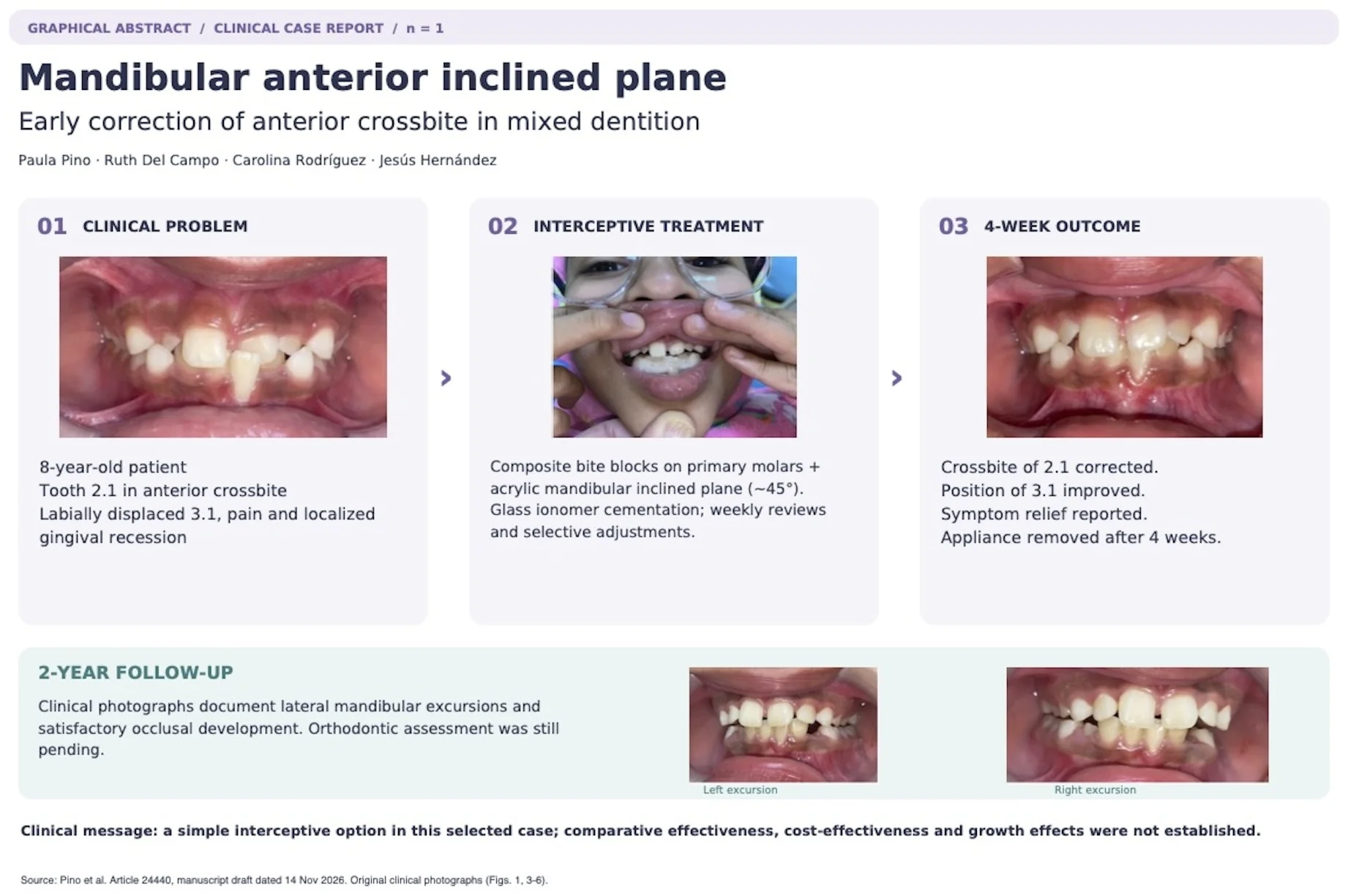
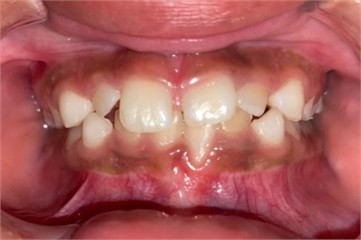
An 8-year-old patient presented with an anterior crossbite involving tooth 2.1, pain associated with tooth 3.1, labial ectopic eruption of tooth 3.1, and localized gingival recession (Fig. 1).
To eliminate anterior occlusal interference and increase the vertical dimension, composite resin bite blocks were placed on the primary molars. Impressions were subsequently obtained for the fabrication of a mandibular anterior inclined plane.
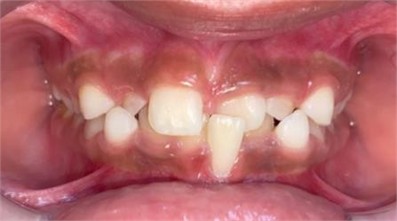
For this clinical case, a mandibular anterior inclined plane was fabricated using transparent self-curing acrylic resin. The dental cast was relieved with pink wax, and a separating medium was applied before acrylic processing. The appliance was constructed with an approximate inclination of 45 degrees to facilitate postural modification, neuromuscular adaptation, and correction of the axial inclination of the affected teeth.
Fig. 2 illustrates an example of the inclined plane fabricated on a gypsum model.
The appliance was cemented using self-curing glass ionomer cement. Weekly follow-up appointments were scheduled to evaluate treatment progress and perform selective acrylic adjustments according to the changes in tooth position.
Anterior inclined planes are generally well accepted by both patients and parents because they allow rapid adaptation and prompt recovery of normal functional activities.
3. Results
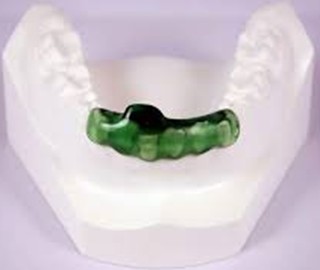
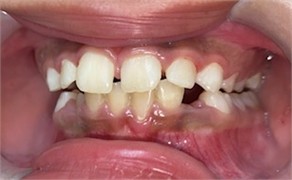
The patient was evaluated weekly throughout treatment, and the acrylic appliance was selectively adjusted according to the progressive changes in tooth position (Fig. 3).
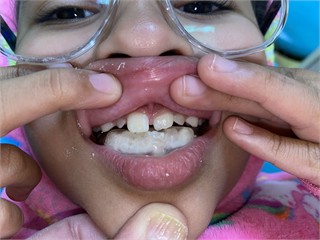
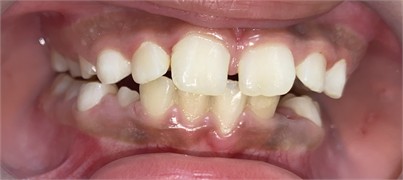
After four weeks of treatment, the mandibular anterior inclined plane was removed because the therapeutic objectives had been achieved. Correction of the anterior crossbite involving tooth 2.1 was successfully accomplished, and tooth 3.1 exhibited substantial improvement in its position and alignment within the dental arch (Fig. 4).
Following correction of the anterior crossbite, the patient was referred for comprehensive orthodontic evaluation and long-term follow-up.
Figs. 5 and 6 show the patient two years after treatment while performing right and left lateral mandibular excursions. The clinical photographs demonstrate maintenance of functional mandibular movements and satisfactory occlusal development.
At the time of this follow-up evaluation, the patient remained on the waiting list for comprehensive orthodontic assessment within the public healthcare system.
4. Discussion
Early treatment of clinically significant occlusal disorders plays a fundamental role in the proper development of the stomatognathic system. Interceptive treatment contributes to the restoration of craniofacial harmony, simplifies future corrective procedures, reduces the likelihood of permanent tooth extractions, and provides important functional and psychosocial benefits.
From the perspective of Functional Jaw Orthopedics, early intervention promotes adequate neuro-occlusal stimulation and establishes favorable conditions for balanced craniofacial growth and development. The correction of altered functional patterns during childhood may prevent the establishment of more complex skeletal and dentoalveolar discrepancies later in life.
Anterior crossbite should be treated promptly to avoid adverse effects on maxillary and mandibular growth, prevent traumatic occlusal overload, and restore physiologic neuromuscular function. Failure to intervene may contribute to functional mandibular shifts, periodontal damage, abnormal wear patterns, and disturbances in the development of the craniofacial complex.
In the present case, a simple acrylic mandibular anterior inclined plane was used as the treatment modality. This appliance has been successfully employed for decades by orthodontists, pediatric dentists, and practitioners of Functional Jaw Orthopedics for the correction of anterior crossbite. Despite its proven effectiveness, it has often been overshadowed by more sophisticated and expensive treatment alternatives.
The clinical relevance of this case lies in the successful management of a functional and occlusal problem associated with pain, periodontal involvement, and altered dental eruption through a simple and low-cost intervention. This aspect is particularly important in public healthcare settings, where access to specialized orthodontic treatment is frequently limited and clinical resources are often constrained.
The effectiveness of the inclined plane is based on biomechanical principles that redirect functional occlusal forces generated during normal mandibular movements. These forces promote physiologic dental displacement while preserving patient comfort and minimizing treatment complexity.
Furthermore, from the Neuro-Occlusal Rehabilitation perspective proposed by Planas, correction of anterior crossbite contributes to the re-establishment of functional anterior guidance, improvement of mandibular posture, recovery of neuromuscular balance, and restoration of favorable relationships between the occlusal plane and Camper’s plane.
In the present case, the appliance was used temporarily to correct the position of a limited number of teeth, producing rapid clinical improvement and creating favorable conditions for subsequent orthodontic treatment if required.
5. Conclusions
Treatment with a mandibular anterior inclined plane proved to be an effective, rapid, minimally invasive, and low-cost therapeutic option for the correction of anterior crossbite in mixed dentition.
The appliance successfully corrected the anterior crossbite involving tooth 2.1, improved the position of tooth 3.1, relieved symptoms, and restored more favorable functional conditions for the development of the stomatognathic system.
This clinical case supports the use of anterior inclined planes as a valuable interceptive treatment alternative within Functional Jaw Orthopedics, particularly in public healthcare settings where simple, accessible, and cost-effective therapeutic approaches are required.
References
-
P. Valério, T. Poklepović Peričić, A. Rossi, C. Grippau, J. D. S. Tavares Campos, and I. J. Borges Do Nascimento, “The effectiveness of early intervention on malocclusion and its impact on craniofacial growth: A systematic review,” Contemporary Pediatric Dentistry, Vol. 2, No. 2, pp. 1–18, Jan. 2021, https://doi.org/10.51463/cpd.2021.61
-
I. Pino, O. Vélez, and P. García, “Malocclusions according to the dental aesthetic index in seventh-grade students from Santa Clara,” Medicentro Electrónica, Vol. 18, No. 4, pp. 177–179, Dec. 2014.
-
J. Park, K. Tai, M. Ikeda, and A. Kanao, “Regaining leeway space and anterior crossbite correction with a modified maxillary molar distalizing appliance,” Journal of Clinical Pediatric Dentistry, Vol. 37, No. 3, pp. 329–334, 2013, https://doi.org/10.17796/jcpd.37.3.qk74l7r278135304
-
L. Ramos Díaz and J. A. Hernández Silva, “Treatment alternatives for anterior crossbite in the primary dentition: report of two cases,” Revista Estomatología, Vol. 33, No. 1, p. e14754, 2025.
-
J. Hernández and M. Padilla, “Early treatment of anterior crossbite: a literature review,” Revista Estomatología, Vol. 19, No. 2, pp. 40–47, 2011.
-
W. Simões, Functional Orthopedics of the Maxillae Through Neuro-Occlusal Rehabilitation. São Paulo: Artes Médicas Latinoamérica, 2004.
-
C. Rodríguez Manjarrés and J. Hernández Silva, “Treatment of anterior crossbite with an anterior inclined plane: effect on dental arches,” Revista de Odontopediatría Latinoamericana, Vol. 7, No. 1, pp. 44–53, 2017.
-
O. Quirós, “The inclined plane for the treatment of anterior crossbite,” Acta Odontológica Venezolana, Vol. 40, No. 3, 2003.
-
P. Planas, Neuro-Occlusal Rehabilitation (NOR). Pedro Planas, 2008.
About this article

The authors have not disclosed any funding.
The datasets generated during and/or analyzed during the current study are available from the corresponding author on reasonable request.
Paula Pino: project administration. Ruth Del Campo: supervision. Carolina Rodríguez: conceptualization. Jesús Hernández: investigation.
The authors declare that they have no conflict of interest.
