Abstract
In 2018, research was initiated to investigate the role of electromagnetic processes in human metabolism. This theoretical research is part of the research work of the Department of Internal Medicine and Emergency Medicine of Poltava State Medical University (23, Shevchenko St., 36011, Poltava, Ukraine) on “Development of algorithms and technologies for implementing a Healthy Lifestyle in patients with Non-Communicable Diseases (NCDs) based on the study of functional status” (state registration number 0121U108237: UDC 613 616-056-06: 616.1/9-03). The results of this work were embodied in the conceptualization of the Magnetoelectrochemical Theory of Metabolism and Life. The purpose of this article is to present to the academic community brief information about the results of the research work carried out in this direction for the further development of these scientific ideas and their integration into the scientific paradigm. Conclusions: 1) Magnetoelectrochemical Theory of Metabolism and Life is a new trend in Complexity in Health Sciences. 2) The biophysical direction of development of modern medicine opens up new ways to solve the problems of diseases of internal organs. 3) Knowledge of the fundamental aspects of electromagnetic communication of cells of the human body is a new basis for deepening the fundamental knowledge of the pathogenesis of diseases of internal organs, and this is a new promising direction for further research. 4) Bioelectronic Medicine, as a new component of medical science, is based on and directs therapeutic influence on the quantum levels of the structure and functioning of the human body. 5) The initiative educational and scientific project “Bioelectronic Medicine or Look at Medicine Differently” is a practical attempt in the conditions of the scientific present to find a way to change the scientific paradigm and popularize the latest knowledge among the academic community of the biomedical direction. 6) The practical application of this knowledge opens up new avenues for the further development of Magnetobiology, Internal Medicine, Microbiology, and Traditional Medicine. It can ensure progress in the treatment of diseases of internal organs, whether infectious or non-infectious in origin.
Highlights
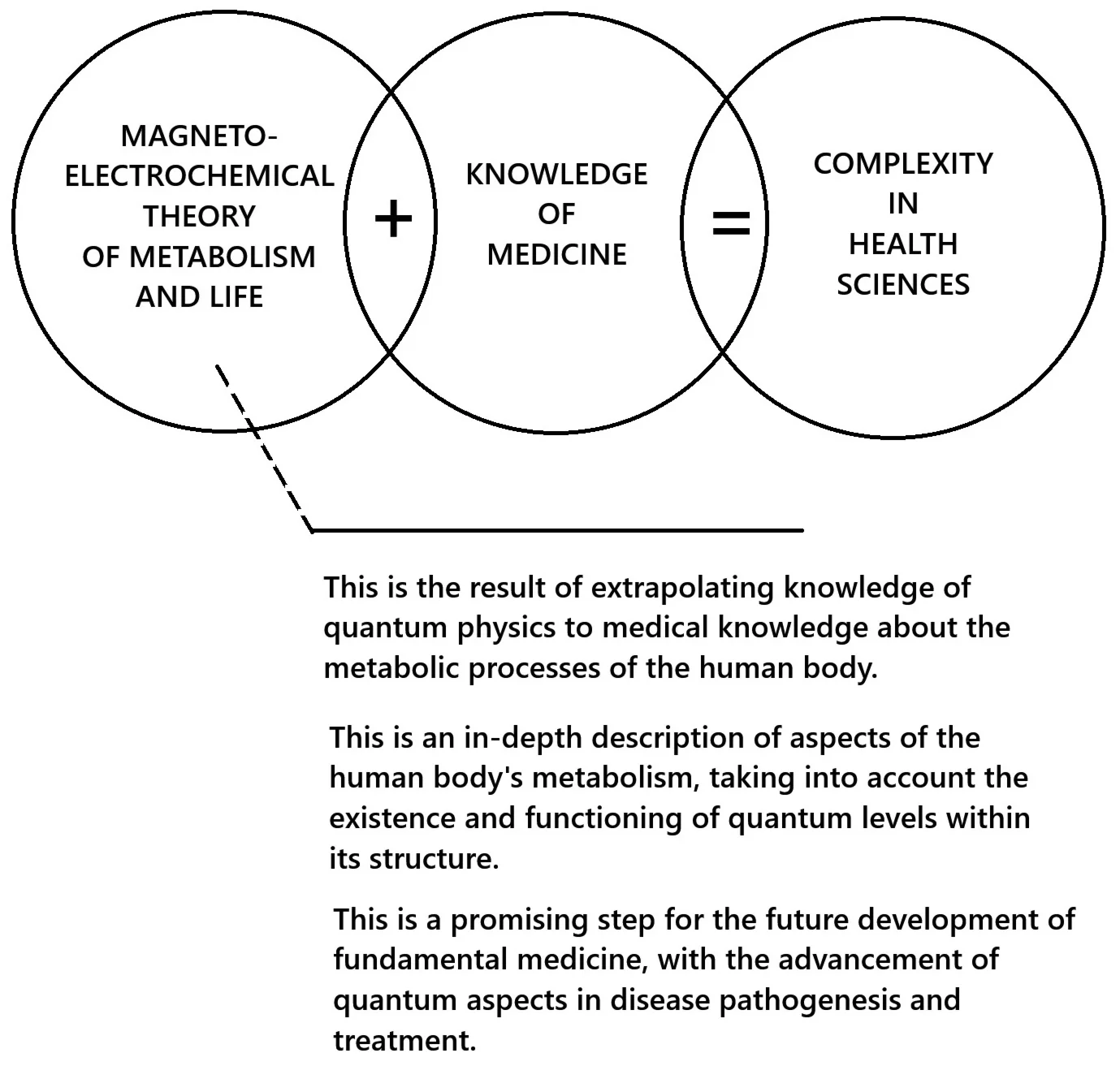
- Magnetoelectrochemical Theory of Metabolism and Life is a new trend in Complexity in Health Sciences.
- The biophysical direction of development of modern medicine opens up new ways to solve the problems of diseases of internal organs.
- Knowledge of the fundamental aspects of electromagnetic communication of cells of the human body is a new basis for deepening the fundamental knowledge of the pathogenesis of diseases of internal organs, and this is a new promising direction for further research.
- Bioelectronic Medicine, as a new component of medical science, is based on and directs therapeutic influence on the quantum levels of the structure and functioning of the human body.
- The practical application of this knowledge opens up new avenues for the further development of Magnetobiology, Internal Medicine, Microbiology, and Traditional Medicine.
1. Introduction
The emergence of a significant amount of fundamentally new knowledge in fundamental branches of science, the achievement of a technical revolution, and the rapid development of information technologies determine the progress of modern science and the transformation of all its branches. In particular, significant progress in quantum physics [1-4] provides a substantial impetus for the further development of medicine. The latest physical paradigm has transformed natural science, leading to the emergence of its quantum branches. For example, quantum biology [5, 6] and quantum chemistry [7, 8] have appeared. Further development of fundamental knowledge necessitates the implementation of quantum levels in medical fields. What new knowledge requires the improvement of the scientific medical paradigm? First of all, this is knowledge about the structure of the human body at the micro level. According to the Standard Model of the atomic structure [9-11], it is now clear that at the micro level, all substances on Earth are organized as electromagnetic field structures. This is also true for the human body. Therefore, modern ideas about the structure of the human body must be supplemented by quantum levels (Fig. 1).
Fig. 1Examples of modern models of hierarchical levels of the structure of the human body, taking into account quantum levels. Fragment from [12, 13]
![Examples of modern models of hierarchical levels of the structure of the human body, taking into account quantum levels. Fragment from [12, 13]](https://static-01.extrica.com/articles/25130/25130-img1.jpg)
Fundamentally important is the fact that there are no atoms in matter at a depth of more than 10-19 cm. There is only electromagnetic energy in various qualities of its manifestation. These represent the quantum levels of matter’s structure. Their existence necessitates the refinement of existing models for describing the human body’s metabolism, transforming and deepening scientific understanding of the molecular and submolecular mechanisms underlying the body’s interaction and functioning. This is because all metabolic processes that occur at the atomic level are a consequence and result of the electromagnetic dynamics of the parameters of the quantum levels of the structure [13]. Therefore, modern medicine must delve deeper into studying the functioning of the human body, from the molecular level to the quantum level. This necessitates the development of new concepts and theories that align with established scientific knowledge about the structure and function of the human body. Today, this is a challenge for biomedical scientists [14].
2. Magnetoelectrochemical theory of metabolism and life
In 2018, an interdisciplinary, fundamentally new theoretical scientific study for clinical medicine was launched to determine the conceptual system of views on the role of internal electromagnetic fields in the human body, to solve this problem. The study was carried out in an interdisciplinary consolidation of medical and technical specialists from the teams of two higher educational institutions: the P.L. Shupyk National University of Health Care of Ukraine (Ukraine, 04112, Kyiv, 9 Dorogozhytska Street; coordinator is the Head of the Department of Medical Informatics, Professor, Doctor of Medical Sciences, Dr Ozar Mintser) and Poltava State Medical University (Ukraine, 36011, Poltava, 23 Shevchenko Street; coordinator is the Head of the Department of Internal Medicine and Emergency Medicine, Professor, Doctor of Medical Sciences, Dr Maksym Potyazhenko, sub-coordinator is Associate Professor, Candidate of Medical Sciences, Dr Ganna Nevoit). The results of the study were summarized in the Magnetoelectrochemical Theory of Metabolism and Life [15,16]. In 2021, the first volume of the monograph [17] was published, which conceptualized the role of electromagnetic processes at the subatomic, atomic, molecular, subcellular, and cellular levels. This scientific work received positive feedback from leading scientists in Ukraine [18-20] (Fig. 2).
Fig. 2Reviews of famous Ukrainian scientists in the monograph “Magnetoelectrochemical Theory of Metabolism. Conceptualization” [14]
![Reviews of famous Ukrainian scientists in the monograph “Magnetoelectrochemical Theory of Metabolism. Conceptualization” [14]](https://static-01.extrica.com/articles/25130/25130-img2.jpg)
Since 2022, this theoretical study has been continued jointly with scientists from the Lithuanian University of Health Sciences. The coordinators of the study were the Head of the Department of Nephrology of the Faculty of Medicine, Professor, Doctor of Medical Sciences, Dr Inga Arune Bumblite, and Senior Researcher of the Laboratory of Automated Heart Research of the Institute of Cardiology, Professor, Doctor of Medical Sciences, Dr Alfonsas Vainoras (Lithuania, 44307, Kaunas, Michkavicius Street, 9). Since 2024, scientists from the Kherson State Medical University have joined the study. The coordinators of the study are Associate Professor, Candidate of Medical Sciences, Dr Svetlana Danylchenko, and Associate Professor, Candidate of Biological Sciences Igor Golovchenko, (Ukraine, 77311, Ivano-Frankivsk region, Ivano-Frankivsk, Shevchenko Street, 14). Since 2025, scientists from the Institute of Sports Science and Innovation of the Lithuanian Sports University have joined the study. The coordinator of the study is Associate Professor, Candidate of Biological Sciences Kristina Poderiene (Lithuania, 44221, Kaunas, Sportu Street, 6) [14].
The scientific significance of the Magnetoelectrochemical Theory of Metabolism and Life lies in its being the first time, from the standpoint of systems medicine, that it extrapolated modern biophysical knowledge regarding quantum-level phenomena to the processes of human bodily function. Thanks to this, at the modern scientific level, the participation of the phenomenon of life in quantum magnetoelectrochemical processes of water [21] and cell membranes [22] was conceptualized, and a generalization was made regarding the essence of the mechanisms of biological life [15-17]. The conceptualization of the role of electromagnetic processes at the tissue, organ, and organism levels continues. The role of biophotons in the human body was conceptualized [23]. A new, promising working concept of biophoton signaling has been developed, which, within the framework of modern biological ideas, presents and justifies the participation of electromagnetic processes in intercellular and interorgan interactions [24, 25]. Biophoton signaling is a promising working biophysical model for describing the processes of formation and propagation of electromagnetic energy in the human body in vivo. This model complements the fundamental scientific understanding of the role and mechanisms of implementing electromagnetic communicative signals in the form of biophotons within cells and beyond. This concept serves as a working model for describing and further studying the electromagnetic processes involved in the functioning of the human brain and the formation of quantum fields by it. These ideas must elevate the knowledge of modern biological science to a qualitatively higher level, enabling us to comprehend the pivotal role of electromagnetic processes in the functioning of the human body. This is the latest trend in Complexity in Health Sciences.
The Magnetoelectrochemical Theory of Metabolism and Life formulated and substantiated the quantum concept of the phenomenon of biological life at the micro level of the human body’s structure. The biological life of the human body is determined by electromagnetic processes that occur at the quantum level within the microstructure of the human body. At the same time, with the participation of biophoton signaling processes, magnetoelectric activation of biomolecules of membrane structures of cells occurs [24, 25]. Therefore, in vivo, the life of biopolymers and other molecules is possible only under the condition of generation by biopolymers and the transportation of coherent electromagnetic energy in the form of solitons along the molecular structures of cellular chains. The cessation of generation and transportation of electromagnetic energy along biopolymers in cells leads to the biological death of these biopolymers and the entire organism as a whole. This is because the biological life of a biopolymer molecule depends on and is determined by the generation, constant receipt, and circulation of coherent electromagnetic energy in it. This determines its biochemical activity, structural integrity, and coordinated collective interaction in the body with other biomolecules. The biological death of a molecule is the cessation of its functioning due to the lack of energy circulation within it, resulting in subsequent chemical decomposition. This deepens and changes the medical understanding of the biophysical mechanisms that underlie the biological life of the human body [15-17].
Thanks to an understanding of the above mechanisms, the essence of the phenomenon of biological life has been revealed, allowing Health Sciences to deepen and transform the biophysical basis of health and disease phenomena. According to the concepts of the Magnetoelectrochemical Theory of Metabolism and Life, health is a state of adequate (which ones should be specified in the future) levels of the flow of magnetoelectric energy processes between biomolecules, which is objectively manifested at the macro level by the normal level of metabolism, the functioning of tissues and organs of the human body. Accordingly, disease is a disorder of the magnetoelectric state of biomolecular structures [15-17]. Thus, it is clear that the adequacy of the exchange of electromagnetic energy quanta in its various states (electrons, photons, solitons, etc.) between molecular structures in the human body is the basis of its clinical and morphological structure and health. Therefore, the processes of energy exchange at the quantum level represent the next pathogenetic level of understanding for medicine in the pathogenesis of diseases of internal organs. They are also a therapeutic target. Based on this, it is clear that the general practical significance of the Magnetoelectrochemical Theory of Metabolism and Life lies in the formation of a new scientific direction, Bioelectronic Medicine [26].
3. Bioelectronic medicine or look at medicine differently
The Magnetoelectrochemical Theory of Metabolism and Life is a new trend in Complexity in Health Sciences and a scientifically sound basis for deepening the medical paradigm. Thanks to this, a scientific transition is now underway from the molecular level to understanding the quantum levels of the human body’s functioning. That is why, in order to disseminate this knowledge among the academic community, the educational and scientific project “Bioelectronic Medicine or Look at Medicine Differently” was activated in 2023 [14]. This initiative project aims to develop the direction of quantum medicine by combining existing medical knowledge with modern biophysical knowledge about the functioning of the human body at the nanoscale and beyond. Its tasks are to promote the further development of the field of “Therapy” and other medical areas, deepen fundamental knowledge, and form the latest scientific views on key aspects of the functioning of the human body. Accordingly, on this basis, the project should contribute to the further development of comprehensive treatment of diseases of the human body and more effective implementation of health preservation measures. Within the framework of this project, our scientific team is currently conducting theoretical research on the concepts of magnetoelectrochemical theory of metabolism and life at the tissue, organ, and organism levels. This project aims to popularize and further disseminate the ideas of the Magnetoelectrochemical Theory of Metabolism among the academic community in the biomedical field. Work continues on popularizing and introducing computerized methods of examining patients into the work of family doctors and other specialists of the therapeutic profile [27, 28]. Approaches to assessing the functional state of patients, based on the analysis of short-term heart rate variability indicators [29-35], electrophoton emission analysis [33, 36-39], body composition bioimpedance measurement [40], and vegetative resonance testing [41], have been tested.
The central idea of the project is the concept of Bioelectronic Medicine. The main concepts of bioelectronic medicine have been formulated and substantiated [13]. Bioelectronic medicine, as a scientific concept, is the result of combining molecular medicine with neurobiology, engineering, and computer science. It includes the development and use of hardware and software devices with various effects and mechanisms of action for diagnostic and therapeutic purposes. The essence of the therapeutic component of Bioelectronic Medicine lies in the conscious direction of treatment to the quantum levels of the human body, which serves as the primary therapeutic target. It is essential to recognize that all therapeutic methods employed by orthodox medicine, including pharmacotherapy, also impact the quantum levels of the human body. However, the mechanisms of these effects remain unexplored. For example, pharmacological agents at the micro level of their structure are also field structures that have specific frequency-wave energy parameters. Therefore, at the micro level of the human body's structure, according to the principles of bioelectronic interaction, they interact with the field components of the corresponding molecules within the human body. Thus, Bioelectronic Medicine does not contradict the paradigm of orthodox medical science but instead takes it to a qualitatively new promising level of research. That is why, according to many scientists, Bioelectronic Medicine is at the forefront of a potential revolution in the treatment of diseases of internal organs and is a promising direction for further scientific research [42-48].
4. Practical application of the concepts of the magnetoelectrochemical theory of metabolism and life
Several clinical and theoretical studies were conducted in this direction. The Magnetoelectrochemical Theory of Metabolism and Life has made a significant contribution and serves as a basis for the further development of Magnetobiology. In 2022, within the framework of scientific research, the search for potential mechanisms linking the human body’s functioning to the Earth’s electromagnetic field continued. For the first time, an exploratory study was conducted to investigate the connections between cases of chronic kidney disease and the annual dynamics of changes in Schumann resonances [49], as well as to explore the latest electromagnetic mechanisms underlying the pathogenesis of cardiorenal syndrome [50]. The above has been generalized in the modern coverage of the problems related to the interaction of the human body with the Earth’s electromagnetic field within the frequency spectrum of Schumann resonances [12]. This research work is continuing, and it is planned to study the further influence of Schumann resonances on renal function. A theoretical study of the role of the kidneys in regulating electromagnetic processes in the human body is also being conducted.
The development of aspects of studying the quantum pathogenesis of chronic non-communicable diseases from the standpoint of the Magnetoelectrochemical Theory of Metabolism and Life has provided a basis for deepening our understanding of the key role of mitochondrial dysfunction in these processes. The participation of mitochondria was conceptualized in the stages of chronic non-communicable disease development, and the concept of a general continuum of chronic non-communicable diseases was proposed [51-55]. It has been concluded that mitochondria play a key role in the mechanisms underlying the quantum pathogenesis of internal organ diseases. This research work is also ongoing. At the same time, further knowledge about the key role of mitochondria in cellular metabolism has become an impetus for conceptualizing the quantum role of muscles [25, 56]. This forms a fundamentally new perspective on the algorithms for introducing a healthy lifestyle and highlights the fundamental importance of kinesiotherapy in comprehensive patient treatment.
The Magnetoelectrochemical Theory of Metabolism and Life, particularly its concept of Biophoton Signaling [24, 25], is a significant contribution to the development of the fundamental mechanisms underlying the clinical effectiveness of reflexotherapy methods. Currently, this area of research, according to the conclusions of the World Health Organization in the “Report of the Global Summit of Traditional Medicine 2023: Gujarat Declaration” (August 17-18, 2023), is recognized as important and relevant [57]. Biophoton Signaling is essentially a biological theory that, from the standpoint of modern biophysical and medical knowledge, explains the emergence and transmission of energy and its informational component at all hierarchical levels of the human body structure. The concepts underlying this idea provide the scientific basis for the further integration of a significant number of Traditional Medicine methods into orthodox medical science, as well as for further study of the quantum mechanisms governing the human brain's functioning [58].
A separate aspect of the practical application of the Magnetoelectrochemical Theory of Metabolism and Life, as well as Bioelectronic Medicine, is the further theoretical substantiation and clinical development of diagnostic and therapeutic methods that utilize the frequency-wave parameters of the human body. These methods combine a significant number of instrumental hardware methods, which, due to the action of electromagnetic fields, can influence the functional state of the human body. The study of the potential applications of vegeto-resonance testing in clinical practice continues, with a focus on its use by doctors during objective patient examinations. The theoretical substantiation of this method’s mechanisms has been carried out from the standpoint of modern biophysical knowledge [41]. An educational and methodological manual, “Vegeto-resonance test in clinical examination of patients”, is currently being prepared for publication.
The creation of quantum sections in many branches of medicine is of great practical importance. The sections of quantum pharmacology and quantum microbiology are the most promising for creation shortly. This is so for the following reasons. Pharmacological agents at the nanolevel and deeper in their structure also do not have atoms; instead, they are electromagnetic field structures. Therefore, at the micro level, their pharmacokinetic effects are realized through electromagnetic interaction with the field components of the atoms of the human body. This is logical, but these moments have not been thoroughly studied, and this presents a practical prospect for the future in creating sections of quantum pharmacology. Quantum Microbiology should be developed soon because it offers a promising approach to a practical solution to the problem of antibiotic resistance in microorganisms. All microorganisms are composed of atoms and exhibit specific frequency-wave spectra of their vital activity. The study of these spectra, on the one hand, will deepen the fundamental knowledge of science. On the other hand, this will enable the justified application of the influence of resonant frequencies to these spectra, making it a real possibility to quantumly destroy the necessary pathogenic microorganisms in vivo in the human body and beyond. This will usher in a new era of conscious, practical application of Bioelectronic Medicine in Microbiology and the complex treatment of human infectious diseases.
The presented interdisciplinary theoretical concepts complement the existing scientific paradigm. They are based on modern scientific knowledge and are essentially a product of their integral system analysis. Therefore, the presented concepts are consistent with established biomedical and physiological models and are their continuation and description of the principles of their electromagnetic device.
5. Conclusions
1) Magnetoelectrochemical Theory of Metabolism and Life is a new trend in Complexity in Health Sciences.
2) The biophysical direction of development of modern medicine opens up new ways to solve the problems of diseases of internal organs.
3) Knowledge of the fundamental aspects of electromagnetic communication of cells of the human body is a new basis for deepening the fundamental knowledge of the pathogenesis of diseases of internal organs, and this is a new promising direction for further research.
4) Bioelectronic Medicine, as a new component of medical science, is based on and directs therapeutic influence on the quantum levels of the structure and functioning of the human body.
5) The initiative educational and scientific project “Bioelectronic Medicine or Look at Medicine Differently” is a practical attempt in the conditions of the scientific present to find a way to change the scientific paradigm and popularize the latest knowledge among the academic community of the biomedical direction.
6) The practical application of this knowledge opens up new avenues for the further development of Magnetobiology, Internal Medicine, Microbiology, and Traditional Medicine. It can ensure progress in the treatment of diseases of internal organs, whether infectious or non-infectious in origin.
7) The study of electromagnetic parameters of the human body (electrography, magnetography, studies of frequency components of tissue activity, analysis of biophoton emission by human body tissues) is the scientific basis for the development and evaluation of the promising parameter “quantum balance”.
References
-
D. Taschetto, “Rewriting the quantum “revolution”,” Studies in History and Philosophy of Science, Vol. 109, pp. 72–88, Feb. 2025, https://doi.org/10.1016/j.shpsa.2024.12.006
-
A. Rae, Quantum Physics: Illusion or Reality?. Cambridge University Press, 2004.
-
P. C. W. Davies, The Ghost in the Atom: A Discussion of the Mysteries of Quantum Physics. Cambridge University Press, 2010.
-
E. Schrödinger and R. Penrose, What is Life?. Cambridge University Press, 1992, https://doi.org/10.1017/cbo9781139644129
-
A. Marais et al., “The future of quantum biology,” Journal of The Royal Society Interface, Vol. 15, No. 148, p. 20180640, Nov. 2018, https://doi.org/10.1098/rsif.2018.0640
-
G. R. Fleming, G. D. Scholes, and Y.-C. Cheng, “Quantum effects in biology,” Procedia Chemistry, Vol. 3, No. 1, pp. 38–57, Jan. 2011, https://doi.org/10.1016/j.proche.2011.08.011
-
Y. Cao et al., “Quantum chemistry in the age of quantum computing,” Chemical Reviews, Vol. 119, No. 19, pp. 10856–10915, Oct. 2019, https://doi.org/10.1021/acs.chemrev.8b00803
-
V. P. Gupta, Principles and Applications of Quantum Chemistry. Elsevier, 2016, https://doi.org/10.1016/c2014-0-05143-x
-
J. D. Wells, “Discovery beyond the standard model of elementary particle physics,” in SpringerBriefs in Physics, Cham: Springer International Publishing, 2020, pp. 1–69, https://doi.org/10.1007/978-3-030-38204-9
-
P. Paganini, Fundamentals of Particle Physics: Understanding the Standard Model. Cambridge University Press, 2023.
-
T. Hübsch, Advanced Concepts in Particle and Field Theory. Cambridge University Press, 2023, https://doi.org/10.1017/9781009291507
-
G. Nevoit et al., “Schumann resonances and the human body: questions about interactions, problems and prospects,” Applied Sciences, Vol. 15, No. 1, p. 449, Jan. 2025, https://doi.org/10.3390/app15010449
-
G. Nevoit, O. Filiunova, M. Potyazhenko, O. Minser, I. A. Bumblyte, and A. Vainoras, “Modern biophysical view of electromagnetic processes of the phenomenon of life of living biological systems as a promising basis for the development of complex medicine: towards the concept of Bioelectronic Medicine,” Journal of Complexity in Health Sciences, Vol. 6, No. 2, pp. 49–66, Dec. 2023, https://doi.org/10.21595/chs.2023.23867
-
G. Nevoit et al., “Educational and scientific project “Bioelectronic medicine or look at medicine differently”: the path to a paradigm shift,” (in Ukrainian), Ukrainian Medical Journal, Vol. 4-5, Aug. 2025, https://doi.org/10.32471/umj.1680-3051
-
O. P. Mintser, M. Potiazhenko, A. L. Vainoras, I. B. Bumblytė, and G. V. Nevoit, “Informational analytical representations of the magneto-electrochemical theory of metabolism, life and health,” Ukrainian Journal of Medicine, Biology and Sports, Vol. 6, No. 7, pp. 232–246, Nov. 2022.
-
O. P. Mintser, M. M. Potiazhenko, and G. V. Nevoit, “Informational analytical representations of the magneto-electrochemical theory of life and health,” Journal of Applied Interdisciplinary Research, Vol. 2, pp. 91–98, Jan. 2023, https://doi.org/10.25929/38d5-p759
-
O. P. Mintser, M. M. Potyazhenko, and G. V. Nevoit, Magnetoelectrochemical Theory of Metabolism. Volume 1 Conceptualization. (in Ukrainian), Kyiv-Poltava: Interservice, 2021.
-
V. V. Boyko, “Review of the monograph of the collective of authors O.P. Mintsera, M.M. Potyazhenko, G.V. Nevoyt “Magnetoelectrochemical theory of metabolism” in two volumes,” (in Ukrainian), Ukrainian medical journal, Vol. 4, No. 150, p. 111, 2022.
-
S. O. Gulyar, “Review of the monograph of the collective of authors O.P. Mintsera, M.M. Potyazhenko, G.V. Nevoyt “Magnetoelectrochemical theory of metabolism. Conceptualization”,” (in Ukrainian), Bukovinian Medical Bulletin, Vol. 3, p. 103, 2022.
-
M. D. Kolbun, “Review of the monograph of the collective of authors O.P. Mintsera, M.M. Potyazhenko, G.V. Nevoyt “Magnetoelectrochemical theory of metabolism. Conceptualization” Volume 1,” (in Ukrainian), Actual Problems of the Modern Medicine: Bulletin of Ukrainian Medical Stomatological Academy, Vol. 2, No. 22, pp. 134–135, 2021.
-
G. Nevoit, I. A. Bumblyte, M. Potyazhenko, and O. Minser, “Modern biophysical view of electromagnetic processes of the phenomenon of life of living biological systems as a promising basis for the development of complex medicine: the role of water,” Journal of Complexity in Health Sciences, Vol. 5, No. 2, pp. 45–57, Dec. 2022, https://doi.org/10.21595/chs.2022.23089
-
G. Nevoit, I. A. Bumblyte, M. Potyazhenko, and O. Minser, “Modern biophysical view of electromagnetic processes of the phenomenon of life of living biological systems as a promising basis for the development of complex medicine: the role of cell membranes,” Journal of Complexity in Health Sciences, Vol. 5, No. 1, pp. 22–34, Jun. 2022, https://doi.org/10.21595/chs.2022.22787
-
G. Nevoit, I. A. Bumblyte, M. Potyazhenko, O. Minser, and A. Vainoras, “Modern biophysical view of electromagnetic processes of the phenomenon of life of living biological systems as a promising basis for the development of complex medicine: the role of biophotons,” Journal of Complexity in Health Sciences, Vol. 6, No. 1, pp. 1–15, Jun. 2023, https://doi.org/10.21595/chs.2023.23443
-
G. Nevoit et al., “Magneto-electrochemical theory of metabolism: electromagnetic communication of cells and the role of the extracellular matrix,” Biologija, Vol. 71, No. 1, pp. 43–58, Apr. 2025, https://doi.org/10.6001/biologija.2025.71.1.3
-
G. Nevoit et al., “Biophotonics and reflexology: conceptualization of the role of biophotonic signaling,” Fitoterapia, Vol. 3, No. 3, pp. 62–78, Jan. 2024, https://doi.org/10.32782/2522-9680-2024-3-62
-
G. Nevoit, O. Vlasova, M. Ryabushko, N. Moisieieva, I. Zviagolska, and M. Potyazhenko, “Magnetoelectrochemical theory of metabolism and life: what is it, when is it needed and what to expect from it for medicine and reflexology (literature review),” Fitoterapia, Vol. 2, No. 2, pp. 47–62, Jan. 2024, https://doi.org/10.32782/2522-9680-2024-2-47
-
G. V. Nevoit, ““Assessment of the clinical effectiveness of the method of identifying personalized correction of patients’ lifestyle and new promising predictors of non-communicable diseases,” (in Ukrainian), Ukrainian therapeutic journal, Vol. 1, pp. 20–25, 2021.
-
O. P. Mintser, V. V. Semenets, M. Potiazhenko, P. Podpruzhnykov, and G. V. Nevoit, “The study of the electromagnetic component of the human body as a diagnostic indicator in the examination of patients with non-communicable diseases: problem statement,” Wiadomości Lekarskie, Vol. 73, No. 6, pp. 1279–1283, Jan. 2020, https://doi.org/10.36740/wlek202006139
-
A. S. Korpan, “The heart knows all about us”: an assessment of the functional state of patients by the indicators of a short recording of the heart rate variability,” (in Ukrainian), Current Problems of Daily Medicine: Bulletin of the Ukrainian Medical Dental Academy, Vol. 21, No. 1, pp. 30–35, Mar. 2021, https://doi.org/10.31718/2077-1096.21.1.30
-
G. V. Nevoit and M. M. Potyazhenko, “Cardiovascular continuum in the results of short recording of heart rate variability: possibilities of instrumental diagnostics,” (in Ukrainian), Clinical and Experimental Pathology, Vol. 20, No. 2, pp. 57–64, Aug. 2021, https://doi.org/10.24061/1727-4338.xx.2.76.2021.9
-
G. Nevoit and M. Potiazhenko, “Analysis of indicators of short recording of heart rate variability in comorbid patients with non-communicable diseases,” (in Ukrainian), Bukovinian Medical Herald, Vol. 25, No. 2(98), pp. 82–88, Aug. 2021, https://doi.org/10.24061/2413-0737.xxv.2.98.2020.13
-
G. V. Nevoit, Potiazhenko, and P. Mintser, “Assessment of the functional types of body mobilization based on a dynamic analysis of spectral indicators of heart rate variability and their classification,” World of Medicine and Biology, Vol. 3, No. 73, pp. 77–81, Jan. 2020, https://doi.org/10.26724/2079-8334-2020-3-73-77-81
-
G. V. Nevoit, Potiazhenko, P. Mintser, and L. Y. Babintseva, “Electro-photonic emission analysis and hardware-software recording of heart rate variability during an objective structured clinical examination,” World of Medicine and Biology, Vol. 4, No. 74, pp. 107–111, Jan. 2020, https://doi.org/10.26724/2079-8334-2020-4-74-107-111
-
G. V. Nevoit, Potiazhenko, P. Mintser, N. I. Ignatenko, and Y. Kаbernik, “Bioelectrical impedance determining body composition and hardware-software recording of heart rate variability during an objective structured clinical examination as a diagnostic tool,” World of Medicine and Biology, Vol. 2, No. 72, pp. 89–93, Jan. 2020, https://doi.org/10.26724/2079-8334-2020-2-72-89-93
-
O. P. Mintser, M. Potiazhenko, and G. V. Nevoit, “The short record of heart rate variability in clinically ill patients,” in Systemic Medicine, Kiev-Poltava: Interservis, 2022.
-
G. V. Nevoit, “Evaluation of electro-photonic emission analysis indicators in patients with noncommunicable diseases – ishemic heart disease,” The Medical and ecological problems, Vol. 1-2, No. 25, pp. 16–21, 2021.
-
G. V. Nevoit, “Possibilities of electro-photonic emission analysis in the representation of system information energy processes of the human organism”, The Medical and ecological problems,” The Medical and ecological problems, Vol. 5-6, No. 24, pp. 17–20, 2020.
-
G. V. Nevoit, O. P. Mintser, M. Potiazhenko, and L. Y. Babintseva, “Electro-photonic emission analysis in functionally health respondents and patients with non-communicable diseases,” Wiadomości Lekarskie, Vol. 6, No. 74, pp. 1439–1444, Jan. 2021, https://doi.org/10.36740/wlek202106128
-
G. Nevoit et al., “The biophoton emission in biotechnological research: from meta-epistemology and meaning to experiment – part 1,” Ukrainian Journal of Physics, Vol. 69, No. 3, pp. 190–206, Mar. 2024.
-
G. V. Nevoit, Potiazhenko, and P. Mintser, “Systemic dependences of changes in body composition with the progression of non-communicable diseases,” World of Medicine and Biology, Vol. 17, No. 77, pp. 132–137, Jan. 2021, https://doi.org/10.26724/2079-8334-2021-3-77-132-137
-
G. Nevoit et al., “Vega test method and diagnosis of non-communicable diseases: problems, biophysical diagnostic mechanisms and prospects,” Journal of Complexity in Health Sciences, Vol. 8, No. 1, pp. 12–28, Jun. 2025, https://doi.org/10.21595/chs.2024.24727
-
T. Datta-Chaudhuri et al., “The fourth bioelectronic medicine summit “technology targeting molecular mechanisms”: current progress, challenges, and charting the future,” Bioelectronic Medicine, Vol. 7, No. 1, May 2021, https://doi.org/10.1186/s42234-021-00068-6
-
I. Ezeokafor, A. Upadhya, and S. Shetty, “Neurosensory prosthetics: an integral neuromodulation part of bioelectronic device,” Frontiers in Neuroscience, Vol. 15, p. 67176, Nov. 2021, https://doi.org/10.3389/fnins.2021.671767
-
P. Ganzer and G. Sharma, “Opportunities and challenges for developing closed-loop bioelectronic medicines,” Neural Regeneration Research, Vol. 14, No. 1, pp. 46–50, Jan. 2019, https://doi.org/10.4103/1673-5374.243697
-
S. Gibney, J. M. Hicks, A. Robinson, A. Jain, P. Sanjuan‐Alberte, and F. J. Rawson, “Toward nanobioelectronic medicine: Unlocking new applications using nanotechnology,” WIREs Nanomedicine and Nanobiotechnology, Vol. 13, No. 3, p. e1693, Jan. 2021, https://doi.org/10.1002/wnan.1693
-
P. Sanjuan-Alberte, M. R. Alexander, R. J. M. Hague, and F. J. Rawson, “Electrochemically stimulating developments in bioelectronic medicine,” Bioelectronic Medicine, Vol. 4, No. 1, Mar. 2018, https://doi.org/10.1186/s42234-018-0001-z
-
A. K. Singh, R. Awasthi, and R. Malviya, “Bioelectronic medicines: Therapeutic potential and advancements in next-generation cancer therapy,” Biochimica et Biophysica Acta (BBA) – Reviews on Cancer, Vol. 1877, No. 6, p. 188808, Nov. 2022, https://doi.org/10.1016/j.bbcan.2022.188808
-
C. Sevcencu, “Single-interface bioelectronic medicines-concept, clinical applications and preclinical data,” Journal of Neural Engineering, Vol. 19, No. 3, p. 031001, Jun. 2022, https://doi.org/10.1088/1741-2552/ac6e08
-
G. Nevoit et al., “Interconnections between local Schumann resonances and episodes of kidney disease,” Journal of Complexity in Health Sciences, Vol. 7, No. 1, pp. 1–18, Jun. 2024, https://doi.org/10.21595/chs.2024.23941
-
G. Nevoit et al., “The search for new pathogenesis of cardiorenal syndrome: the effect of local Schumann resonance on the occurrence of episodes of kidney disease and myocardial infarction,” KIDNEYS, Vol. 13, No. 1, pp. 26–38, Mar. 2024, https://doi.org/10.22141/2307-1257.13.1.2024.438
-
G. Nevoit, G. Jarusevicius, M. Potyazhenko, O. Mintser, I. A. Bumblyte, and A. Vainoras, “Mitochondrial dysfunction and atherosclerosis: the problem and the search for its solution,” Biomedicines, Vol. 13, No. 4, p. 963, Apr. 2025, https://doi.org/10.3390/biomedicines13040963
-
G. Nevoit, G. Jarusevicius, M. Potyazhenko, O. Mintser, I. A. Bumblyte, and A. Vainoras, “Mitochondrial dysfunction and risk factors for noncommunicable diseases: from basic concepts to future prospective,” Diseases, Vol. 12, No. 11, p. 277, Nov. 2024, https://doi.org/10.3390/diseases12110277
-
O. Mintser, M. Potyazhenko, and G. Nevoit, “Mitochondrial dysfunction in the general continuum of non-infectious diseases from the perspective of systemic medicine. Part I. Review of literature and results of theoretical research,” Ukrainian Medical Journal, Vol. 147-148, No. 1-4, pp. 67–74, Feb. 2022, https://doi.org/10.32471/umj.1680-3051.147.227281
-
O. P. Mintser, Potiazhenko, and G. V. Nevoit, “Non-communicable diseases: the concept of a general continuum (first report),” Bulletin of the Ukrainian Medical and Stomatological Academy Current problems of modern medicine, Vol. 22, No. 1, pp. 203–210, Apr. 2022, https://doi.org/10.31718/2077-1096.22.1.203
-
G. Nevoit and M. Potiazhenko, “Clinical and pathogenetic features of the development of non-communicable diseases depending on the degree of comorbidity, the stage of cardiovascular continum,” Bukovinian Medical Herald, Vol. 26, No. 1 (101), pp. 13–22, May 2022, https://doi.org/10.24061/2413-0737.xxvi.1.101.2022.2
-
О. Mintser, G. Nevoit, S. Danylchenko, M. Potyazhenko, I. A. Bumblyte, and A. Vainoras, “Percent muscle deficit is a predictor of cardiometabolic risk: quantum mechanisms of the role of muscle,” in Physical Rehabilitation and Health-Saving Technologies: Realities and Prospects: Collection of Scientific Materials of the X All-Ukrainian Scientific and Practical Conference with International Participation, p. 105, Nov. 2024.
-
Who Team, “WHO traditional medicine global summit 2023 meeting report: Gujarat declaration,” Journal of Ayurveda and Integrative Medicine, Vol. 14, No. 5, p. 100821, Sep. 2023, https://doi.org/10.1016/j.jaim.2023.100821
-
G. Nevoit, K. Poderiene, M. Potyazhenko, O. Mintser, G. Jarusevicius, and A. Vainoras, “The concept of biophotonic signaling in the human body and brain: rationale, problems and directions,” Frontiers in Systems Neuroscience, Vol. 19, Jun. 2025, https://doi.org/10.3389/fnsys.2025.1597329
About this article

The authors have not disclosed any funding.
The datasets generated during and/or analyzed during the current study are available from the corresponding author on reasonable request.
Ganna Nevoit: conceptualization, investigation, visualization, writing-original draft. Kristina Poderiene: conceptualization, writing-review and editing. Svetlana Danylchenko: conceptualization, investigation. Oksana Kitura: conceptualization. Nadiia Liulka: investigation. Igor Golovchenko: conceptualization. Maksim Potyazhenko: conceptualization, supervision, writing-review and editing. Ozar Mintser: conceptualization, methodology, supervision, writing-review and editing. Gediminas Jarusevicius: conceptualization, data curation, methodology, resources, supervision, writing-review and editing. Alfonsas Vainoras: conceptualization, methodology, project administration, supervision, writing-review and editing.
The authors declare that they have no conflict of interest.

