Abstract
This study provides an in-depth examination of the processes of crack initiation and propagation on automobile roads under real-world operational conditions. The research aims to better understand how a combination of pavement material characteristics, traffic-induced stresses, and environmental influences contribute to the formation and evolution of cracks over time. To achieve this, a series of comprehensive field surveys were carried out on various selected road sections representing different traffic volumes, climatic conditions, and pavement ages. During these surveys, the types of cracks present, their widths, lengths, and spacing intervals were carefully documented. Data collection was conducted using several complementary methods, including direct visual inspections, systematic photographic recording, and detailed crack mapping techniques.
Highlights
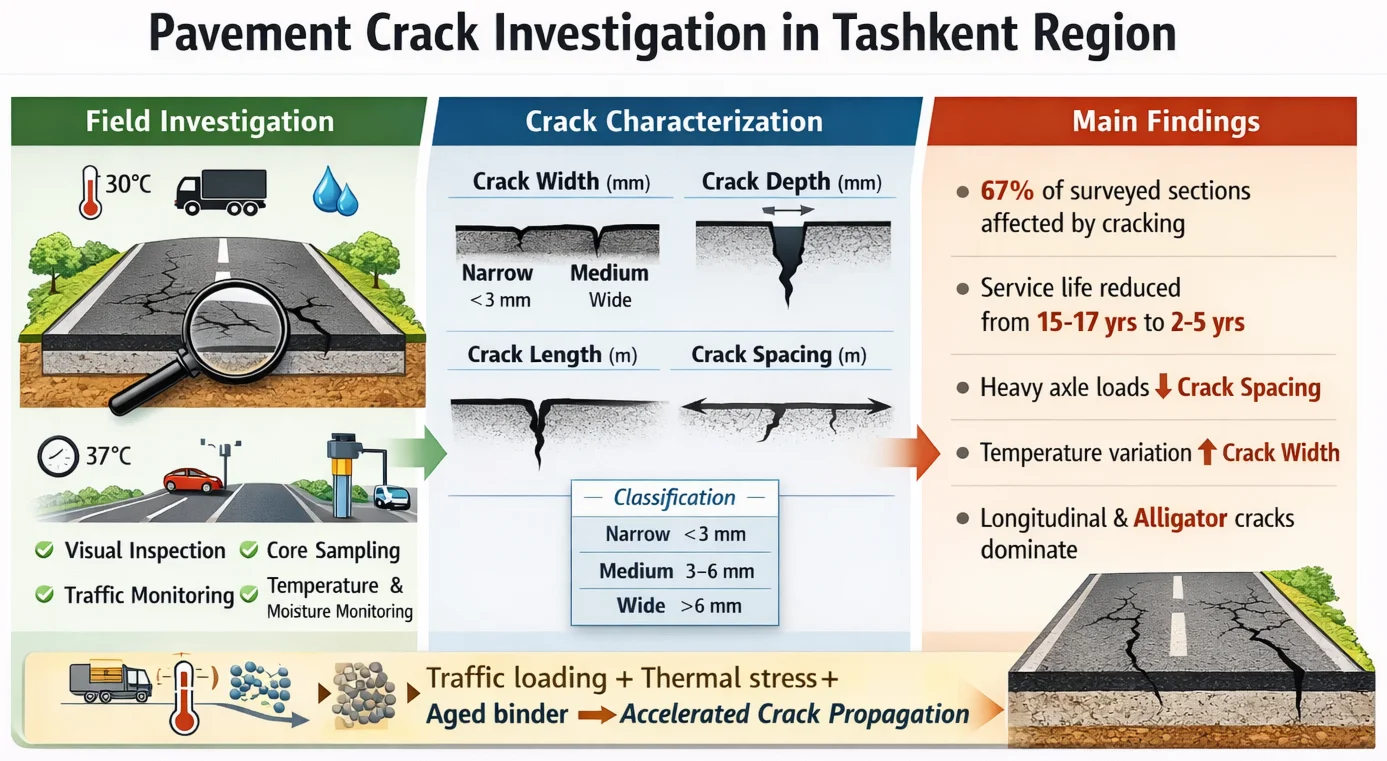
- 67% of examined pavement sections in Tashkent region were affected by cracking under real operational conditions.
- Pavement service life decreased from 15–17 years to 2–5 years due to aging bitumen and increasing traffic loads.
- Crack width, depth, length, and spacing were measured and statistically correlated with traffic intensity and climatic factors.
- Temperature fluctuations significantly increased crack width and promoted crack propagation over time.
- Longitudinal and alligator cracks were the most dominant distress types observed during field investigations.
1. Introduction
The road network is considered the most crucial element of Uzbekistan’s economy. Its effective functioning and sustainable development are essential prerequisites for transitioning to economic growth, ensuring the country’s integrity and national security, and elevating and improving the population’s living standards. Roads are the most vital component of transport infrastructure [1].
Fig. 1Road network of Tashkent region
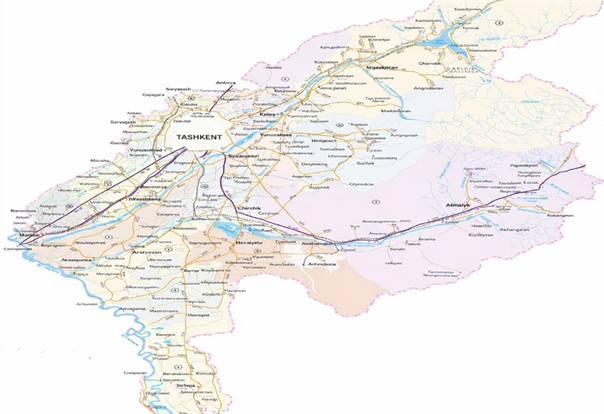
In 2022, 212.5 billion soums were allocated for the repair of 750.9 km of internal roads. During the first 9 months of 2022, 442.9 kilometers of internal roads were repaired (59 % of the plan) and 116 billion soums were spent.
In the Tashkent region, there are a total of 14,288 kilometers of roads, of which 3,955 kilometers are public roads, and 10,202 kilometers are internal roads, including streets in cities and rural settlements. Of these, 5,262 km (39.3 %) are in need of repair. In 2022, it was planned to reconstruct and repair 1063.8 km of roads and internal streets in the Tashkent region at a cost of 1173.8 billion soums. During 2022, 755.6 km of roads and internal streets were repaired in the region using 778.1 billion soums, completing 71 % of the planned work [2].
Roads of national significance extend for 1241 km, of which, as of January 1, 2023, 1105.4 km are in satisfactory condition, 78.4 km require repair, and 57.2 km are currently undergoing repairs. Roads of local significance cover 2324 km, of which, as of January 1, 2023, 2276.9 km are in satisfactory condition, 33 km require repair, and 14.1 km are currently undergoing repairs.
The significant decline in transport and operational indicators of highways in recent years has led to an increase in transportation costs and a rise in shipping expenses [3].
The number of vehicles on the roads of the Republic of Uzbekistan is increasing by 21 % annually [4]. The road network of the Republic of Uzbekistan was designed and constructed 20-30 years ago [5], without taking into account the loads from present-day vehicles. The problem lies in the fact that the axle loads from vehicles on the roads are continuously increasing, however, sufficient financial and technical resources are not being allocated to reinforce the road infrastructure.
2. Problem formulation
Cracks in road pavements are considered the most common type of pavement defect [6-9]. The main causes of crack formation are the impact of vehicle loads and natural-climatic factors on the pavement, both individually and in combination [10]. Cracks primarily occur when the effect of tensile forces on the road surface or pavement exceeds the ultimate strength limit. Cracks in road surfaces become visually detectable when their width is 0.2-1 mm or greater and their length is at least 10 cm. Smaller cracks and microcracks cannot be visually identified. The majority of cracks develop under the influence of natural and climatic factors and loads, which leads to fatigue of the road surface.
The road surfaces in Tashkent region are primarily constructed using asphalt concrete. Diagnostic assessment of the pavement’s external condition reveals the formation of transverse, longitudinal, and interconnected crack networks on the surface. During the structural diagnosis of the pavement, we observe that 67 % of the examined areas are affected by cracking.
3. Materials and methods
Crack surveys were conducted visually. Crack type, width, depth, and propagation pattern were recorded for each site. Environmental and traffic parameters such as temperature, humidity, and load repetitions were monitored using portable sensors and traffic counters. Core samples obtained from the research sites reveal that the bitumen, which serves as the primary binder in the asphalt concrete mixture, has exceeded its service life and no longer performs its binding function. As a result, numerous cracks have appeared in the pavement (Fig. 2).
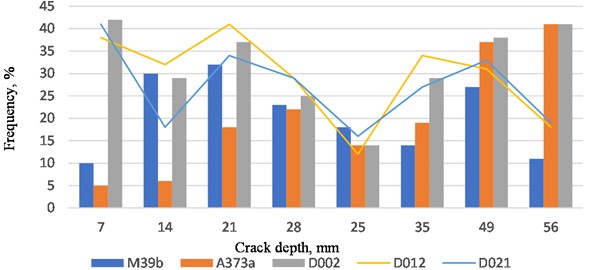
As a result, the service life of bituminous and bitumen-mineral coatings is decreasing from 15-17 years to 2-5 years. This, in turn, leads to an increase in maintenance and repair costs. Fig. 3 presents the results showing the depth of cracks and their frequency of occurrence.
Field surveys were carried out to identify the type, extent, and severity of cracks on the pavement surface. Visual inspection and photographic documentation were used to record the geometry and distribution of cracks, including longitudinal, transverse, and alligator types. Crack mapping was performed by dividing each section into grids to determine crack density and length. Traffic data such as average daily traffic and axle load distribution were collected from transport authorities, while climatic factors including temperature variation, precipitation, and freeze-thaw cycles were recorded from nearby meteorological stations.
Fig. 2Research results. Photos were taken by Mamatkulov Muzaffar in September 2023, in highways M39b and A373a
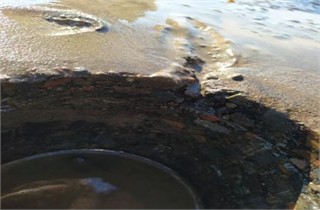
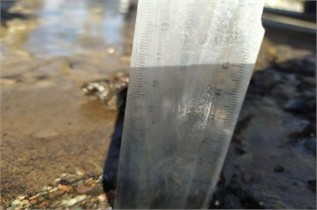
Fig. 3Distribution of crack depths
The collected information was analyzed to establish relationships between pavement composition, traffic loading, and environmental influences. Crack density and severity indices were calculated according to standard road condition evaluation methods, and statistical regression analysis was used to identify the most significant variables affecting crack initiation and propagation.
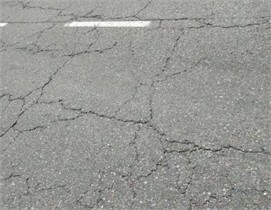
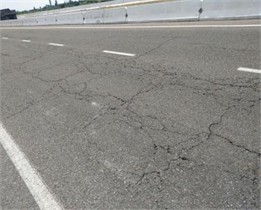
Fig. 4Research results. Photos were taken by Mamatkulov Muzaffar in September 2023, in highways D002, D012 and D021
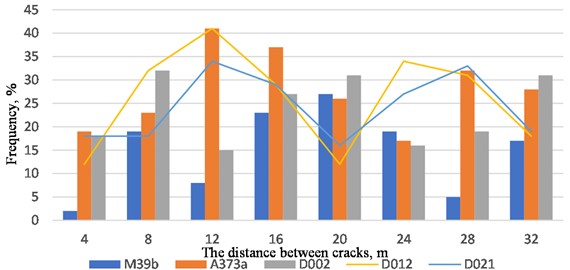
The distance between cracks, or crack spacing, is another key parameter in assessing the condition and performance of pavement structures. It indicates how frequently cracks appear along a given length of road and helps determine the dominant type of pavement distress. Crack spacing was measured in the field using measuring tapes or laser distance meters along both the longitudinal and transverse directions of the pavement. According to standard evaluation procedures, closely spaced cracks (less than 0.5 m apart) usually signify advanced fatigue or thermal cracking, suggesting that the pavement has lost its flexibility and load-bearing capacity. Medium spacing (0.5-2.0 m) typically reflects intermediate stages of distress, often linked to repeated traffic loading or partial bond loss between layers. Wide spacing (more than 2.0 m) generally occurs in pavements with better structural integrity or in early stages of thermal movement. In this study, the average crack spacing was recorded for each observation site, and results showed that spacing tends to decrease with increasing traffic loads, temperature variation, and pavement age. Sections subjected to frequent heavy vehicle movements exhibited clusters of closely spaced cracks, confirming that cumulative loading accelerates fatigue damage and reduces crack intervals over time (Fig. 5).
Fig. 5The distance between cracks, m
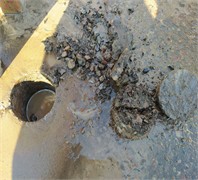
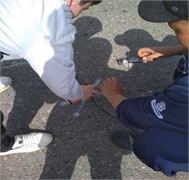
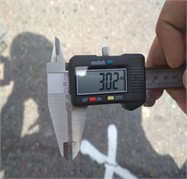
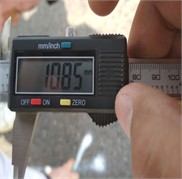
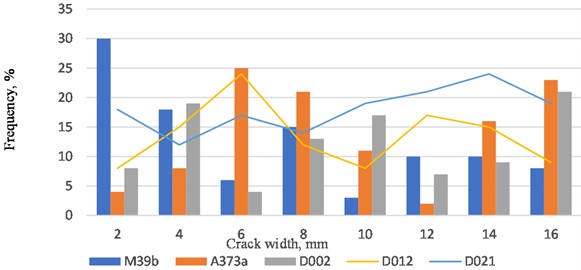
The width of cracks is one of the most important indicators of pavement deterioration and structural performance. It reflects both the severity of the damage and the stage of crack development. In field observations, crack width was measured using a crack gauge or digital caliper with a precision of 0.1 mm. Based on international pavement condition standards (such as AASHTO and ASTM D6433), cracks were classified into three categories: narrow cracks (less than 3 mm), medium cracks (3-6 mm), and wide cracks (greater than 6 mm). Narrow cracks typically indicate the early stages of fatigue or thermal shrinkage and may not yet affect the waterproofing capacity of the surface. Medium-width cracks suggest the progression of fatigue under repeated traffic loading, allowing moisture infiltration and oxidation of the asphalt binder. Wide cracks represent advanced distress, often accompanied by raveling, block separation, and structural weakening of the pavement layers. In this study, the average crack width was determined for each section, and its correlation with traffic intensity, pavement age, and climatic factors was analyzed (Fig. 6).
Fig. 6Research results. Photos were taken by Mamatkulov Muzaffar in October 2023, in highway D002 and D021
A consistent increase in crack width was observed in areas with high temperature fluctuations and heavy axle loads, confirming that both thermal stress and mechanical deformation contribute significantly to crack widening and propagation (Fig. 7).
As can be seen from the above, the formation of cracks in asphalt concrete pavements is significantly influenced not only by the transport and operational characteristics of roads, but also by natural and climatic factors, as well as the physical and mechanical properties of the materials.
Fig. 7Frequency of crack width recurrence
4. Results and discussion
Preventive measures such as timely surface sealing, overlay application, and improved material selection can extend pavement service life and delay the onset of structural cracking.
Fig. 8Dependence of crack width on crack depth on the M39b highway
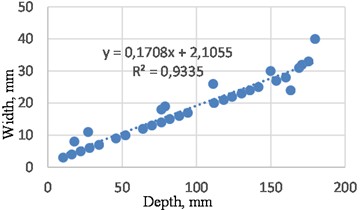
Fig. 9Values for the dependence of crack length on the distance between cracks on the M39b highway
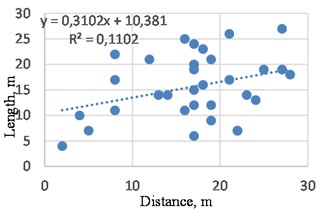
Fig. 10Dependence of crack width on crack depth on the A373a highway
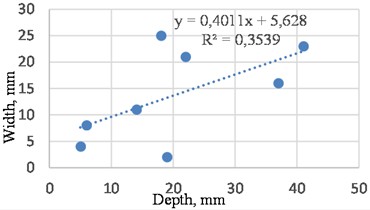
Fig. 11Values for the dependence of crack length on the distance between cracks on the A373a highway
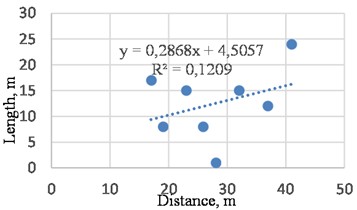
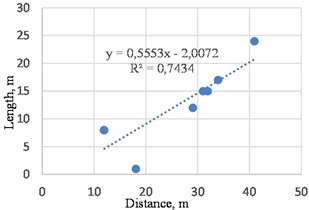
The research results were based on parameters such as the distance between cracks, crack depth, crack width. The widest cracks were found on the M39b highway, ranging from 3 to 30 mm in width. In terms of crack depth, the deepest cracks were observed on the D002 highway, ranging from 14 to 42 mm. Regarding the distance between cracks, the most widely distributed cracks were found on the A373a highway, reaching up to 41 m apart. The longest crack in terms of length was identified on the D021 highway, extending up to 30 m. The study also established correlations between these various crack parameters (Fig. 8-15).
Fig. 12Dependence of crack width on crack depth on the A373a highway
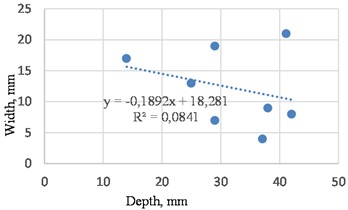
Fig. 13Values for the dependence of crack length on the distance between cracks on the A373a highway
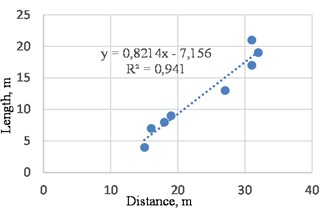
Fig. 14Dependence of crack width on crack depth on the A373a highway
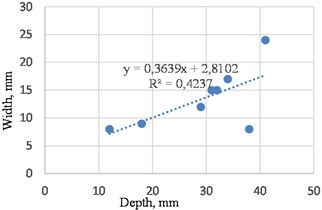
Fig. 15Values for the dependence of crack length on the distance between cracks on the A373a highway
5. Conclusions
The study of road crack formation under real field conditions has shown that cracking is a complex phenomenon influenced by material properties, structural design, environmental factors, and traffic loading. The analysis confirmed that the most frequent types of damage are longitudinal, transverse, and alligator cracks, which develop progressively with pavement age and traffic stress.
Crack width and spacing were identified as key indicators of pavement deterioration. narrow cracks represent early stages of fatigue or thermal movement, while wider and closely spaced cracks signify advanced structural distress. The results demonstrated that pavements exposed to high temperature variations and heavy axle loads experience faster crack propagation and reduced service life.
It was also observed that pavements constructed with high-quality aggregates, proper compaction, and modified binders show greater resistance to cracking compared with those built using conventional materials. regular maintenance, sealing of surface cracks, and timely overlay applications significantly reduce moisture penetration and delay structural damage.
Based on the experimental research conducted, the following conclusions were drawn:
1) The research results revealed that traffic intensity on roads causes pavement deterioration, which consequently leads to a decrease in the strength of the road structure. The relationships between pavement strength and the number of cracks were determined.
2) The patterns of pavement deformation's influence on crack formation were investigated.
3) At the research sites, work was carried out to measure the depth, width, length, and distance between cracks. The relationships between these parameters were established.
Overall, the research highlights the importance of continuous pavement monitoring, proper material selection, and preventive maintenance as essential strategies for improving road durability and ensuring long-term serviceability of highway infrastructure.
The extended investigation revealed that longitudinal cracks and alligator (fatigue) cracks are the most frequently observed forms of pavement distress. These crack types were predominantly concentrated in wheel path areas, indicating that repetitive loading from passing vehicles is one of the leading contributors to structural deterioration. The study also found that crack width tends to increase as pavements age, and this widening is further accelerated by fluctuations in temperature, particularly in regions that experience large seasonal differences. In contrast, heavily trafficked roads typically exhibited a reduced spacing between cracks, suggesting that intense and continuous loading accelerates the formation of closely spaced cracking patterns.
Overall, the findings underscore the critical importance of selecting high-quality pavement materials, designing road structures with sufficient strength and durability, and implementing timely and effective maintenance interventions. By addressing these factors, it becomes possible to reduce the rate of crack propagation, improve pavement resilience, and significantly extend the service life of road infrastructure. This research therefore provides valuable insights for engineers, planners, and policymakers seeking to enhance the long-term performance and reliability of highway and urban road networks.
References
-
“Main indicators of transport operation,” Tashkent, statistical bulletin of the state committee of the Republic of Uzbekistan, 2016.
-
“How many kilometers of roads will be built and repaired in Tashkent region this year?,” 2022, https://yuz.uz/uz/news/bu-yil-toshkent-viloyatida-necha-kilometr-yol-quriladi-va-tamirlanadi.
-
I. S. Sadikov, “Forecasting and management of transport and operational qualities of highways,” Adolat, Tashkent, 2005.
-
Ministry of Economic Development and Poverty Reduction of the Republic of Uzbekistan, 2019, https://regulation.gov.uz/ru/document/4087.
-
“Highways (Design),” SNK 2.05.02-95, 1995.
-
J.-S. Lee, “Digital image enhancement and noise filtering by use of local statistics,” IEEE Transactions on Pattern Analysis and Machine Intelligence, Vol. PAMI-2, No. 2, pp. 165–168, Mar. 1980, https://doi.org/10.1109/tpami.1980.4766994
-
R. W. Culley, “Temperature cracking of flexible pavements in Saskatchewan,” Saskatchewan Department of Highways, Technical Report 3, Jun. 1966.
-
I. Deme, “Ste. Anne test road, two years progress report of pavement cracking,” Manitoba Department of Transport, Internal Report 69-1, 1969.
-
A. Cubero-Fernandez, F. J. Rodriguez-Lozano, R. Villatoro, J. Olivares, and J. M. Palomares, “Efficient pavement crack detection and classification,” EURASIP Journal on Image and Video Processing, Vol. 2017, No. 1, Jun. 2017, https://doi.org/10.1186/s13640-017-0187-0
-
D. J. Kirkner and W. Shen, “Numerical simulation of thermal cracking of asphalt pavements,” in Transportation Research Board Preprint, pp. 1–8, 1999.
About this article

The authors have not disclosed any funding.
The datasets generated during and/or analyzed during the current study are available from the corresponding author on reasonable request.
The authors declare that they have no conflict of interest.

