Abstract
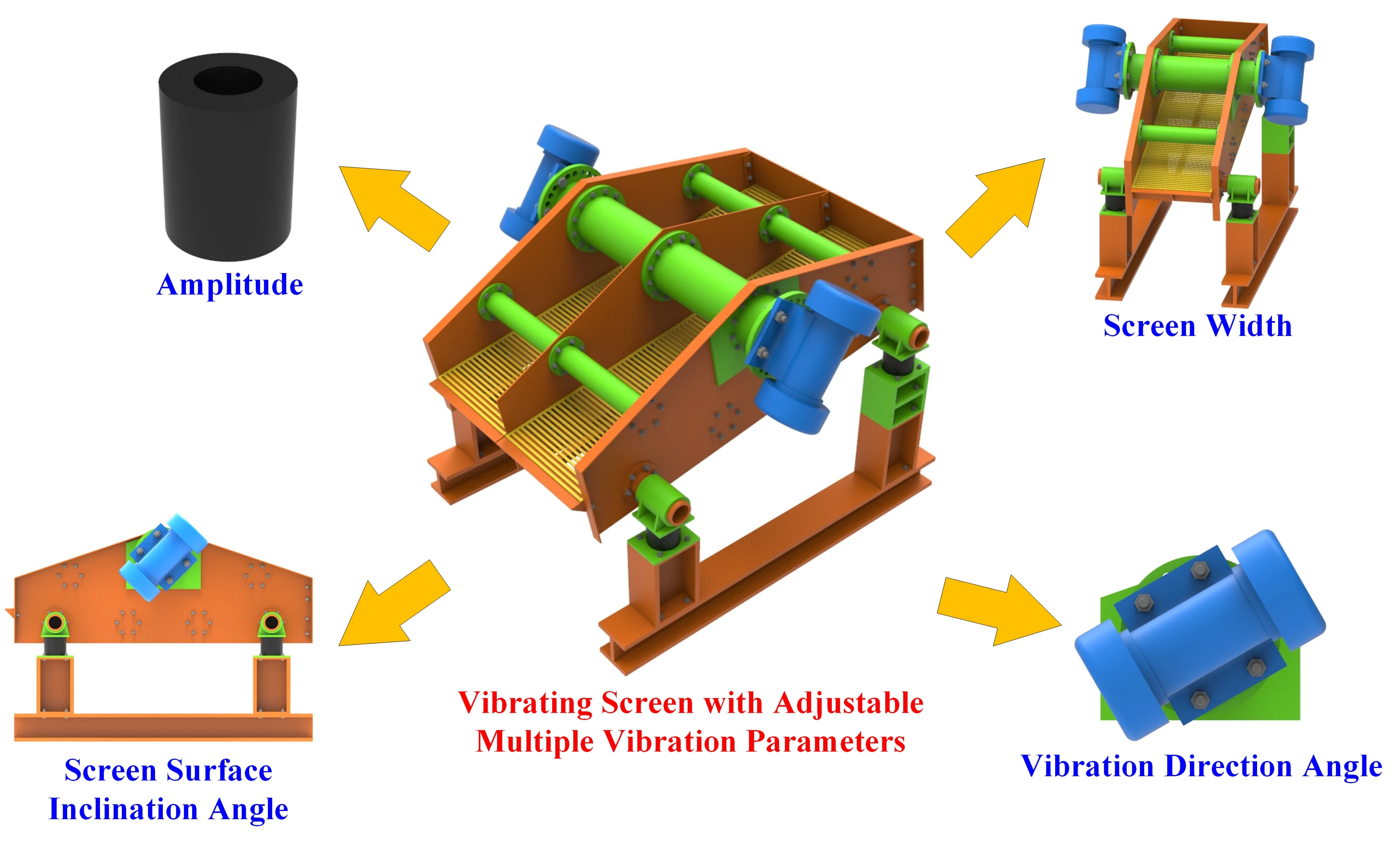
In response to the drawbacks of existing vibrating screens, such as fixed vibration parameters, lack of adjustability, and poor adaptability, this study proposes a new type of vibrating screen with multiple adjustable vibration parameters. By modifying the dimensions of the rubber springs, the amplitude can be adjusted; by increasing or decreasing the number of components such as side plates, the screening width can be adjusted; by adding spacer blocks to the frame, the inclination angle of the screen surface can be adjusted; and by altering the installation position of the vibration motors, the vibration direction angle can be adjusted. This new vibrating screen features a simple and reliable structure, is capable of adapting to different working conditions, and provides a technical reference for innovative designs of vibrating screens.
Highlights
- A new vibrating screen with adjustable multiple vibration parameters was proposed.
- The amplitude, screen width, screen surface inclination angle, and vibration direction angle of the vibrating screen are adjustable.
- A dynamic analysis of the new vibrating screen was carried out, and the results prove that the vibrating screen is feasible.
1. Introduction
Vibratory screening machinery is now widely used across various industrial sectors, including coal, iron ore, steel, chemicals, railways, cement, non-ferrous metal mining, transportation, and water conservancy and electric power. In recent years, with the continuous growth of China’s coal demand and production, the country has increasingly focused on the environmental challenges brought about by the large-scale utilization of coal resources [1]. A policy direction has been set to actively promote clean coal technology as part of the clean energy initiative, aiming to achieve energy conservation, emission reduction, environmental protection, and enhanced coal utilization efficiency, while steadily advancing efforts toward carbon peaking and carbon neutrality [2].
As critical mechanical equipment, vibrating screens play a significant role in coal preparation plants. By cleaning raw coal to remove impurities and produce clean coal, they improve product quality and economic efficiency [3]. Vibrating screens can also classify and screen materials to meet different production requirements, thereby enhancing the utilization rate of coal. Furthermore, with the advancement of highly mechanized and intelligent coal preparation plants, vibrating screens are tasked with important production functions such as coal dewatering and medium removal [4]. The advantages of vibrating screens are numerous – they feature simple structure, strong processing capability, and high reliability, securing a pivotal position among screening equipment [5].
Amplitude, screen width, screen surface inclination angle, and vibration direction angle are key parameters that influence the performance of vibrating screens. Selecting suitable values for these parameters according to different working conditions and material characteristics can significantly improve the processing capacity and screening efficiency of vibrating screens. Rational selection of vibration parameters is therefore crucial for enhancing the production capacity of coal preparation plants [6].
In the current design and application of vibrating screens, most are tailored for single working conditions, with fixed and unadjustable vibration parameters such as amplitude, screen width, screen surface inclination angle, and vibration direction angle. When the characteristics of the screened materials change, the vibrating screen often needs to be redesigned, remanufactured, and reinstalled to adapt to new conditions. This not only substantially increases production costs but also reduces operational efficiency.
2. Model establishment
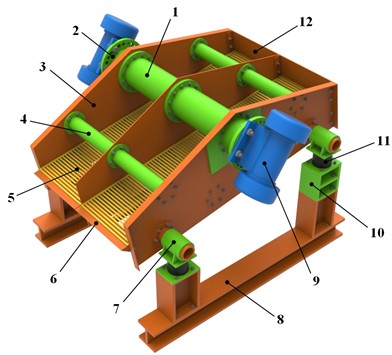
The new vibrating screen with multiple adjustable vibration parameters is illustrated in Fig. 1. Its overall structure primarily includes the main screen body, screen surface, frame, spacer blocks, rubber springs, spring supports, and vibration motors. The main screen body consists of side plates, support pipe beams, discharge outlets, spring support pipe beams, motor mounts, rear baffle plates, and main beams. The main beams, support pipe beams, discharge outlets, rear baffle plates, motor mounts, and spring supports are bolted to the side plates. Two vibration motors are mounted on the motor mounts located on both sides. The main screen body is connected to the frame via rubber springs, while spacer blocks are bolted to the frame. The frame itself is anchored to the ground using foundation bolts.
Fig. 1Overall structure of the new vibrating screen: 1 – main beam; 2 – motor mount; 3 – side plate; 4 – reinforcing pipe beam; 5 – screen surface; 6 – discharge outlet; 7 – spring support; 8 – frame; 9 – vibration motor; 10 – spacer block; 11 – rubber spring; 12 – rear baffle
3. Adjustment method of vibration parameters
3.1. Amplitude
Amplitude refers to the maximum displacement of the vibrating screen body relative to its equilibrium position, providing the energy for material to bounce. The larger the amplitude, the higher the material is thrown and the farther it travels forward; conversely, the smaller the amplitude, the lower the material is thrown and the shorter its forward travel distance. Large amplitudes are suitable for coarse particles, high-density, and viscous or wet materials, helping to overcome resistance and prevent clogging. Small amplitudes are suitable for fine particles, fragile materials, and dry materials, preventing excessive breakage and dust generation. Amplitude can be adjusted by changing the stiffness of the springs: the greater the stiffness, the smaller the amplitude.
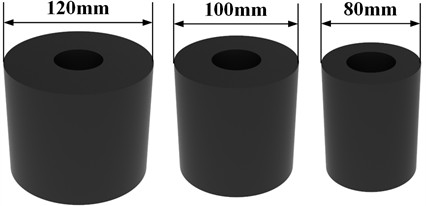
The new vibrating screen utilizes rubber springs as vibration isolation elements. Compared to metal springs, rubber springs offer advantages such as lower noise, reduced fluctuations during resonance, and more stable operation. Furthermore, their shape and stiffness can be adjusted according to actual working conditions, facilitating modular design. In this study, the rubber springs are designed modularly. Without altering their shape, changes in spring diameter allow springs of different stiffness to be obtained, enabling amplitude adjustment. This design offers easy installation, simple operation, good adaptability, and a wide adjustable range for amplitude.
Fig. 2Rubber springs selected for different amplitudes (3 mm; 4 mm; 5 mm)
3.2. Screening width
Screening width refers to the effective working width of the vibrating screen surface, which directly influences the screen's processing capacity. A larger screening width enhances processing capability, as a wider screen surface can accommodate more material, thereby increasing the throughput per unit time. However, excessive width may lead to uneven material distribution on the screen surface, causing localized accumulation and reducing screening efficiency.
Fig. 3Methods for adjusting screen width (Single width; Double width)
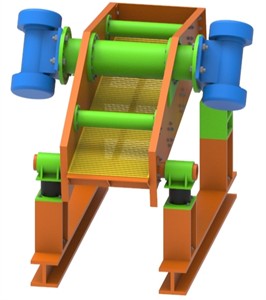
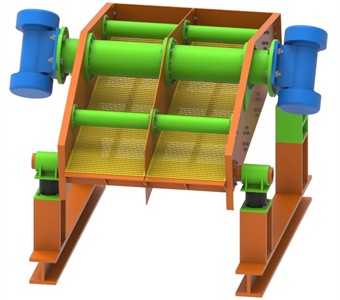
In the new vibrating screen, side plates are connected via bolted components such as support pipe beams, main beams, discharge outlets, and rear baffle plates. By adding or removing side plates along with their connected modules – including support pipe beams, main beams, discharge outlets, and rear baffle plates – the overall width of the main screen body can be adjusted. This adjustment method is simple, reliable, and effectively improves the processing capacity of the vibrating screen. Compared to increasing the number of screens, this approach significantly reduces production costs.
3.3. Screen surface inclination angle
Screen surface inclination angle refers to the angle between the vibrating screen surface and the horizontal plane. This angle significantly affects both the screening efficiency and the movement speed of the material. A larger inclination angle shortens the material's residence time on the screen surface, reduces the number of times material passes through the screen openings, and may lower screening efficiency. Conversely, a smaller inclination angle increases the material's residence time, allowing more material to pass through the openings, thereby helping to improve screening efficiency.
Fig. 4Methods for adjusting screen surface inclination angle (0°; 5°; 10°)
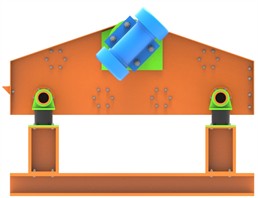
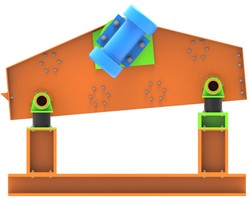
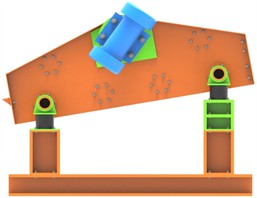
In the new vibrating screen, both the frame and the spacer blocks are equipped with four bolts each. The frame and spacer blocks, as well as spacer blocks themselves, are connected via these four bolts. By installing spacer blocks on the rear section of the frame, the height of the rear frame can be raised, altering the front-to-back height difference of the main screen body and thus adjusting the screen surface inclination angle. Adding one spacer block can achieve an inclination angle of 5°, while adding two spacer blocks can achieve an inclination angle of 10°, meeting the common requirements for inclination adjustment. The installation and removal of the spacer blocks are simple and convenient, and their fastening method is secure and reliable, capable of withstanding significant impact loads.
3.4. Vibration direction angle
Vibration direction angle refers to the angle between the direction of the excitation force and the vibrating screen surface, and it is a core parameter affecting the performance of the vibrating screen. The selection of the vibration direction angle depends on the material characteristics of the feedstock. A larger vibration direction angle results in higher material throw on the screen surface, slower material movement speed, longer material residence time, and more opportunities for screening, making it more suitable for processing difficult-to-screen materials or fine particle classification. Conversely, a smaller vibration direction angle leads to farther material throw, faster material movement speed, and quicker screening processes, making it suitable for easy-to-screen materials or high-throughput applications.
Fig. 5Methods for adjusting Vibration direction (30°; 45°; 60°)
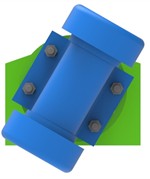
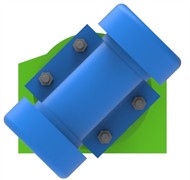
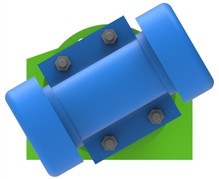
In the new vibrating screen, the bolt holes on the motor mounts are arranged in a circular pattern, with an angle of 15° between adjacent bolt holes, totaling 24 bolt holes. The vibration motors are secured to the motor mounts via bolts inserted into these holes. By adjusting the installation angle of the vibration motors and fixing them to different bolt holes, the vibration direction angle can be effectively regulated. This adjustment method is simple, reliable, and user-friendly, as the installation and removal of the vibration motors are straightforward and require low technical expertise. The vibration motors are firmly secured using bolts and bolt holes, ensuring a robust and stable connection. During operation, the position of the vibration motors remains unchanged, keeping the vibration direction angle constant and allowing the main screen body to operate more smoothly.
4. Dynamic analysis
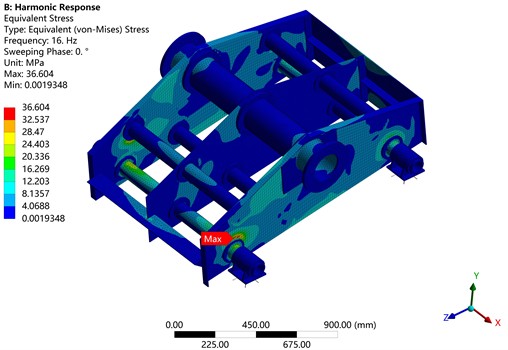
Using ANSYS Workbench, a dynamic analysis was performed on this vibrating screen with adjustable multiple vibration parameters, The resulting stress distribution of the vibrating screen is shown in Fig. 6. The maximum stress on the vibrating screen is 36.604 MPa, located at the connection between the side plate and the spring support. The overall stress on the screen body is approximately 15 MPa, which is far below the yield limit of Q345 steel (345 MPa), the material used for the vibrating screen. The safety factor exceeds 20, indicating that the novel vibrating screen with adjustable multiple vibration parameters possesses good structural strength, is structurally safe and reliable, and can meet the operational requirements.
Fig. 6Stress distribution contour of the vibrating screen
5. Conclusions
This study proposes a new type of vibrating screen with adjustable multiple vibration parameters, which enables simultaneous adjustment of vibration parameters such as amplitude, screen width, screen surface inclination angle, and vibration direction angle. By modifying the dimensions of the rubber springs, the amplitude of the main screen body can be adjusted, thereby enabling amplitude regulation. By increasing or decreasing the number of components such as side plates, support pipe beams, main beams, discharge outlets, and rear baffle plates, the width of the vibrating screen can be altered, achieving screen width adjustment. By adding spacer blocks to the rear frame, the height difference between the front and rear parts of the main screen body can be changed, enabling adjustment of the screen surface inclination angle. By altering the fixing position of the bolts connecting the vibration motors to the motor mounts, the angle between the vibration direction and the screen surface can be modified, thereby achieving adjustment of the vibration direction angle. This new vibrating screen can adapt to different working conditions, ensuring excellent processing capacity and screening efficiency. Its operation is simple and reliable, providing technical reference and design insights for the modular design of vibrating screens.
References
-
Z. Yue-Min, L. Chu-Sheng, H. Xiao-Mei, Z. Cheng-Yong, W. Yi-Bin, and R. Zi-Ting, “Dynamic design theory and application of large vibrating screen,” Procedia Earth and Planetary Science, Vol. 1, No. 1, pp. 776–784, Sep. 2009, https://doi.org/10.1016/j.proeps.2009.09.123
-
L. Peng et al., “A review on the advanced design techniques and methods of vibrating screen for coal preparation,” Powder Technology, Vol. 347, pp. 136–147, Apr. 2019, https://doi.org/10.1016/j.powtec.2019.02.047
-
L. Huang et al., “A review of the research on equal thickness screening of material clusters,” Powder Technology, Vol. 467, p. 121531, Jan. 2026, https://doi.org/10.1016/j.powtec.2025.121531
-
S. Zhou, L. Meng, Y. Du, and Z. Wang, “Dynamic analysis of a new type of linear vibrating screen with adjustable vibration direction angle,” Vibroengineering Procedia, Vol. 58, pp. 8–13, May 2025, https://doi.org/10.21595/vp.2025.24791
-
Z. Wang, C. Liu, J. Wu, H. Jiang, B. Song, and Y. Zhao, “A novel high-strength large vibrating screen with duplex statically indeterminate mesh beam structure,” Journal of Vibroengineering, Vol. 19, No. 8, pp. 5719–5734, Dec. 2017, https://doi.org/10.21595/jve.2017.18319
-
S. Li et al., “Study on nonlinear dynamic characteristics of DDVFFS considering the action of spring and particle material,” Nonlinear Dynamics, Vol. 114, No. 2, Jan. 2026, https://doi.org/10.1007/s11071-025-11928-0
About this article

The research work is financially supported by the Natural Science Foundation of Shandong Province (ZR2023ME211), and College Students Innovation and Entrepreneurship Training Program of Linyi University (X2025104520623), Technology-based Small and Medium-sized Enterprises Innovation Capacity Enhancement Project of Shandong Province (2023TSGC0387), and Key Research and Development Program of Linyi City (2024013).
The datasets generated during and/or analyzed during the current study are available from the corresponding author on reasonable request.
The authors declare that they have no conflict of interest.

