Abstract
This study establishes quantitative criteria for evaluating the transition of dispersed particles to a nano-state in polymer composite systems. We demonstrate that the critical nanoparticle size 230–1/2 [nm], where is the Debye temperature, provides an adequate assessment of nanoscale characteristics across diverse material classes including metals, halides, and AIIIBV/AIIBVI semiconductors. Experimental validation through thermally stimulated current spectroscopy and electron paramagnetic resonance reveals that particles below this dimensional threshold exhibit fundamentally different energy parameters, characterized by uncompensated charge states with extended relaxation times. Morphological analysis confirms that technological treatments – thermal (373-473 K), laser ( 1.06 μm, 2×10⁻⁶ s pulse), and mechanochemical activation – substantially modify surface layer morphology, increasing the content of nanoscale constituents. The proposed dimensional criterion enables rational selection of modifiers for polymer-based composite materials with applications in vibration-damping components for automotive engineering. The validity of the proposed criterion is further confirmed by the analysis of thermal transport mechanisms in the formed interfacial layers. It is demonstrated that particles meeting the threshold promote the development of a three-dimensional physical bond network at the polymer-filler interface. This interfacial structuring not only enhances thermal conductivity but also facilitates the formation of viscoelastic layers with optimized mechanical energy dissipation ( 0.1-0.3), which is essential for vibration-damping components in mechanical systems.
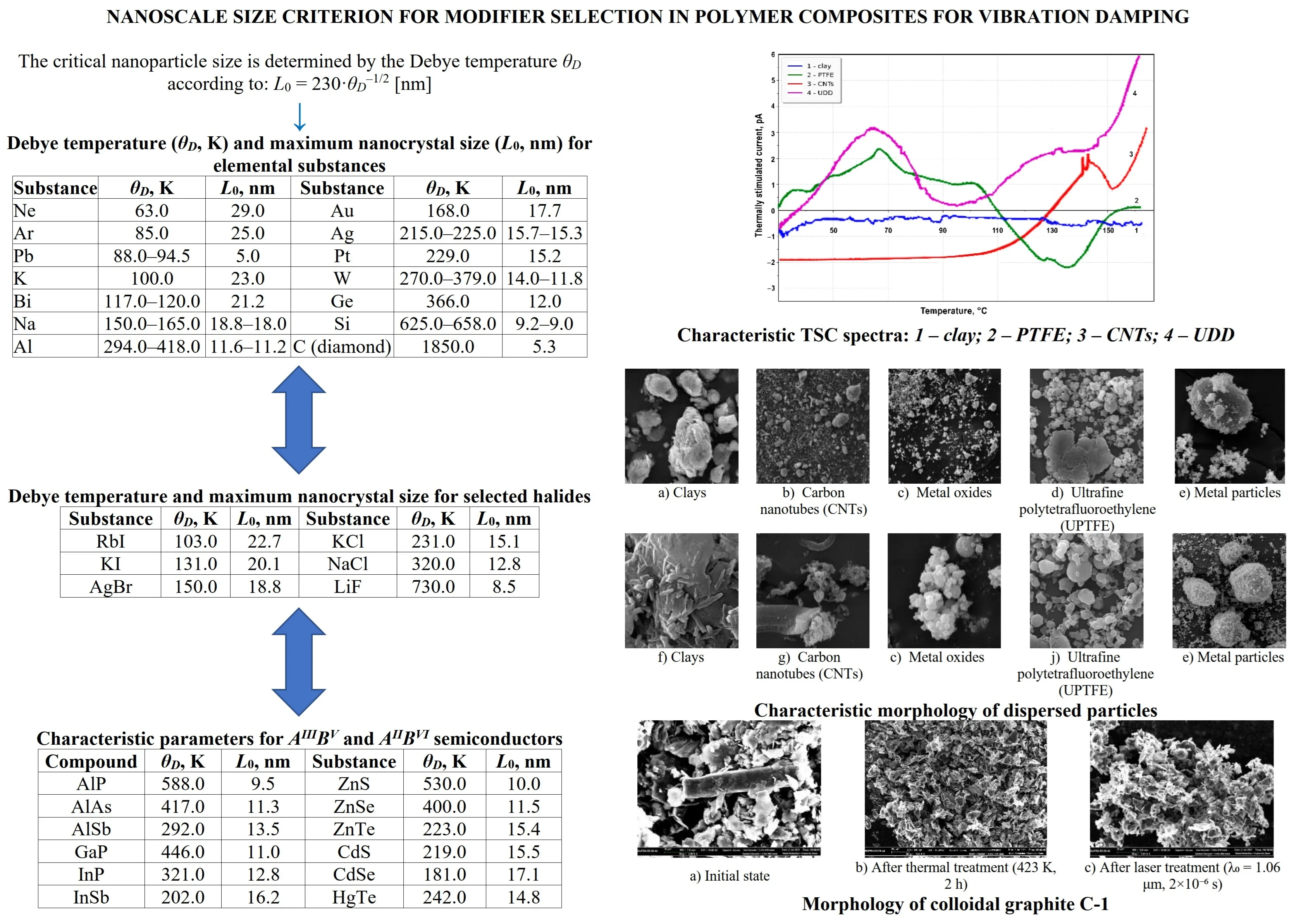
Highlights
- This study addresses this gap by establishing and validating a quantitative criterion for the nano-state transition, enabling the targeted selection of modifiers for polymer-based composite materials intended for vibration-damping applications in automotive and mechanical engineering.
- Nanosized components were produced through mechanical grinding and thermal treatment at temperatures ranging from 400 to 1200 °C.
- The data demonstrate systematic variation in L0 with composition, confirming that particle size, composition, habitus, and structure collectively influence the modifying effect through changes in energy state.
- SEM and AFM analysis revealed characteristic surface layer morphologies incorporating nanoscale components across all particle classes.
- The proposed criterion has direct applications in the development of vibration-damping materials for automotive engineering.
1. Introduction
Modern mechanical engineering increasingly relies on functional polymer nanocomposites for critical components in machinery, transportation systems, and industrial equipment [1], [2]. These materials enable innovative engineering solutions that achieve enhanced performance parameters, particularly in applications requiring controlled vibration damping and energy dissipation [3], [4].
The performance characteristics of nanocomposites based on high-molecular-weight matrices are largely determined by the intensity of physicochemical processes at the matrix-modifier interface. These processes depend fundamentally on a unique state of nanoparticles, referred to as the nano-state phenomenon [1], [3-6]. Despite significant contributions from Metsik M. S., Liopo V. A., Bragg W., Claringbull G., Belov N. A., and their colleagues, who analyzed the structure and energy state of particles derived from natural raw materials [1-7], a systematic methodological approach to quantifying the nano-state transition remains underdeveloped.
The achievement of the nano-state phenomenon by a composite component decisively influences structural parameters that govern stress-strain, tribological, adhesive, thermophysical, and functional characteristics of end-use products [2-6], [8], [9]. However, the absence of rigorous dimensional criteria for predicting nano-state behavior impedes rational materials design [16-19].
Unlike previous empirical size ranges (1-100 nm), this study introduces a physically grounded nanoscale criterion based on the Debye temperature of the modifier for predicting the nano-state transition of dispersed particles in polymer composites.
This study addresses this gap by establishing and validating a quantitative criterion for the nano-state transition, enabling the targeted selection of modifiers for polymer-based composite materials intended for vibration-damping applications in automotive and mechanical engineering.
2. Materials and methods
2.1. Materials
The primary objects of this study were nanodispersed particles of the following classes:
1) Carbon-based: graphite, ultradispersed diamonds (UDDs), carbon nanotubes (CNTs), shungite, carbon fibers (CFs).
2) Metal-containing: oxides and salts of organic acids.
3) Silicon-containing: mica, tripoli, opal, clays.
4) Fluorinated compounds: ultra-dispersed polytetrafluoroethylene (UPTFE).
All materials were sourced from industrial enterprises in Belarus and the Russian Federation. Nanosized components were produced through mechanical grinding and thermal treatment at temperatures ranging from 400 to 1200 °C.
2.2. Characterization techniques
The structure and properties of dispersed particles were investigated using the following methods:
– Infrared (IR) spectroscopy: Specord instrument, 400-4000 cm–1 range.
– Electron paramagnetic resonance (EPR) spectroscopy: Bruker spectrometer, X-band (9.5 GHz).
– X-ray diffraction (XRD) analysis: DRON 3.0 diffractometer, CuKα radiation.
– Differential thermal analysis (DTA): Q-1500 derivatograph, 10 K/min heating rate.
– Scanning electron microscopy (SEM): ISM-50A, Nanolab-7, 15-30 kV accelerating voltage.
– Atomic force microscopy (AFM): NT-206, contact mode.
The energy state of nanosized modifiers was assessed using thermally stimulated current (TSC) spectroscopy over the temperature range 300-600 K at a heating rate of 5 K/min.
2.3. Technological treatments
Modifier particles were subjected to:
– Thermal treatment: 373–473 K for 1-3 hours in air atmosphere.
– Laser treatment: 1.06 μm, pulse duration 2×10⁻⁶ s, energy density 10-50 J/cm2.
– Mechanochemical activation: Planetary ball mill, 300-500 rpm, 0.5-2 hours.
3. Results and discussion
3.1. Theoretical foundation of the nano-state criterion
For any substance, there exists a critical size L₀ below which characteristic parameters are influenced by the size factor. Following the concept developed by Professor V. A. Liopo [2-6], [8], [9], the critical nanoparticle size is determined by the Debye temperature according to: 230·–1/2 [nm], where is expressed in Kelvin. When particle size , the particle exhibits bulk phase parameters with no size effects; when , the substance behaves as a nano-object with properties differing from the bulk phase.
Table 1 presents the characteristic temperatures and maximum nanocrystal sizes for elemental substances.
Analysis of values reveals significant variation across different materials, ranging from 29.0 nm for neon to 5.3 nm for diamond. These values differ substantially from the commonly accepted arbitrary range of 1-100 nm, emphasizing the need for material-specific criteria.
Table 1Debye temperature (θD, K) and maximum nanocrystal size (L0, nm) for elemental substances
Substance | , K | , nm | Substance | , K | , nm |
Ne | 63.0 | 29.0 | Au | 168.0 | 17.7 |
Ar | 85.0 | 25.0 | Ag | 215.0-225.0 | 15.7-15.3 |
Pb | 88.0-94.5 | 5.0 | Pt | 229.0 | 15.2 |
K | 100.0 | 23.0 | W | 270.0-379.0 | 14.0-11.8 |
Bi | 117.0-120.0 | 21.2 | Ge | 366.0 | 12.0 |
Na | 150.0-165.0 | 18.8-18.0 | Si | 625.0-658.0 | 9.2-9.0 |
Al | 294.0-418.0 | 11.6-11.2 | C (diamond) | 1850.0 | 5.3 |
3.2. Validation across material classes
The formula’s adequacy was verified for halide compounds (Table 2) and semiconductor materials (Table 3).
Table 2Debye temperature and maximum nanocrystal size for selected halides
Substance | , K | , nm | Substance | , K | , nm |
RbI | 103.0 | 22.7 | KCl | 231.0 | 15.1 |
KI | 131.0 | 20.1 | NaCl | 320.0 | 12.8 |
AgBr | 150.0 | 18.8 | LiF | 730.0 | 8.5 |
Table 3Characteristic parameters for AIIIBV and AIIBVI semiconductors
Compound | , K | , nm | Substance | , K | , nm |
AlP | 588.0 | 9.5 | ZnS | 530.0 | 10.0 |
AlAs | 417.0 | 11.3 | ZnSe | 400.0 | 11.5 |
AlSb | 292.0 | 13.5 | ZnTe | 223.0 | 15.4 |
GaP | 446.0 | 11.0 | CdS | 219.0 | 15.5 |
InP | 321.0 | 12.8 | CdSe | 181.0 | 17.1 |
InSb | 202.0 | 16.2 | HgTe | 242.0 | 14.8 |
The data demonstrate systematic variation in with composition, confirming that particle size, composition, habitus, and structure collectively influence the modifying effect through changes in energy state.
3.3. Morphological evidence of nano-state formation
SEM and AFM analysis revealed characteristic surface layer morphologies incorporating nanoscale components across all particle classes (Fig. 1).
Fig. 1Characteristic morphology of dispersed particles
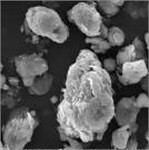
a) Clays
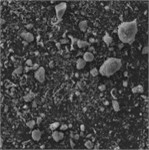
b) Carbon nanotubes (CNTs)
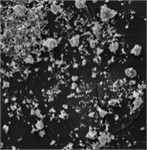
c) Metal oxides
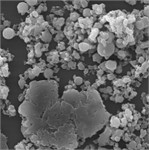
d) Ultrafine polytetrafluoroethylene (UPTFE)
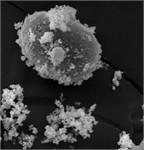
e) Metal particles
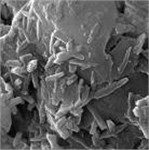
f) Clays
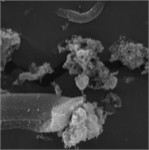
g) Carbon nanotubes (CNTs)
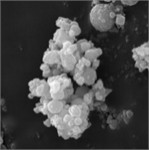
c) Metal oxides
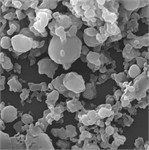
j) Ultrafine polytetrafluoroethylene (UPTFE)
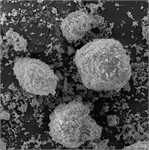
e) Metal particles
Technological treatments substantially modified surface layer morphology, increasing nanoscale constituent content (Fig. 2). Laser treatment produced the most pronounced effect, generating surface features with dimensions below the calculated threshold.
Fig. 2Morphology of colloidal graphite C-1
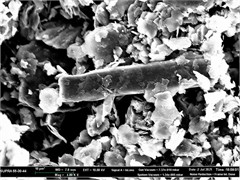
a) Initial state
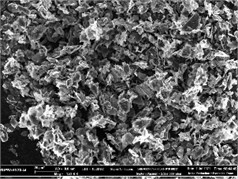
b) After thermal treatment (423 K, 2 h)
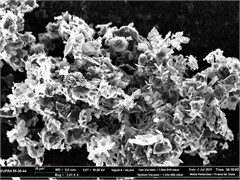
c) After laser treatment (1.06 μm, 2×10⁻6 s)
3.4. Energy state characterization
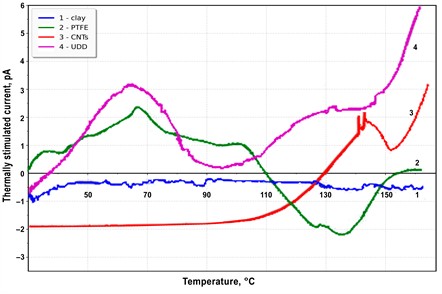
TSC spectroscopy revealed nonlinear current-temperature dependence with extrema in temperature ranges characteristic of each modifier type (Fig. 3). The spectra exhibited transformation with changes in dimensional parameters and treatment intensity.
A characteristic feature of dispersed particles suitable for polymer matrix modification is the presence of uncompensated charge states with anomalously long relaxation times exceeding 103 s, confirmed by EPR spectroscopy.
From the perspective of vibration-damping material design, these extended relaxation times are of particular significance. In polymer composites, the ability of a modifier to retain uncompensated energy and exhibit slow relaxation processes directly influences the viscoelastic response of the matrix under dynamic loading. The nanoscale particles () act as centers of local internal stress and sites for physical crosslinking, promoting the formation of a rigid but flexible interfacial layer. When mechanical vibrations propagate through the composite, this layer facilitates the conversion of mechanical energy into thermal energy through internal friction and chain segment relaxation. Thus, the enhanced energy state of subcritical particles serves as the fundamental driver for creating an interfacial structure capable of effective mechanical energy dissipation, which is essential for vibration-damping components.
A characteristic feature of dispersed particles suitable for polymer matrix modification is the presence of uncompensated charge with relaxation times exceeding 103 s, confirmed by EPR spectroscopy. Particles below the threshold exhibited spin concentrations 2-3 orders of magnitude higher than their bulk counterparts.
Fig. 3Characteristic TSC spectra: 1 – clay; 2 – PTFE; 3 – CNTs; 4 – UDD
3.5. Implications for vibration-damping materials
The established dimensional criterion enables rational selection of modifiers for polymer composites intended for vibration-damping applications. Particles with exhibit enhanced surface energy ( 50-200 mJ/m2) and increased interfacial adhesion work ( 80-150 mJ/m2), promoting the formation of viscoelastic interphase layers with optimal damping characteristics (tan 0.1-0.3 at 20-80 °C).
The presence of nanoscale components in the surface layer is the crucial factor determining modifier activity in structure formation processes [10-15]. Activation technology must ensure formation of nanoscale components enabling dominant interfacial processes to proceed with required intensity for specific compositions and processing conditions [1], [2], [4], [8], [9].
4. Conclusions
This study establishes and validates a quantitative criterion for evaluating the nano-state transition in dispersed particles used as polymer composite modifiers. The critical size 230·–1/2 provides material-specific dimensional thresholds ranging from 5.3 nm (diamond) to 29.0 nm (neon), enabling rational selection of modifiers for targeted applications.
Morphological analysis confirms that technological treatments – thermal, laser, and mechanochemical activation – substantially modify surface layer morphology, increasing nanoscale constituent content. Energy state characterization reveals that particles below the threshold exhibit fundamentally different parameters, including uncompensated charge states with extended relaxation times and enhanced surface energy.
For the first time, a direct correlation is shown between the criterion and the formation of a three-dimensional physical bond network at the polymer-filler interface. This network is the physical origin of the controlled viscoelastic damping ( = 0.1-0.3) in the 20-80 °C range.
The proposed criterion has direct applications in the development of vibration-damping materials for automotive engineering. Modifiers selected according to this dimensional threshold promote formation of viscoelastic interphase layers with optimized damping characteristics ( = 0.1-0.3) in the 20-80 °C operating temperature range typical of mechanical systems. These materials enable targeted control of energy dissipation in machine components, reducing vibration transmission and extending service life.
References
-
A. A. Eliseev and A. V. Lukashin, Functional Nanomaterials. Moscow: Fizmatlit, 2010.
-
S. V. Avdeychik et al., Nanocomposite Engineering Materials: Development and Application Experience. Grodno: GrSU, 2006.
-
S. V. Avdeychik et al., Polymer-Silicate Engineering Materials: Physical Chemistry, Technology, Application. Grodno: Tekhnalogiya, 2007.
-
V. A. Struk et al., Nanomaterials and Nanotechnologies for Mechanical Engineering. Minsk: RIVSH, 2021.
-
S. V. Avdeychik, V. A. Liopo, A. A. Riskulov, and V. A. Struk, Introduction to the Physics of Nanocomposite Engineering Materials. Grodno: GSAU, 2009.
-
S. V. Avdeychik et al., Fluorine-Containing Wear Inhibitors for Metal-Polymer Systems. Grodno: Tekhnalogiya, 2011.
-
A. A. Abdurazakov, S. V. Avdeychik, and A. S. Antonov, Composite Materials in High-Resource Belt Conveyor Structures. Minsk: Vneshinvestprom, 2019.
-
A. S. Antonov, S. V. Avdeychik, and A. G. Ikromov, Energy Factor in Materials Science and Technology of Polymer Composites. Minsk: Vneshinvestprom, 2019.
-
S. V. Avdeychik, V. A. Struk, and A. S. Antonov, The Factor of Nano-State in Materials Science of Polymer Nanocomposites. Saarbrücken: LAP LAMBERT Academic Publishing, 2017.
-
A. I. Gusev, Nanomaterials, Nanostructures, Nanotechnologies. Moscow: Fizmatlit, 2005.
-
P. M. Ajayan, L. S. Schalder, and A. V. Braun, Nanocomposite Science and Technology. Weinheim: Wiley, 2003, https://doi.org/10.1002/3527602127
-
C. P. Poole and F. J. Owens, Nanotechnology. Moscow: Tekhnosfera, 2005.
-
A. Antonov, K. Nurmetov, A. Riskulov, T. Urazbaev, V. Struk, and D. Nakhvat, “Composite thermoplastic materials for filament production in 3D printing technology,” Vibroengineering Procedia, Vol. 60, pp. 424–430, Dec. 2025, https://doi.org/10.21595/vp.2025.25691
-
N. Ashcroft and N. Mermin, Solid State Physics. Moscow: Mir, 1979.
-
C. Kittel, Introduction to Solid State Physics. Moscow: Nauka, 1978.
-
S. Makhmudova, N. Tursunov, and G. Avazova, “Planar dynamic modeling of a rotor-bearing-housing system with polyurethane support layer,” Vibroengineering Procedia, Vol. 60, pp. 1–7, Dec. 2025, https://doi.org/10.21595/vp.2025.25509
-
A. Antonov, K. Nurmetov, A. Riskulov, V. Struk, and W. Xuemin, “Composite materials based on polyolefins modified with carbon-containing components,” Vibroengineering Procedia, Vol. 60, pp. 458–465, Dec. 2025, https://doi.org/10.21595/vp.2025.25690
-
O. Toirov, N. Tursunov, and L. Kuchkorov, “Development of resource-saving composition of sand-clay mixtures for steel castings with improved physical and chemical characteristics,” Vibroengineering Procedia, Vol. 58, pp. 277–282, May 2025, https://doi.org/10.21595/vp.2025.24959
-
M. I. Rakhmatov, A. A. Riskulov, and K. I. Nurmetov, “Composite materials with enhanced abrasion resistance and certain functional characteristics based on thermoplastics,” Material and Mechanical Engineering Technology, Vol. 2025, No. 2, pp. 86–93, Jan. 2025, https://doi.org/10.52209/2706-977x_2025_2_86
About this article

The authors have not disclosed any funding.
The datasets generated during and/or analyzed during the current study are available from the corresponding author on reasonable request.
Prof. Khurshidbek Nurmetov is a scientific committee member of the 76th International Conference on Vibroengineering and was not involved in the editorial review and/or the decision to publish this article.

