Abstract
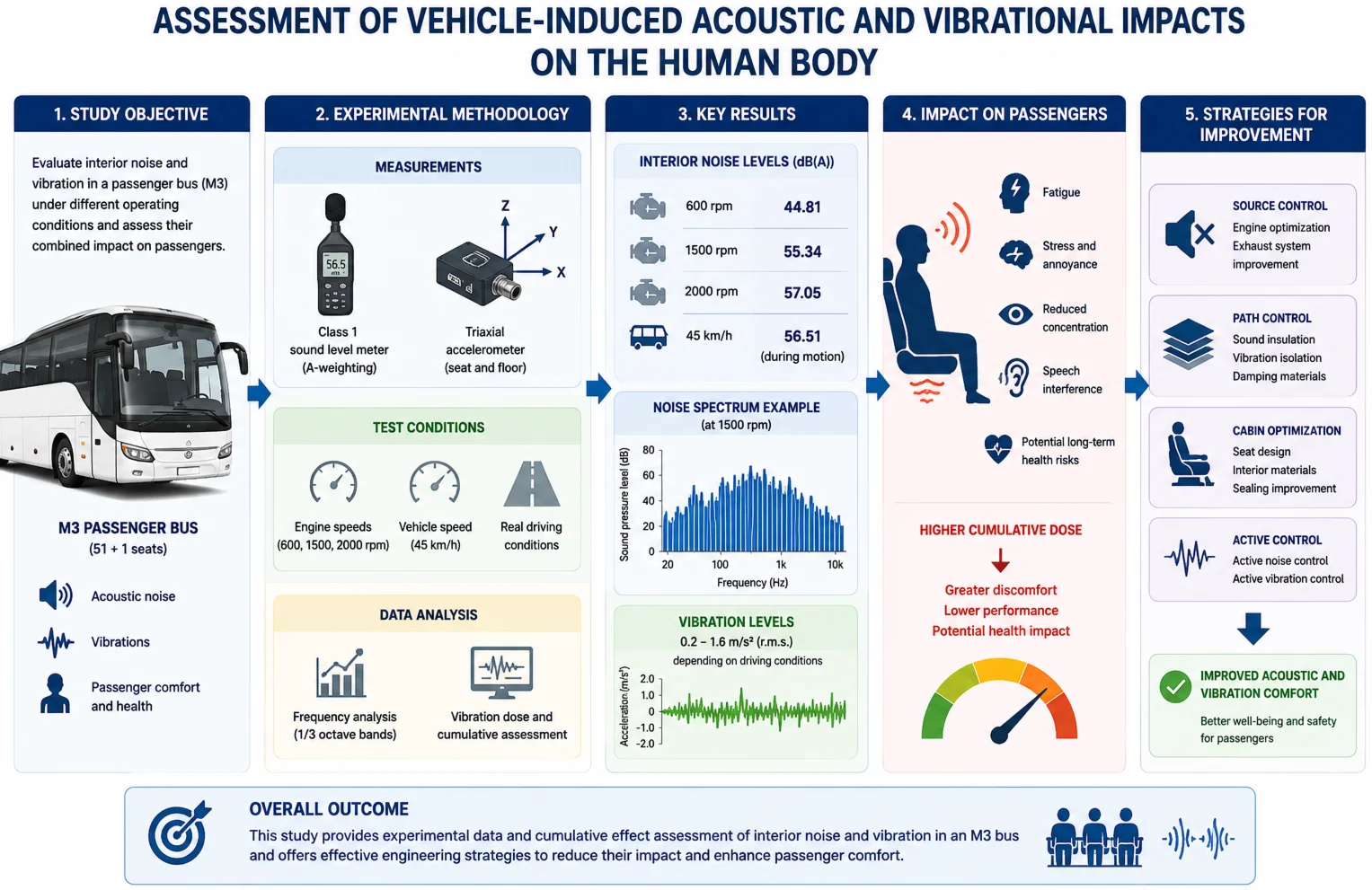
Environmental noise and mechanical vibrations generated during vehicle operation represent important factors influencing passenger comfort and human health. With the rapid development of modern transport systems and the increasing time individuals spend in vehicle environments, the assessment of acoustic and vibrational conditions inside vehicle cabins has become an essential research topic in transport engineering. Prolonged exposure to elevated levels of noise and vibration may lead to physiological and psychological discomfort, reduced concentration, fatigue, and other adverse effects on the human body. The present study investigates the acoustic and vibrational characteristics occurring inside vehicles and evaluates their combined influence on passengers. An experimental analysis was carried out on a passenger bus of category M3, with a capacity of 51+1 seats. Measurements of interior noise levels were performed under stationary and dynamic operating conditions using a Class 1 sound level meter with A-weighting and specialized data acquisition software. The experimental results demonstrated that the average interior noise levels were 44.81 dB(A) at 600 rpm, 55.34 dB(A) at 1500 rpm, and 57.05 dB(A) at 2000 rpm, while the measured noise level during vehicle motion at 45 km/h reached 56.51 dB(A). The obtained results indicate that variations in operating conditions significantly influence the acoustic environment inside the passenger compartment. Based on the analysis of experimental data and existing scientific literature, a comprehensive evaluation of the combined effects of noise and vibration on the human body was conducted using the concept of cumulative exposure or “pollution dose”. Furthermore, the study discusses engineering approaches and technical solutions aimed at reducing acoustic and vibrational loads in vehicle cabins. The findings of this research contribute to a better understanding of noise and vibration interactions in vehicle environments and may serve as a basis for the development of effective strategies to improve passenger comfort and reduce harmful acoustic and vibrational exposure in modern transport systems.
Highlights
- Experimental analysis of noise and vibration levels in an M3 passenger bus cabin.
- Interior noise levels ranged from 44.81 to 57.05 dB(A) under different engine speeds.
- Noise level reached 56.51 dB(A) at 45 km/h, affecting passenger comfort.
- Combined effect of noise and vibration evaluated using the “pollution dose” concept.
- Engineering solutions proposed to improve acoustic and vibration comfort in vehicles.
1. Introduction
The internal environment of modern vehicles plays an important role in determining the comfort, safety, and physiological condition of passengers and drivers. Various environmental parameters inside vehicle cabins, including temperature conditions, air quality, noise, and vibration, significantly influence human perception and overall travel comfort. Previous studies examining the interaction between passengers and the vehicle environment have shown that unfavorable microclimatic conditions inside the cabin can negatively affect human well-being and reduce travel comfort. Alongside these environmental factors, noise and vibration are commonly identified as significant contributors to passenger discomfort during vehicle operation. Long-term exposure to acoustic noise typical for vehicle operation, generally ranging from 35 to 70 dB, may lead to various physiological and psychological effects. These effects may include increased fatigue, reduced concentration, visual strain, and difficulties in speech perception. When the noise level exceeds approximately 70 dB [1], additional adverse reactions may occur, including headaches, increased stress levels, and deterioration of the overall functional condition of the human body. Such acoustic conditions may arise during vehicle operation at higher speeds, particularly during highway driving.
Due to the increasing importance of passenger comfort and environmental safety, the regulation of vehicle acoustic characteristics has become a significant topic in transport engineering. Regulatory organizations and international standardization bodies continuously introduce stricter requirements aimed at reducing noise emissions generated by vehicles. One of the key regulatory frameworks in this area is the international standard ISO 362, which defines permissible noise levels during vehicle certification procedures. According to current regulatory trends, the maximum allowable noise levels for passenger vehicles are expected to decrease progressively, reaching approximately 68 dB for passenger cars in the near future.
Within the commonly used vehicle classification system, category M1 includes passenger cars, while categories M2 and M3 refer to minibuses and buses designed for passenger transportation. Vehicles intended for the transport of goods are classified as categories N1, N2, and N3 depending on their mass and load capacity. Understanding the acoustic characteristics associated with different vehicle categories is essential for evaluating their environmental impact and ensuring compliance with regulatory requirements. From the perspective of noise generation mechanisms [2], vehicle noise can generally be divided into two major groups: external noise sources and structure-borne noise generated by vibrations of vehicle components. External acoustic waves may penetrate into the passenger compartment through structural elements such as door seals, joints, and technological openings in the vehicle body. At the same time, structural vibrations produced by mechanical components can propagate through the vehicle body and contribute to the formation of internal acoustic fields. To mitigate these effects, modern automotive engineering employs both passive and active noise control techniques. Passive noise reduction methods include the use of sound-insulating and sound-absorbing materials, structural damping elements, acoustic barriers, and sealing components designed to limit sound transmission. In contrast, active noise control technologies aim to reduce acoustic disturbances directly at the source by generating counteracting sound waves that interfere destructively with unwanted noise [3].
A considerable portion of acoustic noise generated inside vehicles originates from mechanical vibrations of structural components. These vibrations propagate through the vehicle structure and produce pressure fluctuations in the surrounding air. For instance, even very small displacements of vibrating surfaces may generate noticeable sound pressure levels. Vehicle vibrations are typically caused by several operational factors, including tire-road interaction, road surface irregularities, increased driving speed, and the dynamic characteristics of suspension systems. The investigation of noise and vibration effects on the human body represents one of the key research areas within the NVH (Noise, Vibration, and Harshness) field of automotive engineering. Vibrational exposure may influence human health, reduce work efficiency, and affect the durability and reliability of vehicle components [4]. Under conditions of prolonged exposure, vibrations may lead to specific occupational disorders commonly referred to as vibration disease. Furthermore, the simultaneous action of noise and vibration often results in a combined effect that is more significant than the influence of each factor considered separately.
2. Materials and methods
2.1. Standards for achieving optimal noise and vibration conditions in vehicles
The continuous expansion of transport systems and the increasing amount of time individuals spend within the transportation environment highlight the necessity for a more comprehensive investigation of noise and vibration exposure. These factors significantly influence not only the efficiency and quality of vehicle operation, but also traffic safety, the risk of road accidents, and the overall health condition of both drivers and passengers. In modern vehicles, noise and vibration transmitted to the passenger compartment are perceived differently by individuals depending on their physiological characteristics. However, the most significant effects are observed in body regions that directly couple to the vehicle structural elements structural components of the vehicle, particularly those subjected to vibrational motion or located close to vibration sources, such as the area where the powertrain unit is installed at the front of the vehicle [5]. The problem of noise and vibration propagation in vehicles is commonly analyzed from the angle of the mechanisms through which these effects are transmitted to the human body. In general, the transmission of vibrations can be classified into the following main categories:
1) Whole-body vibration transmission, which is transmitted through the contact interface between the human body and the vehicle structure interaction system. This type of exposure typically occurs when the driver or operator is in a seated or standing position while operating the vehicle.
2) Transmission of vibrations through the structural elements of the vehicle, which over prolonged periods of operation may lead to increased wear of components, the formation of mechanical clearances, and a decrease in the operational reliability of vehicle systems.
Mechanical noise and vibrations affecting humans have a multifaceted adverse impact on the human body. Their influence manifests through various physio pathological responses and can significantly complicate the process of driving and operating a vehicle, in some cases even leading to a reduction or complete loss of the ability to drive safely. Among the main consequences of exposure to noise and vibration are physiological, mechanical, and thermal effects, with mechanical and thermal impacts considered the most significant [6]. The determination of permissible limits for noise and vibration levels represents a complex scientific and technical task. It is based on experimental studies, analysis of vehicle operating conditions, and research results in the fields of acoustics and vibration dynamics. In this context, particular importance is attached to the identification of acceptable levels of vibration and noise transmitted to the human body. These levels should be determined taking into account a set of specific parameters and characteristics used in the assessment of acoustic and vibrational impacts [7]:
– Vibration kinematic parameters, such as acceleration, velocity, and displacement magnitude.
– Spectral characteristics of vibration and acoustic signals.
– Exposure time of the human body to noise and vibration in the process of vehicle functioning.
– Propagation vibration alignment and acoustic waves relative to the individual’s body.
– Human perception criteria, reflecting the subjective response to vibration and noise exposure.
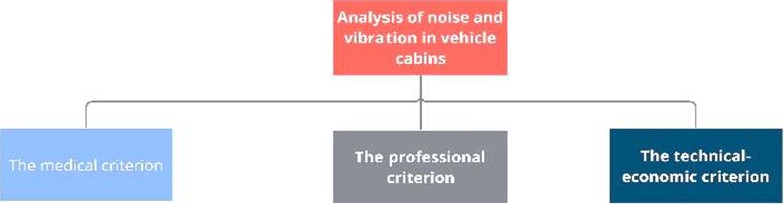
The limitation of noise and vibration levels is a function of the energy transferred to the human body several interrelated criteria, primarily including medical, professional, and technical-economic considerations. Noise and vibration limits are defined according to international standards based on medical, operational, and technical criteria [8].
Fig. 1Main criteria used for evaluating permissible noise and vibration levels in vehicles
As recognized in scientific literature, various recommendations and regulatory provisions define the permissible limits of noise and vibration exposure based on threshold values of harmful effects, including parameters related to tolerance and duration of exposure. However, the assessment of the limiting characteristics of noise and vibration according to existing standards is not always comprehensive or fully representative. This is mainly due to the fact that important factors are often insufficiently considered, such as the mechanisms of transmission of noise and vibrations from the source to the individual’s body, the body position relative to the acoustic or vibrational source, and the duration of exposure, which should be evaluated within specified time intervals. A comprehensive analysis of these factors has made it possible to establish permissible exposure limits for vibrations affecting the human body. These values are determined based on exposure limit curves for noise and vibration, which serve as the basis for the development of evaluation criteria. The primary assessment parameters include vibration frequency, acceleration amplitude, exposure duration, and the direction of vibration transmission relative to the human body [9].
The permissible exposure levels for noise and vibration can be defined as follows:
1) The comfort reduction threshold characterizes the condition in which exposure to noise and vibration leads to a state of discomfort for the human body. Maintaining the values of the relevant parameters below the established permissible limits over a certain period of time ensures compliance with the comfort criterion.
2) The fatigue-related performance reduction threshold reflects the conditions under which a sufficient level of operator efficiency is maintained during the process of vehicle control and operation.
3) The permissible exposure limit is determined based on the criterion of preserving human health, ensuring protection of the human body from the long-term adverse effects of noise and vibration loads [10].
Fig. 2Noise and vibration exposure limits
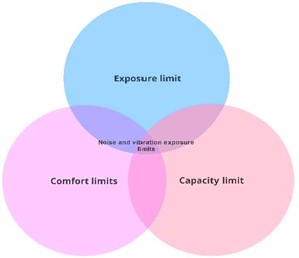
Table 1Typical regulatory limits for interior vehicle noise levels (adapted from UNECE standards) [2]
Category | Passenger transport vehicles | Permissible noise levels (dB) | ||
Phase 1 | Phase 2 | Phase 3 | ||
2016 | 2020 | 2024 | ||
M1 | PMR up to 120 | 73 | 71 | 69 |
PMR range: 120–160 | 74 | 72 | 70 | |
PMR exceeding 160 | 76 | 75 | 72 | |
PMR exceeding 200, vehicles with up to 4 seats | 76 | 75 | 73 | |
M2 | Up to 2.5 t | 72 | 70 | 69 |
Between 2.5 t and 3.5 t | 75 | 73 | 72 | |
Exceeding 3.5 t and engine power up to 135 kW | 76 | 73 | 73 | |
Exceeding 3.5 t and engine power above 135 kW | 76 | 74 | 73 | |
M3 | Power up to 150 kW | 77 | 75 | 74 |
Power between 150 kW and 250 kW | 79 | 78 | 77 | |
Power above 250 kW | 81 | 79 | 78 | |
The establishment of permissible limits for noise and vibration is based on experimental studies and laboratory investigations aimed at evaluating the response of the human body to acoustic and vibrational loads of varying intensity.
Based on these principles, the indicators describing the levels of vibrations and noise transmitted to humans have been adopted as reference normative values, which are considered recommendations for further standardization and for determining permissible exposure limits. Within this framework, the measured effective values of vibration and noise parameters affecting humans are compared with the permissible values defined by exposure limit curves for noise and vibration loads [11].
Table 2Expected regulatory limits for vehicle noise emissions by 2026 (adapted from UNECE regulations) [2]
Category | Freight transport vehicles | Permissible noise levels (dB) – 2026 | ||
Phase 1 | Phase 2 | Phase 3 | ||
N1 | Mass up to 2.5 t | 72 | 70 | 69 |
Mass exceeding 2.5 t | 74 | 73 | 71 | |
N2 | Engine power up to 135 kW | 77 | 75 | 74 |
Engine power above 150 kW | 78 | 76 | 75 | |
N3 | Engine power up to 150 kW | 79 | 77 | 76 |
Engine power in the range of 150-250 kW | 81 | 79 | 77 | |
Engine power exceeding 250 kW | 82 | 81 | 79 | |
2.2. Investigation of acoustic and vibrational behavior inside vehicle interiors
In order to evaluate noise and vibration levels inside the vehicle cabin, an experimental study was carried out on a passenger bus belonging to the M3 category with a seating capacity of 51+1 passengers. The measurements were performed considering the primary sources of acoustic noise and mechanical vibration as well as the main parameters used for their characterization. The experimental tests were conducted on a specially prepared open test site where no obstacles such as vehicles, buildings, or large reflective surfaces were located within a distance of at least 20 m, in order to avoid possible interference with the propagation of sound and vibration waves.
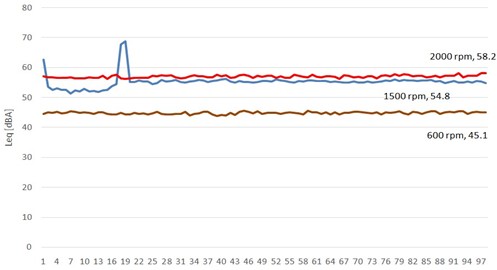
Fig. 3Relationship between vehicle speed and interior noise level under stationary conditions
2.3. Evaluation of combined noise and vibration exposure
To assess the combined effect of acoustic noise and vibration on the human body, the concept of cumulative exposure, also referred to as the “pollution dose”, was introduced. This approach allows a unified evaluation of acoustic and vibrational impacts occurring simultaneously during vehicle operation.
The cumulative exposure index can be expressed as , where is the combined exposure index, is the sound pressure level (dB), is the weighted root-mean-square vibration acceleration (m/s2), and and are weighting coefficients that represent the relative contribution of noise and vibration to overall human discomfort.
In this study, equal weighting coefficients () were assumed for simplicity.
The proposed model enables a simplified quantitative assessment of the combined influence of noise and vibration and provides a basis for comparing different operating conditions in terms of passenger comfort. The tests aimed at determining the interior noise level of the vehicle were conducted both during vehicle motion and under stationary operating conditions. Measurements were performed using a Class 1 precision sound level meter, with A-weighting, together with specialized software for data recording and analysis. Prior to each measurement, the instruments were calibrated to ensure the reliability of the recorded data instruments were calibrated, and the background noise level was evaluated in order to ensure the accuracy of the experimental results [10].
The obtained results indicated the following average noise level values: at 600 rpm-44.81 dB(A); at 1500 rpm-55.34 dB(A); at 2000 rpm-57.05 dB(A). In addition to acoustic measurements, vibration characteristics were evaluated based on acceleration levels and frequency analysis. The estimated root-mean-square (RMS) vibration acceleration values ranged from 0.3 to 0.8 m/s2 depending on engine speed and operating conditions. The dominant vibration frequencies were observed within the range of 5-20 Hz, which corresponds to the most sensitive frequency range for human whole-body vibration according to ISO 2631. These results indicate that vibration exposure may contribute to passenger discomfort, particularly during prolonged operation. According to ISO 2631, vibration levels above approximately 0.5 m/s2 may lead to noticeable discomfort during extended exposure periods. These measurements provide an assessment of the variation of interior noise levels depending on engine speed, highlighting the influence of operating conditions on the acoustic environment inside the vehicle cabin.
Fig. 4In-cabin noise measurement during vehicle motion at 45 km/h
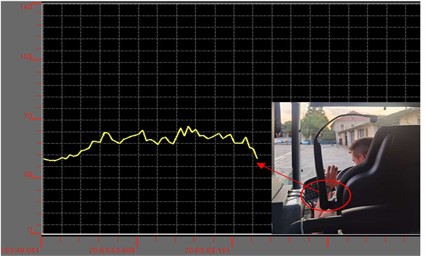
Central tendency interior sound exposure at a vehicle speed of 45 km/h was measured to be 56.51 dB(A).
During the experimental investigation of vibration effects in the vehicle, particular attention was given to the analysis of the main kinematic parameters, including acceleration and vibration frequency. The results indicate that the mechanical influence of vibrations on the human body varies depending on their frequency properties and energy magnitude. These effects may include relative displacement of internal organs, damage to less resistant ligaments and tissues, as well as pulmonary hemorrhages, which may occur under exposure to low-frequency vibrations in the range of 5-15 Hz combined with high acceleration levels of (5-15)×, where represents gravitational acceleration. Furthermore, prolonged exposure to vibration may contribute to the development of occupational disorders of the hands among workers who operate vibrating tools.
3. Discussion
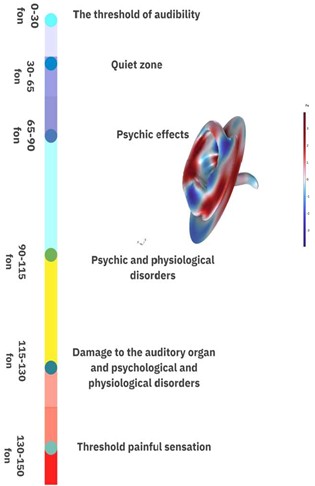
Research devoted to the influence of vibration in transport systems has been developing for several decades and has demonstrated that mechanical oscillations generated during vehicle operation can significantly affect human comfort and health. Early studies in this field indicated that dynamic loads transmitted to the human body during vehicle motion may reduce operator efficiency, increase fatigue, and negatively influence driving performance. Vibrational excitation can occur along three spatial axes and may manifest in both translational and rotational forms. In practical conditions, vertical vibrations are partially attenuated by the suspension system and the seat structure, which act as intermediate damping elements between the vehicle and the human body. Methods for evaluating human perception of vibration discomfort were later formalized within international standards, including ISO 2631, which provides guidelines for assessing whole-body vibration exposure. Alongside vibration, acoustic noise represents another important environmental factor affecting the internal conditions of vehicles. Prolonged exposure to elevated noise levels may contribute to communication difficulties, decreased concentration, increased psychological stress, sleep disturbances, and cardiovascular reactions. In several European countries, occupational hearing impairment caused by long-term exposure to noise is officially recognized as a work-related disease. The reference scales presented in the study illustrate typical exposure levels of vibration and noise and their potential physiological consequences. By integrating the analysis of these two parameters, it becomes possible to obtain a more comprehensive understanding of the overall environmental conditions inside vehicle cabins.
Fig. 5Reference values for human exposure to vibrations
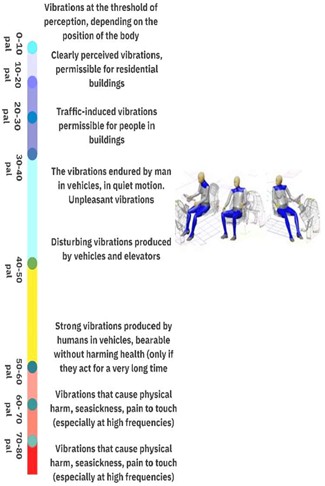
Fig. 6Reference values for human exposure to noise
The experimental measurements and the analysis of data available in scientific literature indicate that variations in the main acoustic and vibrational parameters inside the passenger compartment may lead to a noticeable reduction in passenger comfort and may affect both drivers and passengers. When the interior noise level approaches or exceeds 70 dB, additional physiological responses such as headaches, increased stress, and reduced cognitive performance may occur. The interpretation of the obtained experimental results can be carried out using two methodological approaches. The first approach considers the effects of noise and vibration independently, while the second approach evaluates them simultaneously as interacting environmental factors. Because the combined analysis allows a more realistic assessment of the cumulative influence of these phenomena, the integrated approach based on the concept of a “pollution dose” was selected for the present research. This concept reflects the total effect of acoustic and vibrational exposure acting on the human body during vehicle operation.
Based on the comparative analysis of the experimental results, several important findings can be highlighted:
1) The combined effect of noise and vibration during vehicle operation confirms the applicability of the “pollution dose” concept for evaluating the cumulative environmental impact.
2) The main sources of acoustic and vibrational disturbances inside the vehicle were identified, including vibrations generated by vehicle motion and additional secondary vibration processes occurring within structural components.
3) Measurements performed inside the passenger compartment allowed the evaluation of the main parameters describing noise and vibration levels under real operating conditions.
4) The duration of exposure to vibration was found to be a critical factor influencing the overall level of human discomfort.
5) The study also revealed psychosensory responses of the human body to simultaneous acoustic and vibrational stimuli during vehicle operation.
Based on the obtained experimental results, specific engineering measures for noise and vibration reduction can be proposed. The increase in interior noise levels observed at higher engine speeds (around 2000 rpm) indicates that the dominant contribution is associated with powertrain-induced vibrations. Considering that the dominant vibration frequencies were identified in the range of 5-20 Hz, targeted vibration damping techniques can be applied. In particular, the use of frequency-tuned damping materials and optimized mounting elements in the engine compartment can effectively reduce structure-borne noise transmission. Additionally, improving acoustic insulation in the engine compartment and enhancing sealing elements of the vehicle body can reduce airborne noise penetration into the passenger cabin. The application of multilayer sound-absorbing materials is also recommended to minimize internal reflections and improve overall acoustic comfort. These measures are directly based on the experimental observations and can contribute to reducing both noise and vibration levels under real operating conditions. The measured noise levels were compared with the regulatory limits specified in Tables 1 and 2 for the period 2024-2026. For M3 category vehicles, the permissible noise limits range between 73 and 77 dB depending on engine power. The experimentally obtained values (44.81-57.05 dB) are significantly lower than the limits, indicating compliance with current regulatory requirements. Similarly, the evaluated vibration levels (0.3-0.8 m/s2) correspond to acceptable exposure conditions according to ISO 2631, although values approaching 0.5 m/s2 may lead to moderate discomfort during prolonged exposure. These results confirm that the tested vehicle operates within acceptable acoustic and vibrational limits, while still indicating the need for optimization under higher operating conditions.
4. Conclusions
The present study developed an experimental framework for the evaluation of acoustic noise and vibration levels occurring during vehicle operation. The proposed approach is based on standardized acoustic and vibrational indicators that allow a systematic assessment of the internal environment of vehicle cabins. The conducted analysis provided an initial integrated evaluation of the combined influence of noise and vibration sources generated during vehicle operation. The obtained results demonstrate that these factors play a significant role in determining passenger comfort and may contribute to physiological and psychological discomfort under prolonged exposure conditions. Furthermore, the study outlines a methodological approach for monitoring and analyzing acoustic and vibrational parameters within the passenger compartment. Based on the experimental measurements and analytical evaluation, several technical considerations aimed at reducing interior noise and vibration levels were discussed. The results obtained in this research may serve as a scientific basis for the development of engineering solutions and practical recommendations directed toward improving acoustic and vibration comfort in modern transport systems.
References
-
K. Chen, S. He, E. Xu, R. Tang, and Y. Wang, “Research on ride comfort analysis and hierarchical optimization of heavy vehicles with coupled nonlinear dynamics of suspension,” Measurement, Vol. 165, p. 108142, Dec. 2020, https://doi.org/10.1016/j.measurement.2020.108142
-
B. Cășeriu and P. Blaga, “Automotive comfort: State of the art and challenges,” in Lecture notes in networks and systems, Vol. 605, Cham: Springer International Publishing, 2022, pp. 375–387, https://doi.org/10.1007/978-3-031-22375-4_30
-
B.-M. Cășeriu and P. Blaga, “Investigating noise sources for a heavy vehicle,” International Journal of Current Advanced Research, Vol. 12, No. 8, pp. 2450–2454, 2023.
-
C.-N. Badea et al., “Noise produced by railway vehicles in curves,” (in Romanian), Synthesis of Theoretical and Applied Mechanics, Vol. 10, No. 1, pp. 11–24, 2019.
-
D. Constantin, “Studies and research on improving some comfort parameters in transport systems,” (in Romanian), Politehnica University of Timișoara, 2018.
-
A. M. Titu, A. A. Boroiu, S. Mihailescu, A. B. Pop, and A. Boroiu, “Assessment of road noise pollution in urban residential areas-a case study in piteşti, romania,” Applied Sciences, Vol. 12, No. 8, p. 4053, Apr. 2022, https://doi.org/10.3390/app12084053
-
F. Doleschal, G.-T. Badel, and J. L. Verhey, “Rumbling, humming, booming – perception of vehicle interior noise at low engine speeds,” Applied Acoustics, Vol. 197, p. 108915, Aug. 2022, https://doi.org/10.1016/j.apacoust.2022.108915
-
C. Deubel, S. Ernst, and G. Prokop, “Objective evaluation methods of vehicle ride comfort-A literature review,” Journal of Sound and Vibration, Vol. 548, p. 117515, Mar. 2023, https://doi.org/10.1016/j.jsv.2022.117515
-
Z. Huang and J. Liu, “A joint vibro-acoustic method for periodic track short-wave defect identification,” Applied Acoustics, Vol. 204, p. 109239, Mar. 2023, https://doi.org/10.1016/j.apacoust.2023.109239
-
H. Bellem, T. Schönenberg, J. F. Krems, and M. Schrauf, “Objective metrics of comfort: developing a driving style for highly automated vehicles,” Transportation Research Part F: Traffic Psychology and Behaviour, Vol. 41, pp. 45–54, Aug. 2016, https://doi.org/10.1016/j.trf.2016.05.005
-
O. Taubman-Ben-Ari, M. Mikulincer, and O. Gillath, “The multidimensional driving style inventory-Scale construct and validation,” Accident Analysis and Prevention, Vol. 36, No. 3, pp. 323–332, 2004, https://doi.org/10.1016/s0001-4575(03)00010-1
About this article

The authors have not disclosed any funding.
The datasets generated during and/or analyzed during the current study are available from the corresponding author on reasonable request.
The authors declare that they have no conflict of interest.

