Abstract
The reasons of failures, dynamic loads, vibrations and residual deformations occurring at the zone of rail joints of the railway track operating in the conditions of Uzbekistan and possibilities of their mitigation are scientifically and practically studied in the given article. It has already been proved that when the speed of the train is great and the loading high, the dependability of the components of the track superstructure of the railway track is decreased, particularly, in the area of railway joints, the geometry violations, transverse displacements and longitudinal ones, and the destruction of crushed stone of the prism of ballast are increased exponentially. Being the object of the research, were laid on an experimental station chosen on a segment of JSC “Uzbekistan Railways” on the basis of a regular train service. The potential of decreasing the vertical stiffness and enhancing the dispersion of the downward force by adding the use of elastic substrates beneath the sleepers in the area of rail joints has been examined. Experimental measurements were conducted at 2 measurement points in order to determine dynamic effects using a mobile engineering seismometric station and SM-3 sensors. The findings indicated that with the presence of elastic substrates beneath the sleepers on the zone of rail joints, the angle of load distribution within the layer of the ballast becomes larger, the stresses in the foundation, and the magnitude of vibrations become lower. This is used to increase the lifespan of the structural components of the upper structure of the railway track, decrease the repair expenses at present, prolong the inter-repair service, and enhance the safety of the train traffic.
Highlights
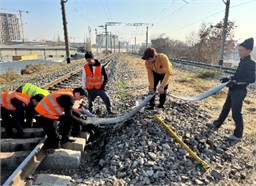
- Propagation of vibrations through the track elements resulting from the interaction between the wheelsets and the rail. The photograph was taken during research conducted by the second author in 2024–2025 and illustrates the process of studying issues in the rail joint zones of the railway track
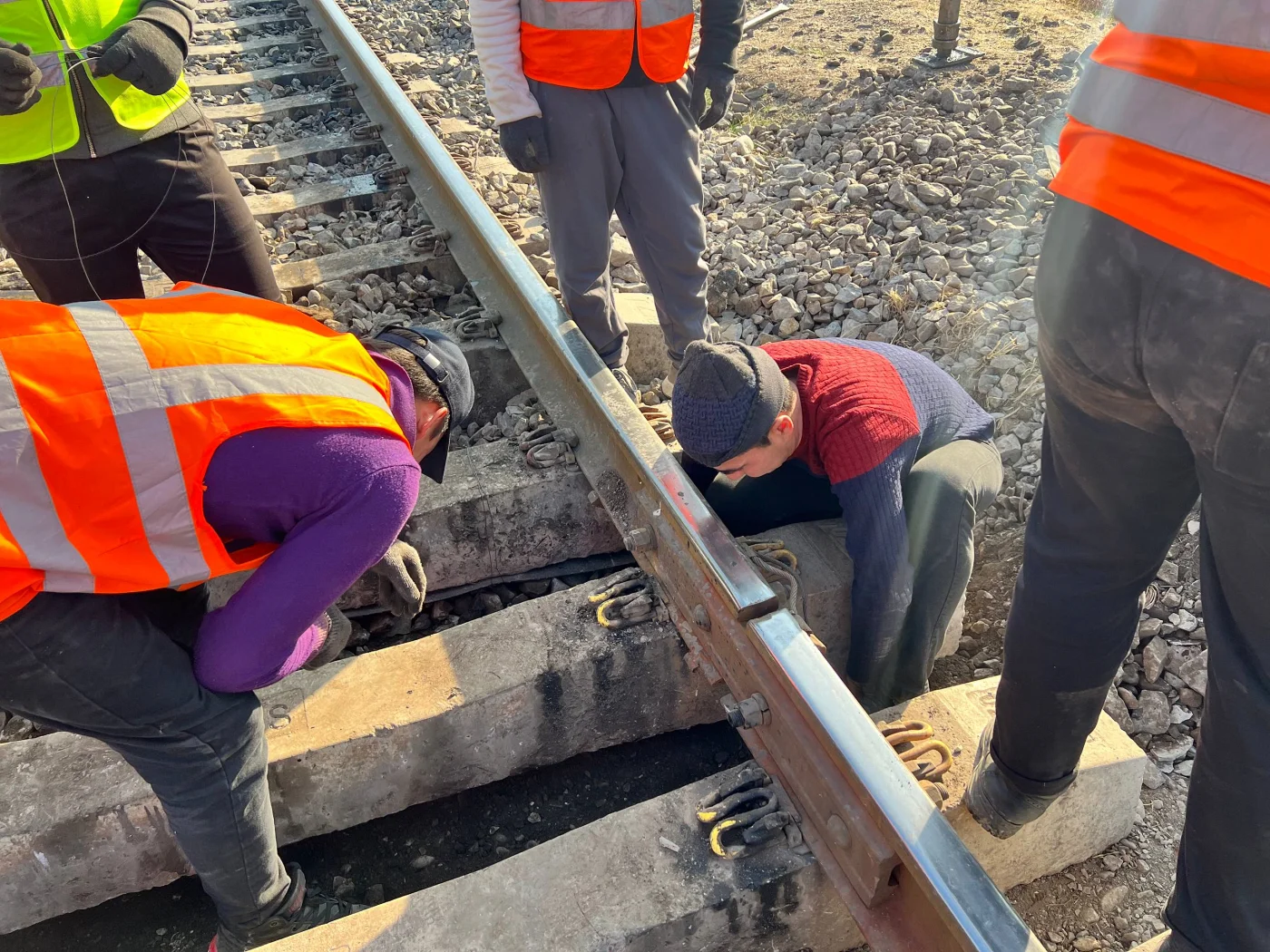
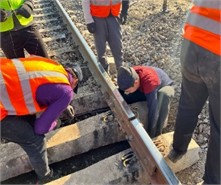
- Installation process of under-sleeper elastic pads in the rail joint zone. The photographs, taken by the second author on November 21, 2025, illustrate the process of experimental studies on the installation of elastic pads
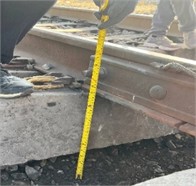
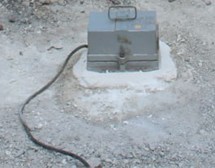
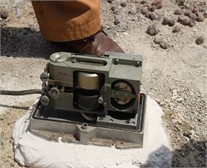
- Sensors for determining the main parameters of oscillations in three main coordinate systems x, y, z (images obtained by the second author in the process of determining the amplitude-frequency characteristics of oscillations as a result of train movement in the zone of railway track joints
1. Introduction
A railway track is a complex engineering system designed to operate at high speeds, under heavy loads, and in complex environmental conditions. In recent years, the length of freight and high-speed railway lines worldwide, including in the Republic of Uzbekistan, has been increasing. The expansion of passenger service on high-speed trains and the increase in freight turnover and volume led to a significant increase in operational parameters, such as axle loads and train traffic density. These changes create significant difficulties in maintaining the railway track in good and stable condition and ensuring the long-term reliable service of infrastructure elements. One of the main consequences of increased operational requirements is the intensive wear of railway track structure elements, including rails, sleepers, intermediate fastening systems, and ballast layer. This problem is especially acute in the zones of railway track joints, where the location of individual structural elements and the absence of improved rails leads to a local increase in vibrodynamic forces. As a result, the condition of the rail seam zone of the railway track becomes faulty and causes the appearance and development of rail defects [1], [2]. This leads to a reduction in the interval between maintenance and repairs, an increase in the demand for materials and labor for the correction of malfunctions of the rail joint zone. Considering these problems, the conducted scientific and experimental research on the dynamic state of rail joint zones and the optimization of the rigidity of the railway track in the conditions of Uzbekistan is of great practical importance.
2. Related work
Extensive practical studies are being carried out on railway sections where both heavy freight and high-speed train operations are organized, focusing on the investigation and analysis of the dynamic characteristics of railway tracks. In this context, specialized instruments such as vibrometers are widely used to determine, measure, and transmit parameters including velocity, acceleration, and resonance. In the conditions of Uzbekistan, in order to accurately identify and analyze vibration effects in the rail joint zones of railway tracks, a number of important research directions have been studied based on foreign scientific investigations, particularly regarding the proper use of vibrometers.
Foreign scientists K. Knothe and S. Grassie, in their scientific research, modeled rails as rays on an elastic basis and analyzed the propagation of vibrations arising in the railway track as a result of dynamic influences. In the conducted studies, vibrometers were compared with the simulation results, and at the same time, dynamic influences in the rail-sleeper system of the elements of the railway track upper structure were clearly characterized [5].
Scientists such as S. Kaewunruen and A. Remennikov investigated the reaction of the under-rail base and the ballast layer under the sleepers to the action of vertical dynamic forces arising from the interaction of the train’s wheelset and the rail, and they measured accelerations by placing vibrometers directly on the elements of the upper railway track structure. As a result of their research, they played an important role in the analysis of deformation and residual deformations of the ballast layer [6].
Based on the study of foreign scientific research, we have also developed a methodology for the conditions of Uzbekistan to measure harmful vibrations generated by train movement in the rail joint zones of railway tracks. These measurements are carried out using specialized vibrometric (SM-3) sensors on a section of the Salor railway maintenance enterprise.
3. Materials and methods
Field observations show that, in joint zones, residual vertical and horizontal deformations accumulate beneath sleepers during the passage of freight and high-speed trains. These deformations complicate track maintenance operations, increase labor requirements, and lead to additional material costs. Furthermore, when a train transitions from a continuous welded rail section to a jointed segment, additional geometric irregularities are encountered. These irregularities generate impact loads from wheelsets, particularly at high speeds, which negatively affect both the joint structure and the running gear of rolling stock, ultimately reducing their service life. The interaction between the wheelsets of the rolling stock and the railway track appears below the following forces (Fig. 1):
a) Vertical forces: 1 – forces from the wheel pairs of locomotives and wagons; 2 – additional forces arising from travelling on a curve section, in jointed areas of the track and uneven riding of trains.
b) Horizontal forces (longitudinal): 1 – friction forces during movement and braking of the train; 2 – rolling friction forces; 3 – longitudinal forces due to continuous temperature changes on the track braids in a track that is not paved.
c) Horizontal forces (transverse): 1 – guiding force from sinusoidal running; 2 – centrifugal forces in curves; 3 – wind forces; 4 – additional forces from discontinuities in the rail.
Scientific research, studies, and test experiments conducted by research institutes have shown that the intensity of the accumulation of residual deposits of the railway track depends not only on the magnitude of the acting forces, but also on the intensity of the oscillations they cause. As can be seen from Table 1, which presents the approximate values of the vibration coefficient , it is possible to observe how many times the rate of accumulation of residual deformations under the effect of vibrating loads increases compared to the rate of accumulation under static (non-vibrating) loading [7].
Fig. 1Propagation of vibrations through the track elements resulting from the interaction between the wheelsets and the rail. The photograph was taken during research conducted by the second author in 2024-2025 and illustrates the process of studying issues in the rail joint zones of the railway track
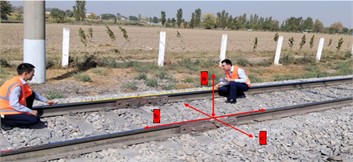
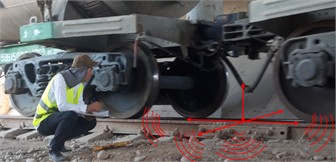
Table 1Values of the vibration coefficient kv for railway track structures
Rail surface irregularity gradient, ‰ | Structural state of the railway track | |
Timber sleeper | Reinforced concrete sleeper | |
0 | 1.0 | 1.0 |
2 | 1.3 | 1.3 |
4 | 1.6 | 1.9 |
8 | 2.5 | 3.6 |
The values presented in the table, i.e., the data obtained during the test study, show that vibrations play a large role in the accumulation of residual deposits of the railway track, and especially of the railway track with a reinforced concrete sleeper structure. If the influence of oscillations is not observed on the railway track (0) without malfunctions and irregularities (settlement of the right or left railway track, deviations, degrees of settlement), but with the presence of irregularities on the rail, we can see that the intensity of accumulation of residual settlements of oscillations increases from a coefficient of 1.3 to a coefficient of 3.6. Measurement and identification of defects and irregularities of the railway track using a railway template and straightening the railway track using sealing railway tools and equipment for placing ballast prism crushed stone under sleepers occupy up to 80 % of the work time of railway track repair brigades. From this it follows that in order to increase the efficiency of using reinforced concrete sleepers in railway track construction, it is important to reduce the vibration of the rail base by means of vibration isolation, for example, the widespread use of elastic sub-sleeper pads in the zone of railway track joints, since the use of elastic sub-sleeper pads reduces the destruction of the ballast layer. Especially effective is the widespread use of elastic sub-sleepers in rail joints of articulated railways, joints of leveling rails of trackless railways, in zones of artificial structures of railway tracks, in rail joints of railway curves, and in rail joints of the railway track transition to the bridge [3]. This can be clearly seen in the example of scientific and experimental studies on the installation of elastic substrates under the sleepers in the zone of the above-mentioned rail joints on sections organized on the basis of established schedules for the movement of freight and passenger trains, which are presented in Fig. 2.
Observations and special measurements conducted in the railway track and rail joint zone, taken as the object of the study, showed that the torsion of nuts as a result of vibrations leads to a weakening of the clamping of the terminals under the rail [4, 7]. After passing 4 million tons of cargo on railway tracks with reinforced concrete sleeper structures, a decrease in terminal tension was noted in the uneven zone with slopes of 2 ‰ by 35-60 %, 4 ‰ - by 50-90 %, and in the zone of rail joints - by 45-75 %. At the same time, the tractive force remained practically unchanged on the road section without unevenness.
Oscillations arising as a result of train movement can reduce the resistance of the railway track and its structures to failure (as a result of oscillation, a decrease in the resistance of the railway track to various influences by up to 50% has been established according to the analytical data of foreign literature), which leads to defects, malfunctions, longitudinal and transverse displacements of the railway track, violation of the sleeper diagram (axial displacement and misalignment), loosening of bolts, crushing, breaking, and falling of insulating parts, the appearance and development of rail defects, crushing, scattering, settling, and residual deformation of the crushed stone of the ballast prism. To reduce the recorded negative phenomena caused by vibration, it is necessary to develop measures to reduce vibrations of the road and especially reinforced concrete sleepers. To assess the effectiveness of these measures, it is necessary to know how to correctly measure the vibrations of road elements [4, 2, 7].
Fig. 2Installation process of under-sleeper elastic pads in the rail joint zone. Photos by the second author on November 21, 2025, illustrate the process of experimental studies on the installation of elastic pads
Frequencies of interest from the point of view of the response of railway track infrastructure structures to vibrational effects are mainly related to the properties of the elements of this railway track structure. The natural frequencies of railway track structure elements can be determined by the factors influencing them [1, 7].
One of the most reliable, accurate, and effective methods for studying railway vibrations arising under the influence of train loads on railway sections, where the movement of freight and passenger trains is organized according to established schedules, is the experimental method of scientific testing. The reliability of field or laboratory tests depends on the correct selection, installation, and application of vibrometric equipment, which must meet the following requirements: ensuring the recording of complex oscillatory processes (polyharmonic and broadband processes) consisting of a large number of simple sinusoidal oscillations with frequencies from tens of hertz to several thousand hertz.
These requirements arise from the fact that in the process of rolling the train's wheelset on the railway track, it is significant that it passes through: a) smooth and long unevenness, b) zones of rail joints and areas with defects along the rolling surface of the rail. In the first (a) case, the influence of additional forces from the irregularities of the railway track changes relatively slowly, and relatively low vibration frequencies correspond to them; in the second (b) case, the interaction of the train wheel and the rail is impactful, accompanied by the appearance of a large number of vibrations with frequencies from tens to thousands of hertz, arising in various elements of the railway track. During operation, vibrations in the rail joint zone and their parameters are monitored and recorded remotely from a specified distance. The research is carried out under the following conditions.
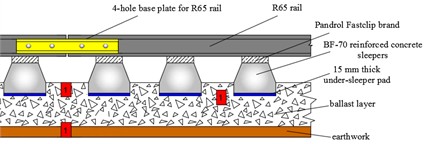
During the experiment, trains were passed at speeds of 20, 40, and 60 km/h through two consecutive rail joint zones, one with a 15 mm under-sleeper elastic pad installed and the other without such a pad. The axle load from the train wheelsets ranged between 18, 21, and 23.5 tons per axle. As trains passed through both joint zones, vibrations were gradually observed. In Zone 1, where six elastic pads were installed, the vibration levels were found to be reduced by approximately 1.5-2 times compared to Zone 2, where no elastic pads were used.
Devices and instruments that convert mechanical oscillations (vibrations) into electrical oscillations most satisfactorily meet these requirements. The sensitive element of this device and instruments is a sensor. When choosing sensors for detecting vibrations on railway tracks, it should be taken into account that the creation of a stationary base for measurements on railway tracks is a complex situation. The interaction forces of the railway track and rolling stock move the rails type R65, sleepers reinforced concrete BF-70, ballast (gravel with a grain size of 25-60 mm, laid with a thickness of 35 sm) and the earthwork [3]. Therefore, special sensors for recording vibrations of the railway track in such conditions are necessary. Such special sensors include sensors with inertial elements (SM-3 sensors), which can be seen in Fig. 3.
Fig. 3Sensors for determining the main parameters of oscillations in three main coordinate systems x, y, z. Photos by the second author in the process of determining the amplitude-frequency characteristics of oscillations as a result of train movement in the zone of railway track joints in a photograph taken on December 10, 2025

Unlike vibrometer devices, accelerometer devices allow recording vibrations in a much larger frequency range with minimal errors. Therefore, it was considered expedient to use them in the study of the entire spectrum of vibrations encountered on railway tracks. It is advisable to use piezoelectric accelerators for recording rapid processes on the railway track, including impact processes in the zone of rail joints.
The SM-3 oscillograph employed in the experimental investigation consists of the following components for each measurement channel: an input divider, an amplifier, a shared analog-to-digital converter (ADC), and a laptop with specialized software. During vibration measurements in the rail joint zone, data from four channels are acquired, stored, and subsequently processed.
It is necessary to measure the vibrations arising from the interaction of wheel pairs and the rail during the passage of trains moving along the railway track through the zone of rail joints and in general during their movement using four sensors, since the operating range of one sensor is insufficient, and based on this, the sensor is only the first element of the vibration measurement channel (Fig. 4), the remaining auxiliary devices are connected sequentially. Generally, the channel and sensor operating ranges may not match. One of the main tasks in performing measurements is to reconcile the most important characteristics of the vibration channel elements.
Fig. 4Arrangement of vibration measurement instruments and channel block diagram in the rail joint zone: 1 – sensor, 2 – amplifier, 3 – intermediate elements, 4 – data acquisition device (laptop)
a) Joint with under-sleeper elastic pad
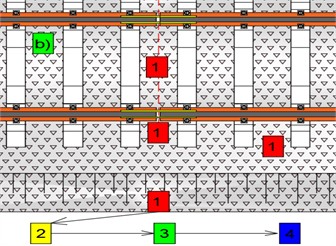
b) Reference joint zone
In experimental setups for assessing vibrations in railway tracks and rail joint zones, the measurement channel is implemented as a linear transducer. This configuration enables the detection of vibration responses with varying amplitudes and frequencies across three orthogonal axes , with signals from each sensor visualized, recorded, and stored in real time using dedicated software on a laptop.
Thus, taking into account the scientific and practical research considered above, we can draw the following conclusions.
4. Conclusions
1) The problem of identifying, analyzing, and comparing dynamic oscillations arising in the zones of rail joints of railway tracks in the conditions of Uzbekistan is one of the most pressing issues today. 2) It is important to know the practice of correctly selecting and installing special vibrometer sensors that detect vibrations of railway structures under various conditions and their operation with high accuracy. 3) Based on accurate data obtained from vibrometers, development of measures to reduce vibrations in the zone of rail joints, impact force, and thereby increase the service life and reliability of elements of the railway overpass structure.
References
-
Y. Chi, H. Xiao, Z. Zhang, and Y. Wang, “Field experiment and numerical simulation investigation on the mechanical properties of ballast bed with elastic sleepers,” Construction and Building Materials, Vol. 397, p. 132361, Sep. 2023, https://doi.org/10.1016/j.conbuildmat.2023.132361
-
C. Kraśkiewicz, A. Zbiciak, J. Pełczyński, and A. Al Sabouni-Zawadzka, “Experimental and numerical testing of prototypical under ballast mats (UBMs) produced from deconstructed tires – The effect of mat thickness,” Construction and Building Materials, Vol. 369, p. 130559, Mar. 2023, https://doi.org/10.1016/j.conbuildmat.2023.130559
-
A. Abdujabarov, M. Mekhmonov, M. Khamidov, S. Tadjibaev, and S. Shayakhmetov, “Experimental results of reducing harmful vibrodynamic effects caused by the interaction between rolling stock and track through the use of elastic under-sleeper pads in the rail joint zone,” Vibroengineering Procedia, Vol. 60, pp. 125–132, Dec. 2025, https://doi.org/10.21595/vp.2025.25753
-
A. Abdujabarov, M. Mekhmonov, M. Khamidov, M. Mirkhanova, and A. Yembergenov, “Reinforcement of the embankment with reinforced concrete piles in the transition zone from the railway embankment to the bridge,” Vibroengineering Procedia, Vol. 60, pp. 133–141, Dec. 2025, https://doi.org/10.21595/vp.2025.25398
-
K. Knothe and S. L. Grassie, “Modelling of railway track and vehicle/track interaction at high frequencies,” Vehicle System Dynamics, Vol. 22, No. 3-4, pp. 209–262, Jan. 1993, https://doi.org/10.1080/00423119308969027
-
S. Kaewunruen, S., and A. Remennikov, “Dynamic properties of railway track,” Engineering Structures, Vol. 31, No. 4, pp. 984–994, 2009.
-
W. Phusakulkajorn, S. Unsiwilai, L. Chang, Z. Li, and A. Núñez, “A hybrid neural model approach for health assessment of railway transition zones with multiple data sources,” IEEE Transactions on Instrumentation and Measurement, Vol. 74, pp. 1–17, Jan. 2025, https://doi.org/10.1109/tim.2025.3575986
About this article

The authors have not disclosed any funding.
The datasets generated during and/or analyzed during the current study are available from the corresponding author on reasonable request.
The authors declare that they have no conflict of interest.

