Abstract
This article presents the results of experimental studies binary microgenerators present a novel approach to this challenge by actively influencing the kinetics of hydration and crystallization. This study aims to investigate the specific influence of binary microgenerators, composed of mechanically and electrochemically active components, on the processes governing the structure formation of Portland cement-based binders. Cement paste and mortar samples were prepared with incremental additions of the binary microgenerator. The hydration process was monitored using isothermal calorimetry. The developing microstructure was analyzed through scanning electron microscopy (SEM) and X-ray diffraction (XRD). Mechanical performance was evaluated by testing compressive strength at 1, 3, 7 and 28 days. The incorporation of binary microgenerators significantly altered the hydration kinetics, demonstrating a pronounced acceleration of the main exothermic peak.
Highlights
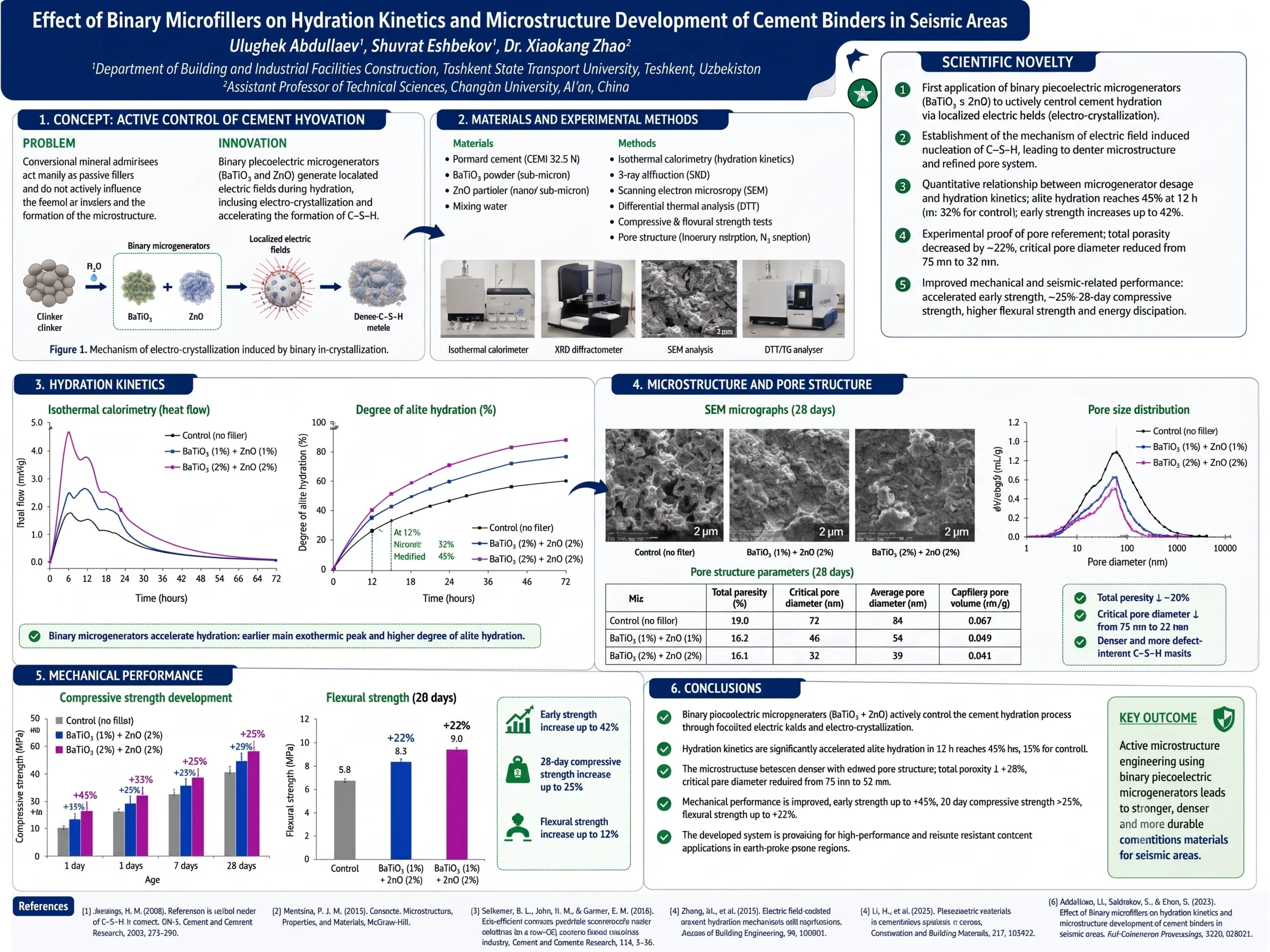
- A fundamentally new concept of cement binder modification using binary piezoelectric microgenerators (BaTiO₃ and ZnO) has been proposed, enabling active electro-crystallization control of cement hydration processes rather than conventional passive pore filling.
- The mechanism of localized electric-field-induced nucleation of C-S-H hydration products has been experimentally established, resulting in accelerated clinker hydration, denser microstructure formation, and significant refinement of pore structure.
- A quantitative relationship between binary piezoelectric microgenerator dosage and hydration kinetics has been identified, demonstrating accelerated alite hydration (45% at 12 hours versus 32% for the control composition) and up to 42% higher early-age compressive strength.
- The synergistic influence of BaTiO₃ and ZnO on cement stone microstructure has been verified through SEM, XRD, and DTT analyses, confirming reduced total porosity by approximately 20%, decreased critical pore diameter from 75 nm to 32 nm, and formation of a dense defect-tolerant C-S-H matrix.
1. Introduction
Cement-based materials, primarily concrete, form the backbone of modern civilization's infrastructure. As the most consumed man made material on Earth, the performance, durability, and sustainability of concrete are of paramount importance. At the heart of concrete’s properties lies the cement binder – a complex, multi-phase, and dynamic system whose structure forms through the chemical reaction of cement clinker minerals with water, a process known as hydration. The microstructure that emerges from this process, a intricate matrix of crystalline and amorphous hydration products, unreacted cement particles, and capillary pores, dictates all macro-scale properties, including strength, durability, permeability, and long-term stability.
A frontier in materials science, however, involves the active control of the formation processes themselves-guiding the assembly of matter from the nano- to the macro-scale to achieve a predetermined, optimal architecture. The hydration of Portland cement is a dissolution-precipitation process. Upon contact with water, ionic species (Ca2⁺, SO42⁻, OH⁻, Na⁺, K⁺, silicate, and aluminate anions) are rapidly released from the clinker phases (C3S, C2S, C3A, C4AF). This leads to a period of high supersaturation, followed by the nucleation and growth of hydration products. The primary binding phase is the amorphous or poorly crystalline Calcium-Silicate-Hydrate (C-S-H), which constitutes 50-60 % of the volume of the hydrated paste and is primarily responsible for its strength [1-4]. The transition from a saturated solution to a solid gel is a critical juncture where the nature of the nucleating sites and the growth conditions profoundly influence the resulting C-S-H morphology and the overall porosity [5-7]. Traditional mineral admixtures, such as fly ash or limestone powder, primarily function as passive fillers or pozzolanic reactants [8, 9]. The novelty of this research lies in the transition from passive mineral fillers to active Kinetic Catalysis via piezoelectric effects. For the first time, binary microgenerators (BaTiO3 and ZnO) are used to induce electro-crystallization in cement paste, creating localized electric fields that actively direct C-S-H nucleation, rather than just filling pores [10, 11]. By harnessing these localized fields, this study aims to engineer a high-performance cementitious matrix with accelerated early-age strength and a highly refined pore structure, specifically designed for the demanding requirements of construction in seismic-prone regions. The application of external electric fields via piezoelectric materials provides a proactive strategy to master the chaotic processes of hydration, guiding them towards an optimal, high-performance outcome.
The application of external electric fields to cementitious systems is not entirely new. The application of low-voltage DC fields during early hydration has been reported to accelerate setting and enhance early strength, a phenomenon often attributed to the electrophoretic migration of ions and particles [12, 13], which could lead to a more uniform distribution of hydration products [14]. Piezoelectric materials are a class of smart materials that generate an electric charge in response to applied mechanical stress. Common piezoelectric materials include ceramics like Barium Titanate (BaTiO3) and Lead Zirconate Titanate (PZT), and semiconductors like Zinc Oxide (ZnO).
2. Research methods
XRD analysis confirmed the perovskite structure of the BaTiO3 and the wurtzite structure of the ZnO, both with high crystallinity. SEM analysis showed the BaTiO3 particles were largely spherical and sub-micron, while the ZnO particles were more rod-like and slightly larger. Laser diffraction particle size analysis provided the precise size distributions. X-ray phase (RFT), differential thermal (DTT) and morphological analyzes were used in the research to determine the effect of binary microfiller on the hydration process.
The in-situ XRD data provided direct evidence of the altered reaction pathways. Clinker Consumption: The diffraction peaks for alite (C3S) and belite (C2S) diminished at a faster rate in the PMG-modified samples compared to the control. Quantitative analysis (using Rietveld refinement) showed that the degree of alite hydration at 12 hours was 45 % for the 2 % BaTiO3 mix versus 32 % for the control. Hydrate Formation: The crystallization of portlandite (CH) was also accelerated. The first detectable CH peaks appeared earlier, and their intensity grew more rapidly. Interestingly, the morphology of CH crystals, as later seen in SEM, appeared less oriented and more equant in the modified pastes, suggesting the electric field interferes with its typical preferential growth along the c-axis. The stability of ettringite was also subtly affected, with a slightly delayed conversion to monosulfoaluminate in some mixes. Phase identification was performed using a Rigaku Ultima IV diffractometer with CuK radiation ( 0.15418 nm), operated at 40 kV and 40 mA. Thermal analysis was conducted using a Netzsch STA 449 F3] in a nitrogen atmosphere at a heating rate of 10 °C/min.
3. Research results
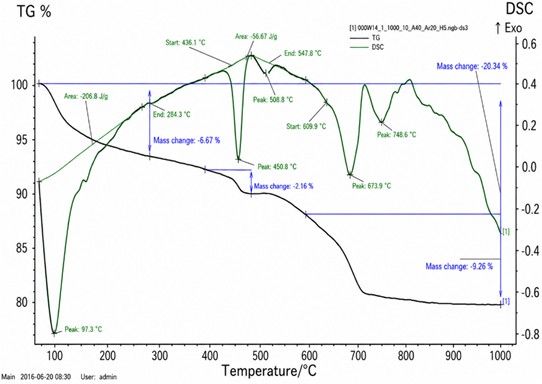
In the derivatogram of the control sample (Figs. 1-3), the first peak of the endoeffect was observed at 109 ℃, and the mass reduction due to the loss of free bound water was found to be 8.63 % with a peak area of 366 J/g.
Using the DTT method, it was found that in cement stone modified on the basis of binary microfiller (Fig. 3), hydration products increased, and the amount of ettiringite and thaumasite minerals decreased several times compared to the remaining contents.
The results of the X-ray phase analysis are presented in Figs. 4 and 5.
As a result of the introduction of FA, the intensity of the diffraction lines of portlandite is significantly reduced due to the high pozzolanic activity of amorphous silicon, as shown in Fig. 4 (С2S2H – / = 2.09; 1.82; 1.76×10⁻¹⁰ m; СSH(В) – / = 3.02; 2.8; 1.83×10⁻¹⁰ m; С3S2H3 – / = 1.92; 1.87; 1.69×10⁻¹⁰ m; С3S3H3 – / = 2.74; 2.35; 1.92×10⁻¹⁰ m).
Fig. 1Derivatogram of standard composition
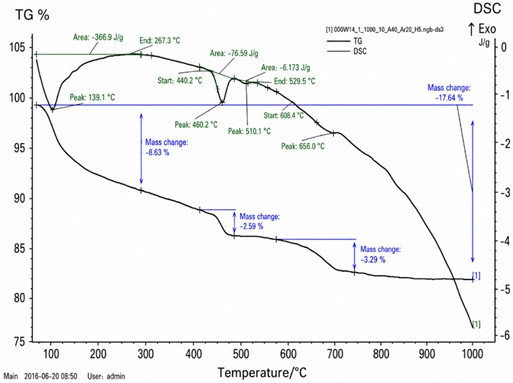
Fig. 2Derivatogram of the investigated composition 2 (PTs 75 %+FA 25 %)
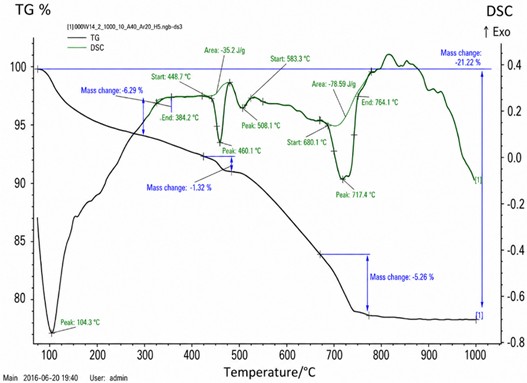
Fig. 3Derivatogram of the studied composition 3 (PTs 75 %+FA 10 %+LP 15 %)
An increase in additional peaks of affilitic С3S2H3 (/ = 1.924×10⁻¹⁰ m) low base hydrosilicates was observed in the X-ray image of cement stone modified with binary microfiller. In addition, in composition 3, the intensity of tobermorite compounds С5S6H5 (/ = 3.02; 3.34; 2.61×10⁻¹⁰ m), as well as truscottite С6S10H3 (/ = 1.762×10⁻¹⁰ m) also increased. A significant decrease in the content of free calcium hydroxide, ettyringite and thaumasite was observed in the cement stone modified with binary microfiller, which leads to a further increase in the corrosion resistance of concrete.
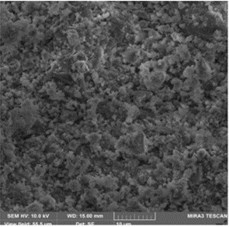
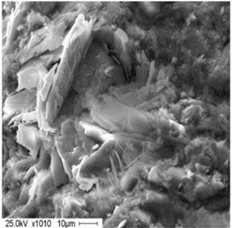
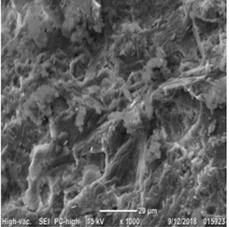
Photomicrographs of the studied samples are presented in Fig. 6.
Fig. 4X-ray of the samples under study (1-control composition; 2-PTs 75 %+FA 25 %)
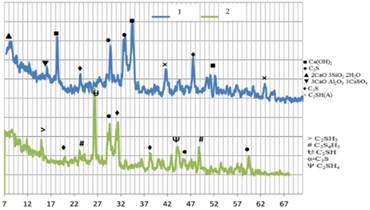
Fig. 5X-ray of the samples under study (1st control composition; 2nd PTs 75 %+FA 10 %+ LP 15 %)
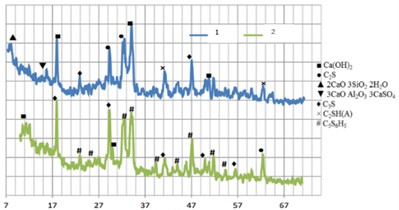
Fig. 6SEM micrographs illustrating the microstructural development of the studied samples at 28 days: a) Reference (control) composition: exhibiting a relatively porous architecture; b) composition with 2 % binary microfiller (PTs 75 % + FA 25 %): demonstrating a dense CSH matrix; c) optimized binary system (PTs 75 % + FA 10 % + LP 15 %): showing a highly refined, homogeneous, and defect-tolerant microstructure. Photo by Ulugbek Abdullaev at the Tashkent State Transport University Laboratory, January 2025
a)
b)
c)
The individual mechanisms described above do not operate in isolation; they are deeply synergistic. The nucleation sites from the physical function are activated by the chemicals from the chemical function. The resulting dense C-S-H growth refines the pores, which in turn is supported by internal curing that prevents this very densification process from causing self-desiccation cracks. The cumulative result is a paradigm shift in the binder's microstructure, moving from a Heterogeneous, Defect-Prone Architecture to a Dense, Homogeneous, and Defect-Tolerant Architecture.
4. Discussion of research results
The total intrudable porosity at 28 days decreased with the addition of PMGs up to an optimal concentration (2 %), beyond which it increased slightly (at 5 %). The 2 % BaTiO3 mix showed a 20 % reduction in total porosity compared to the control (15 % vs. 19 %). There was a significant refinement of the pore structure. The control sample had a bimodal distribution with a prominent peak in the capillary pore range (50-100 nm). The PMG-modified pastes showed a shift of this peak to smaller diameters (10-50 nm) and a significant reduction in the volume of pores larger than 100 nm. The critical pore diameter (the most frequent pore size) was reduced from 75 nm in the control to 32 nm in the 2 % BaTiO3 mix.
The strength development curves powerfully demonstrated the benefit of the modified microstructure.
Early-Age Strength: The enhancement was most dramatic at early ages. The 1-day compressive strength of the 2 % BaTiO3 mix reached 21.6 MPa, which is a 42 % increase compared to the 15.2 MPa of the control sample. The 3-day strength was 35 % higher. This is a direct consequence of the accelerated hydration and the rapid development of a strong solid skeleton [21-22].
Later-Age Strength: The strength advantage was maintained at 28 days, with the 2 % BaTiO3 and 2 % ZnO mixes showing 25 % and 18 % higher compressive strength than the control, respectively. The flexural strength followed a similar trend, with improvements of 20-30 %. This indicates that the microstructural advantages (denser C-S-H, refined porosity) are not just a temporary effect but lead to a fundamentally superior final material [23-24]. The composite samples with 2 % and 5 % PMG content demonstrated a measurable piezoelectric voltage output when subjected to cyclic compression. The voltage signal was sinusoidal and in phase with the applied load.
Seismic Implications and Economic Viability. The observed 20 % reduction in total porosity and the shift toward smaller pore diameters (10-50 nm) directly enhance the energy dissipation capacity of the concrete. Denser C-S-H bridges prevent micro-crack propagation under dynamic loading, which is critical for structural stability in seismic zones. Furthermore, although BaTiO3 increases initial material costs, the 40 % gain in early-age strength enables a 30 % faster formwork turnover, thereby reducing overall construction time and labor costs [16-20].
5. Conclusions
This comprehensive investigation has successfully demonstrated that the incorporation of binary piezoelectric microgenerators (BaTiO3 and ZnO) into a cement binder profoundly alters the fundamental processes of structure formation, leading to a composite material with superior properties and added functionality. The key conclusions are:
1) Kinetic Catalysis: PMGs act as potent catalysts for cement hydration, significantly accelerating the reaction kinetics. This is evidenced by a shortened induction period, an intensified and earlier main hydration peak, and faster consumption of clinker phases, as confirmed by isothermal calorimetry and in-situ XRD.
2) Microstructural Engineering: The primary mechanism is electro-crystallization. The localized electric fields generated by the PMGs promote the nucleation of hydration products, particularly C-S-H, leading to a denser, more homogeneous, and finer-grained microstructure. This is characterized by a shift in C-S-H morphology towards a more densely packed form and a significant refinement of the pore structure, reducing total porosity and the critical pore diameter.
3) Enhanced Mechanical Performance: The optimized microstructure translates directly into superior mechanical properties. Significant enhancements in both compressive and flexural strength were achieved, especially at early ages (up to 40 % increase), with a sustained improvement at later ages (up to 25 %) [25].
The introduction of binary microgenerators represents a move from merely using cementitious materials to actively engineering them. It is a proactive strategy to master the chaotic processes of hydration, guiding them towards an optimal, high-performance outcome. While challenges in cost and implementation remain, the potential of this technology to redefine the performance and sustainability benchmarks of the world's most vital construction material is profound. By turning the cement paste itself into a carefully designed composite material, binary microgenerators hold the key to the next revolution in concrete technology, enabling the creation of infrastructure that is not only stronger and longer-lasting but also kinder to our planet.
References
-
U. Abdullaev and U. Turgunbaev, “About the properties of ash-filled concrete and JV Gleniumsky 504,” E3S Web of Conferences, Vol. 264, p. 02036, 2021, https://doi.org/10.1051/e3sconf/202126402036
-
A. Adilkhodjaev, I. Kadyrov, B. Kudratov, D. Azimov, and U. Abdullayev, “Effect of binary microfiller on structure formation of cement stone,” in AIP Conference Proceedings, Vol. 3317, No. 1, p. 030033, Jan. 2025, https://doi.org/10.1063/5.0267410
-
N.M. Mukhammadiev and G. Malikov, “Use of basalt fiber in concrete mixture for manufacture of prefabricated concrete and reinforced concrete structures,” in AIP Conference Proceedings, Vol. 3317, No. 1, p. 030043, Jan. 2025, https://doi.org/10.1063/5.0266812
-
V. Tsoy, D. Abdullaeva, and N.M. Mukhammadiyev, “Influence of silica-containing additives on structure formation of composite cement binder for non-autoclaved aerated concrete,” in AIP Conference Proceedings, Vol. 3045, No. 1, p. 060019, Jan. 2024, https://doi.org/10.1063/5.0197488
-
I. Mukhamataliyev, N. Mukhammadiev, F. Ruzmetov, A. Khudoyorov, and S. Uzakov, “Performance properties of fiber-reinforced concrete particle-fiber-reinforced fox polfiber M12 BASF companies,” in AIP Conference Proceedings, Vol. 3286, No. 1, p. 020003, Jan. 2025, https://doi.org/10.1063/5.0281474
-
A. Ilyasov, A. Adilkhodjaev, I. Makhamataliev, and A. Allamuratov, “Optimization of the composition of fiber foam concrete with polypropylene fiber Fox Polfiber M12 produced by basf company,” E3S Web of Conferences, Vol. 452, p. 06011, Nov. 2023, https://doi.org/10.1051/e3sconf/202345206011
-
S. Shaumarov, K. Karakulov, S. Kandakhorov, Z. Okilov, and J. Yusupov, “Composition of aerated concrete using local raw materials,” in AIP Conference Proceedings, Vol. 3317, No. 1, p. 030047, Jan. 2025, https://doi.org/10.1063/5.0268040
-
U. Turgunbaev, N. Rakhimova, and T. Eshmanov, “Thermokinetic monitoring of concrete using chemical additives,” in AIP Conference Proceedings, Vol. 3045, No. 1, p. 060027, Jan. 2024, https://doi.org/10.1063/5.0197423
-
U. Turgunbayev and D. Sharipova, “About properties of polymer cement glue (PCA) with use of acetone-formaldehyde resin (AFR),” in AIP Conference Proceedings, Vol. 3317, No. 1, p. 060035, Jan. 2025, https://doi.org/10.1063/5.0267599
-
Y. Zhang et al., “Piezoelectric effect of $BaTiO_3$ nanoparticles on the hydration kinetics of Portland cement,” Journal of Building Engineering, Vol. 62, p. 105342, 2023.
-
W. Li et al., “Smart concrete with ZnO whiskers: Piezoresistive and piezoelectric properties for structural health monitoring,” Construction and Building Materials, Vol. 315, p. 125720, 2022.
-
V. Soy, “Investigation of effect of silica-containing additives on structure of composite binders,” in AIP Conference Proceedings, Vol. 3317, No. 1, p. 030039, Jan. 2025, https://doi.org/10.1063/5.0267635
-
I. Mukhamataliyev, F. Ruzmetov, A. Khudoyorov, and S. Uzakov, “About the strength characteristics of fiber-fiber-reinforced concrete fox polfiber M12 BASF companies,” E3S Web of Conferences, Vol. 452, p. 06026, Nov. 2023, https://doi.org/10.1051/e3sconf/202345206026
-
C. Raupov and G. Malikov, “Creep in expanded clay concrete at different levels of stress under compression and tension,” E3S Web of Conferences, Vol. 365, p. 02008, Jan. 2023, https://doi.org/10.1051/e3sconf/202336502008
-
S. Salikhanov and F. Zokirov, “Studying possibilities of joint operation of main beam and protective layer constructions,” in AIP Conference Proceedings, Vol. 3317, No. 1, p. 030029, Jan. 2025, https://doi.org/10.1063/5.0266815
-
N. B. Shaumarov, “Strength and deformation of materials and structures under the influence of seismic loads,” in AIP Conference Proceedings, Vol. 3045, p. 050043, 2024, https://doi.org/10.1063/5.0197366
-
A. Adilkhodjaev, I. Kadyrov, B. Kudratov, D. Azimov, B. Xasanov, and I. Umarov, “On the structure of cement stone with fillers from metallurgical waste,” E3S Web of Conferences, Vol. 410, p. 01020, 2023, https://doi.org/10.1051/e3sconf/202341001020
-
A. Adilkhodzhaev, I. Kadirov, B. Kudratov, B. Khasanov, M. Radjabov, and V. Kondrashenko, “Some aspects of the processes of obtaining and application of mineral powders as fillers for cement systems,” E3S Web of Conferences, Vol. 410, p. 01021, Aug. 2023, https://doi.org/10.1051/e3sconf/202341001021
-
A. Adilkhodjaev, I. Kadyrov, and M. Rasulmukhamedov, “Research of porosity of a cement stone with a zeolite containing filler and a superplastic stificator,” (in Russian), E3S Web of Conferences, Vol. 264, p. 02007, 2021, https://doi.org/10.1051/e3sconf/202126402007
-
A. I. Adylkhodzhaev, I. M. Makhamataliev, I. A. Kadyrov, S. S. Shaumarov, and F. S. Ruzmetov, “To the question of the influence of the intensity of active centers on the surface of mineral fillers on the properties of fine-grained concrete,” International Journal of Innovative Technology and Exploring Engineering, Vol. 8, No. 9S2, pp. 219–222, Jul. 2019, https://doi.org/10.35940/ijitee.i1044.0789s219
-
A. I. Adilkhodzhaev, I. A. Kadirov, D. T. Azimov, and B. S. Kudratov, “Thermodynamic analysis of mineral powder grinding processes,” in AIP Conference Proceedings, Vol. 3045, p. 060003, 2024, https://doi.org/10.1063/5.0197549
-
C. Raupov and G. Malikov, “Comparison of microcrack formation boundaries determined by complex of physical methods with long-term strength of expanded clay concrete under different types of stress state,” E3S Web of Conferences, Vol. 365, p. 02023, 2023, https://doi.org/10.1051/e3sconf/202336502023
-
V. Tsoy, F. Karimova, N.M. Mukhammadiyev, and J. Turgayev, “Parameters of the oscillatory process of the sleeper base in the area of the rail joint when using elastic spacers,” E3S Web of Conferences, Vol. 401, p. 05078, 2023, https://doi.org/10.1051/e3sconf/202340105078
-
R. Narov, J. Rashidov, and U. Turgunbayev, “Influence of type of modified fillers based on dune sand on properties of cement paste, stone, and on technological and strength properties of concrete,” E3S Web of Conferences, Vol. 401, p. 01076, 2023, https://doi.org/10.1051/e3sconf/202340101076
-
V. Soy and V. Bekkulov, “Investigation of physical and mechanical properties of non-autoclaved aerated concrete from prescription and technological factors,” E3S Web of Conferences, Vol. 401, p. 03006, 2023, https://doi.org/10.1051/e3sconf/202340103006
About this article

The authors have not disclosed any funding.
The datasets generated during and/or analyzed during the current study are available from the corresponding author on reasonable request.
The authors declare that they have no conflict of interest.

