Abstract
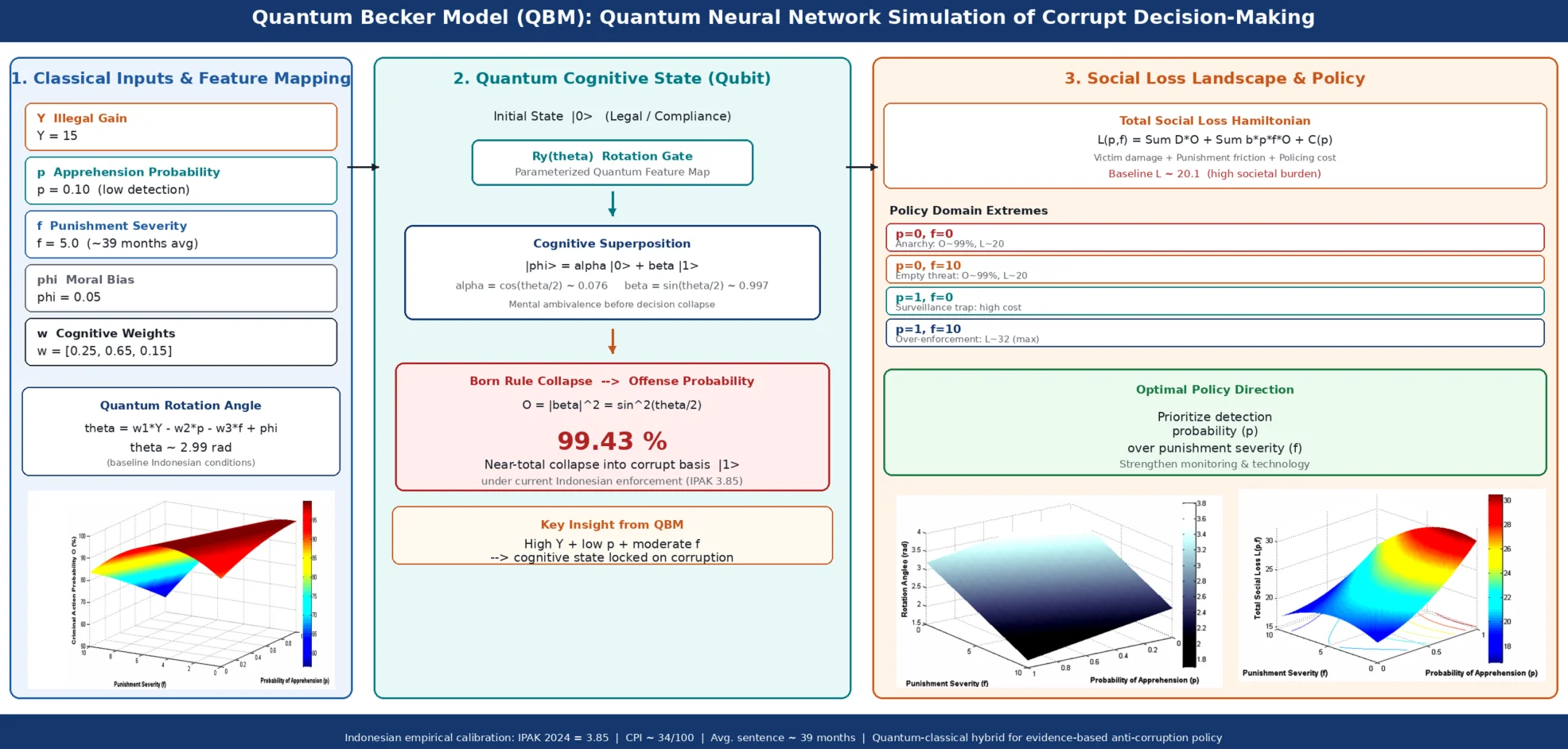
This study introduces the Quantum Becker Model (QBM), a novel quantum-classical hybrid framework that integrates rational choice theory with parameterized quantum neural networks. We created this model to better capture the complex, nonlinear cognitive dynamics that support corrupt decision-making in Indonesia, which conventional economic modeling approaches frequently fail to address. By representing individual choices as evolving qubit states modulated through rotation gates, the QBM naturally accounts for psychological superposition and abrupt behavioral shifts. We calibrated the model using empirical Indonesian data, including the 2024 Anti-Corruption Behavior Index (IPAK = 3.85), low detection probabilities, and sentencing records from 1,768 court decisions. Simulations revealed a near-total collapse of the cognitive state into the corrupt basis (offense probability 99.43 %) under current enforcement conditions. Analysis of the three-dimensional social loss landscape showed that increases in punishment severity yield little deterrence when the probability of apprehension remains low. Optimal policy configurations need significant improvements in detection capabilities rather than relying solely on harsher penalties. The QBM therefore provides policymakers with a robust computational tool for evaluating policy trade-offs and designing more effective, evidence-based anti-corruption strategies. Using quantum machine learning, law and economics, and computational public policy analysis, the proposed approach establishes a novel interdisciplinary connection. Its findings will contribute to quantum economics modeling theory as well as provide practical insights into designing more effective anti-corruption policies based on evidence.
Highlights
- A Quantum Becker Model (QBM) is introduced that represents corrupt decisions as evolving qubit states in a parameterized quantum neural network, capturing cognitive superposition and nonlinear behavioral shifts beyond classical economic models.
- Under current Indonesian enforcement conditions (IPAK 2024 = 3.85, low detection probability), the cognitive state collapses into the corrupt basis with an offense probability of 99.43 %.
- Analysis of the social-loss landscape shows that raising the probability of apprehension is substantially more effective than increasing punishment severity; optimal anti-corruption policy therefore prioritizes detection capacity and institutional monitoring.
1. Introduction
Corruption in Indonesia remains one of the most significant barriers to sustainable economic development, effective governance, and public welfare. It undermines institutional credibility, distorts resource allocation, reduces public trust, and weakens the effectiveness of government policies. Consequently, understanding the mechanisms underlying corrupt behavior and developing effective deterrence strategies have become important research topics in economics, law, and public policy. The economic perspective considers corruption as a rational decision-making process in which individuals evaluate the expected benefits of illegal activities against the expected costs arising from detection and punishment. This perspective has provided a rigorous analytical foundation for studying criminal behavior and designing optimal law enforcement policies [1]. The economic framework was further expanded by incorporating broader discussions on crime, punishment, and institutional responses, thereby establishing the foundations of modern law-and-economics theory [2]. Building upon this foundation, subsequent studies have investigated how enforcement policies should be designed to maximize deterrence while minimizing social costs. Stigler demonstrated that optimal law enforcement requires balancing enforcement expenditures with the expected reduction in criminal activities [3]. Polinsky and Shavell further developed the economic theory of public enforcement by examining the interactions among detection probability, monetary sanctions, and enforcement efficiency [4]. Likewise, Cooter and Ulen established law and economics as a comprehensive analytical framework for evaluating legal institutions using economic principles [5]. Ehrlich subsequently extended these concepts by analyzing criminal behavior through market-based economic mechanisms [6], while Shavell proposed an optimal deterrence framework that incorporated incapacitation and social welfare considerations into enforcement policy design [7]. Collectively, these studies demonstrate that crime prevention depends on complex interactions among economic incentives, punishment severity, enforcement probability, and institutional effectiveness. Despite these theoretical developments, corruption continues to represent a major governance challenge in many countries. In Indonesia, the Anti-Corruption Behavior Index (IPAK) decreased from the previous year to 3.85 in 2024, indicating a decline in anti-corruption behavior among the population [8]. Furthermore, the Corruption Eradication Commission (KPK) reported that public procurement remained the sector most vulnerable to corruption according to the Integrity Assessment Survey in 2024, highlighting persistent weaknesses in public sector governance and accountability [9], [10]. These findings suggest that corruption is governed by multiple interacting economic and institutional factors, making its behavior inherently nonlinear and difficult to represent using conventional analytical approaches. Traditional economic models generally employ deterministic optimization, econometric analysis, or analytical equilibrium solutions to investigate corruption and law enforcement. Although these methods have contributed substantially to the theoretical understanding of criminal behavior, they often rely on simplifying assumptions that limit their ability to capture nonlinear interactions and adaptive decision-making processes.
Recent advances in computational intelligence have demonstrated that neural-network-based approaches are capable of modeling highly nonlinear systems with superior predictive performance across various scientific and interdisciplinary domains. In particular, Quantum Neural Networks (QNNs) and Quantum Decision Theory (QDT) have emerged as powerful frameworks for representing complex human behavior and cognitive processing [11]. The rapid development of quantum computing has expanded the application of QNNs beyond traditional machine learning into econophysics and social science modeling [12]. Quantum representations based on qubit superposition and parameterized quantum circuits enable information to be encoded in higher-dimensional Hilbert spaces, capturing psychological ambivalence and context-dependent decision dynamics that violate classical probability theory [13]. Comprehensive reviews have also emphasized that QNNs offer substantial potential for optimization, pattern recognition, and decision dynamics while identifying significant opportunities for interdisciplinary applications in law and public policy [14]. Although QNNs have demonstrated promising performance in engineering, optimization, and machine learning, their application to economic models of crime and anti-corruption policy remains largely unexplored. Existing studies have primarily focused on engineering optimization, materials science, and computational learning problems, whereas very limited attention has been devoted to integrating quantum machine learning with economic theories of criminal behavior. Moreover, comparative legal studies have emphasized that criminal justice systems involve multidimensional interactions among legal institutions, enforcement mechanisms, and human decision-making processes, all of which require sophisticated computational frameworks for quantitative analysis [15]. Consequently, a significant research gap exists in applying QNNs to model optimal anti-corruption strategies within the framework of economic deterrence theory. To address this gap, this study proposes a Quantum Neural Network framework for modeling optimal anti-corruption strategies based on the economic theory of crime. The proposed model integrates Becker’s utility-based formulation with quantum state representation to estimate corruption probabilities under varying enforcement conditions and punishment policies. Unlike conventional deterministic approaches, the proposed framework exploits parameterized quantum rotations to represent decision states and employs quantum learning mechanisms to optimize deterrence strategies while minimizing expected social losses. The proposed approach establishes a novel interdisciplinary connection among quantum machine learning, law and economics, and computational public policy analysis. The findings are expected to provide both theoretical contributions to quantum economic modeling and practical insights for designing more effective evidence-based anti-corruption policies.
2. Methodology
We developed the QBM to simulate the cognitive decision-making processes of digital offenders under varying institutional enforcement strategies. The framework integrates classical rational choice theory with a parameterized quantum neural network (QNN), representing offender behavior as a quantum cognitive state shaped by economic incentives and law enforcement policies. All numerical simulations, parameter optimization, and three-dimensional behavioral visualizations were implemented in MATLAB® (MathWorks, Inc., Natick, MA, USA). The simulation environment was defined by three exogenous variables: illegal gain , probability of apprehension , and punishment severity . Illegal gain represents the expected economic benefit from cybercrime and is defined over the interval [0.0, ]. The institutional control variables are bounded: and . To evaluate the complete policy space, a tensor meshgrid was constructed across the domains of and , generating a continuous three-dimensional landscape of criminal decision probabilities and associated social losses. Decision formation is governed by a cognitive weight vector , where the elements denote the relative attention allocated to illegal gain, apprehension risk, and punishment severity, respectively. These weights satisfy the normalization constraint . A moral bias parameter is incorporated as an additive phase term to capture the offender’s intrinsic ethical disposition or resistance to criminal behavior. The weighted inputs determine a quantum rotation angle , which parameterizes a single-qubit rotation gate. This unitary transformation evolves the initial cognitive state into a quantum superposition with amplitudes and satisfying . The probability of committing an offense is then computed via Born’s rule: yielding a bounded probability that reflects the collapse of the mental superposition into criminal action or compliance. Finally, the effectiveness of each policy configuration is assessed using the Total Social Loss function , which quantifies the aggregate societal cost arising from enforcement expenditures and expected criminal activity. This formulation permits systematic evaluation of deterrence effectiveness and social welfare trade-offs across the policy landscape.
2.1. Qubit Representation of the cognitive state
In the classical Becker framework, an individual faces a binary choice between committing an offense or remaining in the legal sector, typically modeled via deterministic expected utility or classical logit/probit probability distributions. However, classical stochastic models operate under the assumption of epistemic uncertainty, assuming the agent possesses a definite, hidden preference that is merely unknown to the observer. In contrast, the Quantum Becker Model (QBM) conceptualizes corrupt decision-making as an intrinsic state of cognitive superposition, where conflicting psychological motivations (e.g., economic gain vs. moral risk) coexist simultaneously prior to the decision event. This decision state is represented as a complex state vector in a two-dimensional Hilbert space spanned by the orthonormal computational basis states and :
where and are complex probability amplitudes ( satisfying the normalization condition:
The term gives the probability of observing the criminal action upon measurement, directly corresponding to the offense supply function in classical economic theory.
2.2. Feature mapping via parameterizable quantum rotation gates
To encode the classical Beckerian variables into the quantum domain, the QBM employs quantum feature mapping through a parameterized rotation gate. Let denote illegal gain, the probability of apprehension, and the severity of punishment. The mental rotation angle is defined as a linear function of these inputs:
where represents the cognitive weights (variational parameters of the QNN) that capture the individual’s risk preferences and sensitivity to enforcement and is the internal moral bias term. The quantum state is evolved from the ground state by applying the rotation operator:
The probability of getting a qubit (illegal/criminal choice) from the output is as follows:
This implies that the cumulative quantum criminal action probability function resulting from an independent individual's conscious decision is generally derived via Born’s Rule as follows:
This formulation yields the individual supply of offense probability function for agent in a given socio-legal scenario. The cognitive weight vector scales the subjective elasticities to illegal rewards, apprehension risks, and punishment severity, while the moral bias accounts for intrinsic ethical resistance. These parameters were numerically mapped, simulated, and optimized across diverse socio-legal profiles using custom hybrid quantum-classical algorithms implemented in MATLAB®. The model thereby emphasizes that criminal decisions emerge from internal cognitive structures rather than purely automatic responses to external incentives. Modeling human criminality within a complex Hilbert space offers distinct predictive and theoretical advantages over classical stochastic frameworks: 1) Representation of Cognitive Superposition: Rather than assuming a fixed preference, the Hilbert space representation allows the offender’s mind to reside in a continuous, fluid superposition state. Complex probability amplitudes account for internal psychological friction, hesitation, and dynamic cognitive interference prior to action; 2) Capturing Non-linear Phase Transitions: While classical logistic functions model smooth, gradual probability shifts, Born's rule projection introduces periodic non-linearities. This naturally accounts for abrupt behavioral collapses – such as sudden transitions into widespread corruption when enforcement oversight drops below a critical institutional threshold; and 3) Context Sensitivity and Quantum Interference: Complex amplitudes allow the model to incorporate phase shifts , capturing how internal ethical biases and situational context interfere constructively or destructively with external enforcement incentives.
2.3. Formulation of the quantum social loss function
To bridge microscopic quantum cognitive collapses with macroscopic state budgeting, the government is modeled as a centralized optimizing entity seeking to minimize the global expectation value (⟨⟩) of a social loss Hamiltonian operator (). While classical economics relies on scalar cost equations, this quantum economic framework translates these costs into an energy matrix where the eigenvalues represent the structural strain or energy of institutional and policy failure. The aggregate population comprising potential offenders is treated as a multi-qubit grand ensemble with a joint wave function . The total Hamiltonian operator is constructed as the summation of individual penalty operators plus the state’s operational enforcement costs . The public policy problem is modeled actively as determining enforcement parameters ] to minimize the quantum expectation value (⟨⟩) of a social loss Hamiltonian operator ().
Step 1: Construction of the Social Loss Hamiltonian.
To scale this framework to a macroscopic system, we treat the overall society containing a population of potential offenders as a grand ensemble. While localized criminal networks are grouped into entangled blocks governed by density matrices , the aggregate population is represented by a multi-qubit joint wave function . The total Hamiltonian operator is designed as the summation of individual penalty operators plus the operational enforcement costs borne by the state, :
where represents the Total Social Loss Hamiltonian Operator of the state system across distinct socio-legal environments or cases, represents the identity matrix, and integrates real socio-economic damage factors mapped exclusively onto the criminal state via the quantum projection operator The Total Social Loss Hamiltonian Operator, denoted as , is the core mathematical operator used to quantify, evaluate, and minimize the total fiscal and behavioral costs inflicted on society by crime and enforcement operations. In classical economics, a policymaker uses a standard scalar cost equation. In a quantum economic framework, this cost is translated into a Hamiltonian matrix (). In physics, a Hamiltonian represents the total energy of a physical system; in quantum economics, it represents the total socioeconomic strain or “loss energy” of the state. Energy of Policy Failure: The eigenvalues of this operator represent the possible levels of social loss. A higher expectation value ⟨⟩ means the current legal policy () is failing, causing high crime or excessive enforcement costs. acts as the global objective function. The state’s goal during optimization is to find the exact combination of apprehension probability () and punishment severity () that minimizes this operator. mathematically fuses quantum behavioral variables (the wave function of criminal intent, embedded in ) with classical economic constraints (the tangible cash spent on hiring police officers, represented by the operational enforcement cost ):
where, represents the estimated net damage caused by a criminal offense, is the severity of the punishment, is the probability of apprehension, and defines the punishment friction coefficient ( if the punishment is a financial fine, representing a pure wealth transfer without deadweight loss; if the punishment is imprisonment, which triggers budgetary and custodial infrastructure costs for the state). The Localized Crime and Punishment Friction Operator, , isolates the socioeconomic costs incurred within a specific scenario . The projection operator acts as a computational switch, penalizing the system only when an agent collapses into the criminal execution state . The scalar coefficient combines direct societal damage () with institutional punishment friction (). When applied to the agent's wave function, this operator extracts the real-world expected loss via Born's Rule, formalizing the fiscal trade-offs of incarceration infrastructure (). In quantum mechanics, a wave function describes all possible physical positions of a particle. However, within the context of Quantum Becker Model (QBM), the agent’s wave function (∣⟩) represents the mathematical formalization of an offender's internal psychological state or mental landscape before a final choice is made. Instead of assuming a static, deterministic mind, the wave function captures the fluid human experience of cognitive superposition, the state of mental ambivalence where an individual simultaneously weighs obeying the law versus violating it. Here is the precise breakdown of its structural meaning in your model: 1) The Structure of Mental Superposition: Before a definitive action is executed, the agent's mind does not sit at a hard 0 or 1. It exists as a linear combination of both possibilities within a Hilbert space: . (The Compliance State): The cognitive baseline of law-abiding behavior. (The Offense State): The cognitive state of executing the crime. and (Probability Amplitudes): Complex numbers representing the psychological weights pulling the agent toward compliance or defiance, respectively. 2) Dynamic Mental Rotation: The agent’s wave function is highly dynamic. When policymakers adjust external variables, such as scaling penal severity () or increasing apprehension probability (), these socio-legal shifts act as external forces that actively rotate the wave function by a specific mental angle (). Aggressive Enforcement: Rotates the wave function toward the legal compliance vector (). High Criminal Payoffs () and Degraded Moral Bias (): Rotates the wave function toward the criminal vector (∣1⟩). 3) Wave Function Collapse into Action: When the agent encounters a real-world opportunity to commit an offense, this fluid mental superposition undergoes wave function collapse due to interaction with the environment. The psychological uncertainty instantly collapses into a definitive, observable macro-behavior: either absolute compliance () or active violation (∣1⟩). The statistical likelihood of this collapse occurring is extracted via Born's Rule , which forms the core of our predictive framework.
Step 2: Evaluation of the Quantum Expectation Value.
In quantum economic modeling, Eq. (15) represents the Global Social Loss Expectation Value. It defines how the state calculates its real-world economic and social costs by measuring the “energy” of policy failure embedded within the system's quantum psychological states. While the Hamiltonian is a matrix operator representing potential loss states, this bra-ket projection collapses those quantum operators into a single, real-world scalar cost (as in currency denomination or utility) that policymakers can actively minimize. The social objective function is evaluated through standard bra-ket projection:
Due to the orthogonality and normalization properties of quantum wave functions , the composite multidimensional matrix multiplication simplifies elegantly into single-qubit expectations for each individual :
Step 3: Expansion of the Dirac Inner Product via Born’s Rule.
Referring back to Eq. (4), the inner product bracket is expanded as a projection of state amplitudes:
Taking the absolute square provides the exact probability of the circuit collapsing into a criminal action:
Substituting Eq. (18) into Eq. (16) yields the complete parameterized QNN social loss equation:
Victim Damage Costs represent the actual harm caused by the crime. One obvious instance is when criminals steal money from bank accounts using phishing links, forcing the bank to spend money to reverse the transactions and address the security attack. Punishment Friction Costs are the costs borne by taxpayers to punish imprisoned criminals. A concrete instance is the daily cost of housing an offender in a high-security prison, which includes jail guards, prisoner food, and inmate medical care. Policing Budget Costs are the funds that the government spends directly to arrest criminals and prevent crime. A clear example is purchasing specialized tracking software licenses and funding digital forensics police units. Eq. (14) provides a rigorous bridge between domains: 1) Microscopic Level: Individual decision-making is governed by quantum cognitive rotations () and wave function collapses ; and 2) Macroscopic Level: The state evaluates these expected collapses across the population ensemble, directly summing the statistical victim damage and penal friction costs alongside strictly classical, tangible state budget expenditures (e.g., quadratic policing costs ).
3. Results and discussions
3.1. Modeling optimal anti-corruption strategies via quantum neural networks: Indonesian context
In this study, the Quantum Becker Model (QBM) is initialized with empirical baseline parameters explicitly tied to these Indonesian datasets. The model mapped classical economic metrics into a parameterized quantum landscape using the following baseline values: illegal gain 15 (representing substantial potential rents from corrupt transactions), probability of apprehension 0.10 (directly mirroring Indonesia’s Corruption Perceptions Index score of 34/100, indicating low detection risk), and punishment severity 5.0 (aligned with an average custodial sentence of approximately 39 months derived from Indonesia Corruption Watch records [10]). The moral bias parameter 0.05 captured limited intrinsic ethical resistance, consistent with societal permissiveness quantified by the 2024 Anti-Corruption Behavior Index (IPAK = 3.85). The Anti-Corruption Behavior Index (IPAK) for Indonesia in 2024 stood at 3.85 on a scale of 0 to 5, reflecting a slight decline from 3.92 recorded in 2023. Higher IPAK values indicate stronger anti-corruption norms and behaviors within society, whereas lower values signal increasing permissiveness toward corrupt practices [8]. The index comprises two core dimensions: Perception and Experience. The Perception Index decreased from 3.82 in 2023 to 3.76 in 2024, while the Experience Index fell from 3.96 to 3.89 over the same period. These trends suggest a modest erosion in both public perception of and direct encounters with corruption. Urban residents exhibited a marginally higher IPAK (3.86) compared to their rural counterparts (3.83). A clear positive association also emerged between educational attainment and anti-corruption behavior: individuals with education below senior high school recorded an IPAK of 3.81, those with senior high school education scored 3.87, and those with higher education achieved 3.97. These patterns underscore the persistent challenge of cultivating robust ethical standards across diverse socioeconomic contexts, while highlighting education’s potential role in strengthening societal resistance to corruption [8]. Complementing these behavioral indicators, Indonesia Corruption Watch documented systemic enforcement weaknesses. Analysis of 1,768 court decisions involving 1,871 defendants revealed an average prison punishment of only 3 years and 3 months and an average fine of Rp180 million. State financial losses totaled Rp330.93 trillion. In this study, the Quantum Becker Model (QBM) is initialized with empirically based parameters obtained from corruption data in Indonesia. The model mapped classical economic metrics into a parameterized quantum landscape using the following baseline values: illegal gain 15.0 representing substantial potential rents from corrupt transactions), probability of apprehension 0.10 (consistent with Indonesia’s Corruption Perceptions Index score of 34/100, indicating low detection risk), and punishment severity 5.0 (aligned with an average custodial sentence of approximately 39 months). The cognitive weight vector [;;] [0.25;0.65;0.15] reflected localized risk preferences, with the highest weight assigned to apprehension avoidance. The moral bias parameter 0.05 captured limited intrinsic ethical resistance, consistent with societal permissiveness toward petty corruption (IPAK score of 3.85 on a 0-5 scale). Socio-economic net damage per offense was set at 20.0, scaled to reflect the aggregate state financial losses (Rp56 trillion annually from investigated cases) [10]. Substitution of these parameters into the feature mapping function produced a mental rotation angle 2.9900 radians. Application of the gate evolved the initial state into . Application of Born’s rule produced a criminal action probability of 99.43 %, reflecting a near-complete collapse of the cognitive state into the corrupt basis. Evaluation of the macroscopic social loss, which incorporated a quadratic enforcement cost function, revealed notable differences across policy regimes. Under a financial penalty system, the expected Total Social Loss was 19.9853. When institutional frictions associated with imprisonment were factored in, this value increased to 20.2339. In the baseline scenario, the total social loss stood at 20.1221, highlighting the substantial societal burden resulting from inadequate deterrence. These quantum-derived findings closely align with Indonesia’s ongoing enforcement challenges. High potential gains from corruption, persistently low detection probabilities, and relatively moderate sanctions continue to sustain widespread corrupt practices, even in the presence of established anti-corruption institutions. The results emphasize the profound human and societal costs of systemic weaknesses in accountability and justice. The results demonstrate that marginal increases in punishment severity produce limited behavioral shifts when apprehension probability remains depressed. Fig. 1 shows the non-linear response surface of criminal behavior mapped against varying probabilities of apprehension and punishment severities, with behavioral hyperparameters held constant to the case conditions. The surface is bounded dynamically between 0 % and 100 % via Born’s rule, highlighting the distinctive non-linear wave-like phase transitions where increases in legal penalties decouple from traditional deterrence outcomes. Fig. 2 illustrates the direct, steady gradient shift of the agent’s psychological decision state prior to passing through the quantum network’s periodic activation operator, serving as the cognitive foundation for the case analysis.
Fig. 13D criminal action probability model
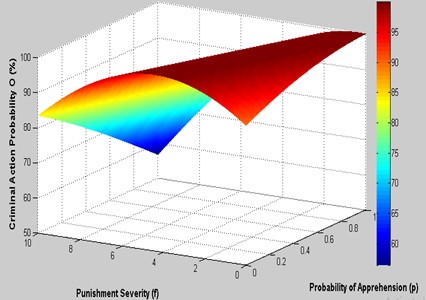
Fig. 23D cognitive mental rotation angle (θ)
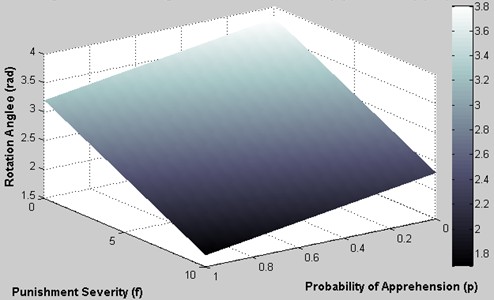
Fig. 3 illustrates the 3D response surface topology of the Global Social Loss Function, denoted as , plotted across the complete operational policy domain of the probability of apprehension ([0, 1.0]) and punishment severity ( [0, 10.0]). The geometric morphology of this continuous non-linear field exposes the critical trade-offs faced by policymakers when distributing public resources between immediate enforcement visibility and subsequent statutory penalty frameworks.
Fig. 33D surface plot of global social loss function
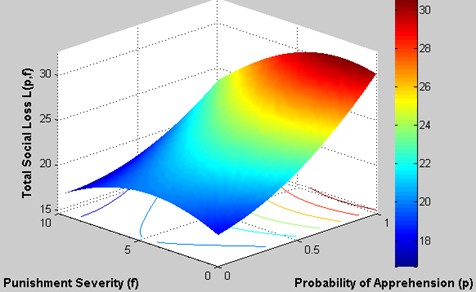
Overall, the findings emphasize that effective anti-corruption strategies must prioritize substantial improvements in detection probability through institutional strengthening and technological monitoring to meaningfully alter cognitive decision landscapes and reduce aggregate social losses.
3.2. Boundary value and topological analysis
A systematic evaluation of the four boundary coordinate vectors of the policy domain matrix across Figure 1 (The Behavioral Response Surface, ) and Fig. 3 (The Global Social Loss Field, ) reveals the structural mechanics governing the Quantum Becker Model (QBM). Deconstructing these asymptotic limits reveals the non-linear coupling between individual cognitive states, active state expenditure, and aggregate social cost.
– Boundary Coordinate Vector ( 0, 0): The Anarchic Negligence State.
Behavioral reality in Figure 1 shows criminal probability reaches its absolute maximum peak ( 99). Because there is no fear of legal consequences, individual quantum cognitive vectors rotate completely into compliance defiance. Fiscal Dynamics and Social Loss in Fig. 3 shows Total Social Loss rests at a high baseline ( 20.0). Under these coordinates, the state spends absolutely nothing on public safety. The quadratic policing budget cost () is completely empty, and because no one is caught, there are no prisoners to feed or guard, reducing incarceration friction to zero . However, Social Loss does not equal the Government Budget. Total social loss is the sum of government spending plus the direct damages felt by citizens . Therefore, even though the government's operational bill is zero, society as a whole suffers a severe loss of 20.0 because criminals operate with total freedom, inflicting unmitigated financial and physical damage on the population.
– Boundary Coordinate Vector ( 0, 10): The Empty Threat Paradox.
Behavioral Reality in Fig. 1 shows criminal probability remains locked at its maximum peak, completely unchanged by the maximum penalty setting. Fiscal Dynamics and Social Loss in Fig. 3 shows Total Social Loss remains stagnated at 20.0. This corner exposes the psychological and mathematical flaw of severe laws without enforcement. In the model’s cognitive equation, punishment severity () is multiplied directly by the probability of apprehension (). If the probability of being caught is zero, the functional deterrent value drops to zero. Criminals recognize that a severe statutory sentence is an empty threat if there are no police officers to arrest them. Because no arrests occur, the state budget remains zero (no surveillance costs, no active prisoners), while society continues to absorb the maximum victim damage cost (20.0).
– Boundary Coordinate Vector ( 1, 10): The Totalitarian Over-Enforcement Crisis.
Behavioral Reality in Fig. 1 shows Criminal probability drops down to its lowest baseline rate, meaning the population is successfully deterred into behavioral compliance. Fiscal Dynamics & Social Loss in Fig. 3 shows Total Social Loss climbs to its absolute global maximum peak ( 32), covered entirely in the dark red heat zone. At this node, the state achieves its goal of a highly controlled environment, but it triggers an economic collapse. The state is hit by a massive financial burden from two compounding directions: 1) Surveillance Costs: Maintaining a perfect, omnipresent detection apparatus ( 1.0) maximizes the quadratic policing function and 2) Incarceration Friction: For the small percentage of offenses that still occur, processing them under maximum severity ( 10) with a heavy friction coefficient ( 0.5) creates an expensive penal tax. The state budget is completely drained by surveillance hardware, police payroll, and long-term correctional facility overhead. This proves that a crime-free society can be an expensive, unsustainable economic ideal.
– Boundary Coordinate Vector ( 1, 0): The Omnipresent Surveillance Trap.
Behavioral Reality in Fig. 1 shows criminal probability drops to a moderate mid-range baseline. The high visibility of the police causes some quantum cognitive hesitation, but compliance is incomplete. Fiscal Dynamics and Social Loss in Fig. 3 shows Total Social Loss remains high ( 23.5), colored in a cool cyan/yellow transition zone. Here, the state deploys police squads on every corner ( 1.0), which immediately drains the public ledger by the maximum fixed amount of 10.0. However, because the statutory code mandates zero actual penalties ( 0), the deterrence is incomplete. Opportunistic offenders quickly realize that even though they will definitely be caught, they face no real punishment or fines. As a result, the state is forced to pay maximum surveillance costs while society continues to suffer from mid-level victim damage, making this position highly inefficient.
3.3. Analysis of the quantum gradient descent optimization code
Section 3 of the Appendix outlines the pure computational quantum gradient descent algorithm built without external libraries. The algorithm evaluates analytical partial shifts across the social loss landscape via the calculus chain rule. The marginal change in criminal response relative to the internal circuit angle is evaluated as::
The algorithm then backpropagates this quantum gradient to the state's policy control instruments and using the cognitive system weights:
4. Conclusions
The present research established the Quantum Becker Model (QBM), an innovative hybrid quantum-classical framework that combines Becker's rational choice theory and simulated quantum neural networks. By representing corrupt decisions as evolving qubit states in a Hilbert space, the model effectively captures nonlinear cognitive dynamics, mental superposition, and behavioral phase transitions that traditional econometric approaches fail to recognize. Numerical simulations based on Indonesian empirical data, including an IPAK score of 3.85, a Corruption Perceptions Index of 34/100, an average imprisonment of 39 months, and Rp330.93 trillion in state-based financial losses, revealed a close failure of the cognitive state into the corrupt basis, resulting in a 99.43 % offense probability under current legal conditions. A study of the three-dimensional social loss model revealed that increasing punishment severity produces minimal prevention when the risk of apprehension remains low. Optimal policy configurations require significant improvements in detection capabilities rather than relying solely on severe punishments. The QBM offers policymakers a computationally powerful tool for assessing complex enforcement trade-offs and developing evidence-based anti-corruption strategies. By linking quantum machine learning, law and economics, and public policy analysis, the framework advances theoretical understanding of criminal decision-making while also providing practical pathways to reduce aggregate social losses. Its findings highlight the critical importance of improving institutional detection mechanisms and technological monitoring in order to transform cognitive systems towards compliance. Future research may extend the model to incorporate multi-agent entanglement for network effects and enable real-time policy optimization. Ultimately, the QBM illustrates the potential of quantum-inspired approaches to address persistent governance challenges and foster more accountable, equitable societies.
References
-
G. S. Becker, “Crime and punishment: an economic approach,” in The Economic Dimensions of Crime, London: Palgrave Macmillan UK, 2016, pp. 13–68, https://doi.org/10.1007/978-1-349-62853-7_2
-
G. S. Becker and W. M. Landes, “Essays in the economics of crime and punishment,” National Bureau of Economic Research (NBER), New York, NY, USA, 1974.
-
G. J. Stigler, “The optimum enforcement of laws,” Journal of Political Economy, Vol. 78, No. 3, pp. 526–536, Jul. 2002, https://doi.org/10.1086/259646
-
A. M. Polinsky and S. Shavell, “The economic theory of public enforcement of law,” National Bureau of Economic Research, Cambridge, MA, Mar. 2007, https://doi.org/10.3386/w6993
-
R. Cooter and T. Ulen, Law and economics. Upper Saddle River, NJ, USA: Prentice Hall, 2011.
-
I. Ehrlich, “Crime, punishment, and the market for offenses,” Journal of Economic Perspectives, Vol. 10, No. 1, pp. 43–67, Feb. 1996, https://doi.org/10.1257/jep.10.1.43
-
S. Shavell, “A simple model of optimal deterrence and incapacitation,” National Bureau of Economic Research, Cambridge, MA, Dec. 2014, https://doi.org/10.3386/w20747
-
“Indonesia’s 2024 anti-corruption behavior index (IPAK) is 3.85, a decrease compared to 2023,” Badan Pusat Statistik, BPS Indonesia, Jul. 2024.
-
“Procurement of goods and services, the most corruption-prone sector in the 2024 SPI findings.” Berita Resmi KPK. https://www.kpk.go.id/id/ruang-informasi/berita/pengadaan-barang-dan-jasa-sektor-paling-rentan-korupsi-di-temuan-spi-2024 (accessed Jan. 2024).
-
“Report on the results of monitoring trends in corruption sentencing in 2024,” Indonesia Corruption Watch, Jakarta, Indonesia, Dec. 2025.
-
V. I. Yukalov and D. Sornette, “Mathematical structure of quantum decision theory,” Advances in Complex Systems, Vol. 13, No. 5, pp. 659–698, Nov. 2011, https://doi.org/10.1142/s0219525910002803
-
E. Haven and A. Khrennikov, Quantum Social Science. Cambridge, UK: Cambridge University Press, 2013, https://doi.org/10.1017/cbo9781139003261
-
C. Conti, “Variational algorithms, quantum approximate optimization algorithm, and neural network quantum states with two qubits,” in Quantum Machine Learning, Cham: Springer International Publishing, 2023, pp. 141–167, https://doi.org/10.1007/978-3-031-44226-1_6
-
Y. Kwak, W. J. Yun, S. Jung, and J. Kim, “Quantum neural networks: concepts, applications, and challenges,” arXiv:2108.01468, Aug. 2021, https://doi.org/10.48550/arxiv.2108.01468
-
C. Roberson and D. K. Das, “Introduction to the study of comparative legal models,” in An Introduction to Comparative Legal Models of Criminal Justice, Boca Raton, FL, USA: Routledge, 2016, pp. 18–49, https://doi.org/10.1201/b19582-3
About this article

The authors have not disclosed any funding.
The authors express their sincere thanks to the Ministry of Industry, the Republic of Indonesia, for providing the necessary facilities.
The datasets generated during and/or analyzed during the current study are available from the corresponding author on reasonable request.
Valentinus Galih Vidia Putra conceived the study, developed the core methodological approach and quantum model, validated the empirical data, and drafted and edited the original manuscript. Valentinus Galih Vidia Putra, Risita Dwi Astuti, Surya Mega Wijaya, Achmad Ibrahim Makki, Arief Dewanto, and Wiwiek Eka Mulyani collaboratively drafted sections of the manuscript, provided critical reviews, and contributed to multiple rounds of revision. All authors read the final manuscript, provided constructive feedback, and approved the version submitted for publication.
The authors declare that they have no conflict of interest.

