Abstract
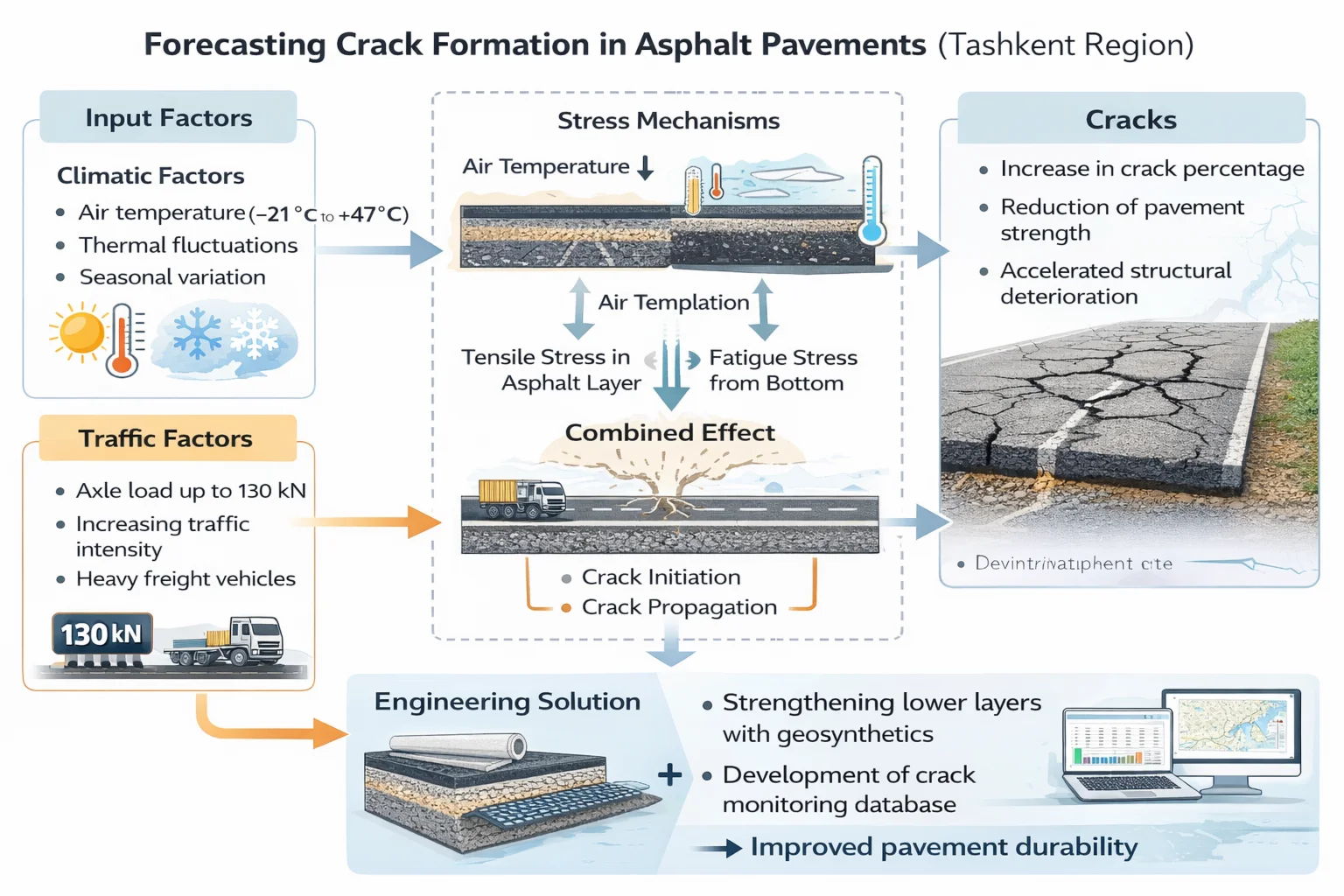
Forecasting the occurrence of cracks in asphalt-concrete highway pavements worldwide - while considering natural and climatic influences - is essential for ensuring high-quality road maintenance, preserving pavement value at standard levels, guaranteeing traffic safety, and improving both transportation services and overall societal mobility. In this context, special emphasis is placed on identifying the underlying causes of crack formation, predicting their development over time, and assessing how these defects affect the functional performance of the roadway and the load-bearing capacity of the pavement structure. This includes evaluating the consequences of cracks on user comfort and safety, determining effective methods for their mitigation, and establishing a comprehensive database of crack characteristics.
Highlights
- A strong correlation between low air temperature and crack formation in asphalt pavements was identified for Tashkent region conditions
- Repeated traffic loads combined with climatic factors significantly reduce pavement strength and accelerate crack development
- A quantitative relationship between pavement temperature, air temperature, and crack percentage was established
- Increased axle loads (up to 130 kN) intensify structural deterioration compared to countries using 100 kN standards
- Strengthening lower pavement layers with geosynthetics improves resistance to thermal and fatigue cracking
1. Introduction
Public highways are roads that are part of the international highway network in accordance with international treaties of the Republic of Uzbekistan, providing transport links between the administrative centers of regions and districts, cities of regional subordination, cultural and industrial centers, as well as connecting these centers with roads of international importance, airports, railway stations, ports and berths, as well as with neighboring countries. roads connecting the administrative centers of districts with cities, towns and villages, as well as roads connecting with roads of national importance.
This article research serves to a certain extent the implementation of the tasks defined in the Decree of the President of the Republic of Uzbekistan PD-No. 60 “On the Development Strategy of New Uzbekistan for 2022-2026” [1], PD-No. 5890 “On Measures for Deep Reform of the Road Management System of the Republic of Uzbekistan” [2], PR-4545 “On measures to further improve the road sector management system” [3] and other regulatory legal documents related to this activity [4, 5].
Leading experts [6-11] conducted scientific studies to assess the impact of traffic flows and natural and climatic factors on the road design. Their research has shown that the formation of cracks is greatly influenced not only by the calculated loads, but also by the number of load cycles under the influence of natural and climatic factors. Repeated loads lead to residual deformations, which can lead to deformations and cracks in the future. Forecasting cracks in asphalt concrete pavements helps to make decisions about timely repair and improvement of the condition of road structures and pavement.
As a result of the low technical level of the highways, the amount of traffic not corresponding to the parameters of the highways, the increase in the level of loading on some sections of the highways, the average speed on the roads has decreased to 40 km/h, and this serves to increase the cost of transportation of goods by 20-25 %. It is observed that the cost of transportation increases by 30-50 % due to the unsatisfactory level of transport and operational indicators of highways [12].
The total length of the highway network of Tashkent region is 14,288 km, of which 3,965 km are highways in general use, 1,310 km are city roads and streets, and 9,610.1 km are internal roads. The density of highway network of Tashkent region is 24.6 km/100 km2 [13] and this indicator is much less than that of Andijan, Fergana, Namangan and Khorezm regions.
The increase in the number of cars on the roads of the Republic of Uzbekistan is 21 % per year [14]. The highway network of the Republic of Uzbekistan was designed and built 20-30 years ago [15], and the current loads from cars were not taken into account. The problem is that the loads on the road from the axle of the vehicle are constantly increasing, but financial and technical means are not allocated enough to strengthen the road structure.
2. Problem formulation
One of the main problems of the road sector is the occurrence of cracks in the pavements of highways. With the appearance of cracks, the passage of surface water into the structure of the road surface is observed, and it is precisely in that section of the road that rapid deterioration of the pavement and defects occur [single cracks, transverse and longitudinal cracks, network of cracks, etc.]. The following pictures show the available types of cracks.
According to the reasons for the appearance of cracks, they are divided into technological and operational cracks.
Technological cracks in asphalt concrete pavements often occur as a result of poor-quality fusion of hot and cold laying lines during the construction of the upper layer.
Operational cracks in pavements occur as a result of complex effects of external force factors. According to the reasons for their appearance, they can be divided into 3 main types: Cracks that appear under the influence of temperature, fatigue and those that are reflected on the surface of the pavement.
Fig. 1Transverse cracks. Photo was taken by Mamatkulov Muzaffar in October 2023, in highway M39b
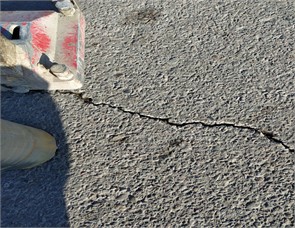
Fig. 2Longitudinal cracks. Photo was taken by Mamatkulov Muzaffar in October 2023, in highway A373a
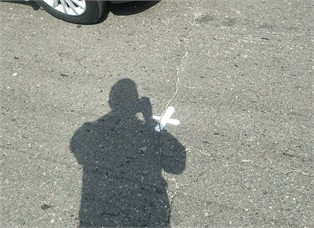
Fig. 3Both transverse and longitudinal cracks. Photo was taken by Mamatkulov Muzaffar in October 2023, in highway D001
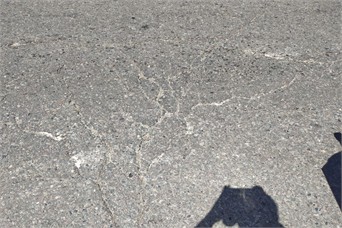
Fig. 4A network of cracks. Photo was taken by Mamatkulov Muzaffar in October 2023, in highway D012
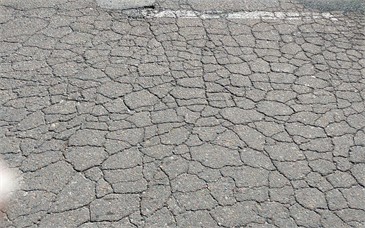
Fig. 5The process of turning cracks into grooves. Photo was taken by Mamatkulov Muzaffar in October 2023, in highway D012
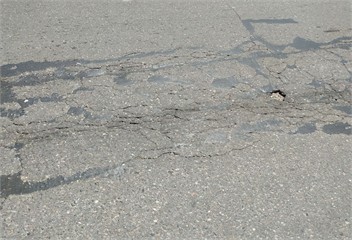
Fig. 6Y and X-shaped cracks. Photo was taken by Mamatkulov Muzaffar in October 2023, in highway D021
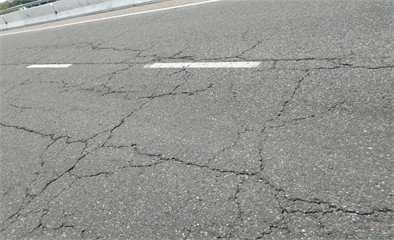
Thermal cracks occur as a result of constant changes in air temperature, that is, from cold air to hot air and from hot air to cold air. This type of cracks develops mainly from the top down, that is, from the pavement to the base.
Fatigue cracks occur when the upper layer bends under the influence of repeated traffic loads. This type of cracks develops mainly from the bottom to the top, that is, from the base to the pavement.
Cracks develop rapidly in spring and autumn, and expand rapidly in winter and spring. In the summer, as a result of softening of the bitumen, expansion of the covering material, small cracks are closed. Cracks are usually classified by their width. However, due to different classifications in different countries, they can be standardized as follows: narrow cracks up to 3-5 mm, medium cracks up to 5-10 mm, wide cracks up to 10-30 mm and very wide cracks larger than 30 mm [16].
3. Materials and methods
The area of Tashkent region is 15.3 thousand km2. The population is 2.931 million people. The region includes 15 districts (Bekabad Boka, Bostonliq, Zangiota, Aqqorgon, Ohangaron, Parkent, Piskent, Chirchik, Yangiyol, Qibray).
The climate is strictly continental. Winter is wet, relatively warm, summer is long, hot and dry. The average temperature in January is –1.3-1.8 °C, the lowest temperature is –34 °C (in the plains), –38 °C (in the foothills), the average temperature in July is 26.8 °C, the highest temperature is 43-47 °C. It rains 250 mm per year in the plains, 350-400 mm in the foothills, and 500 mm in the mountains. Most of the precipitation falls in spring and winter.
Fig. 7Daily temperature for November 2023
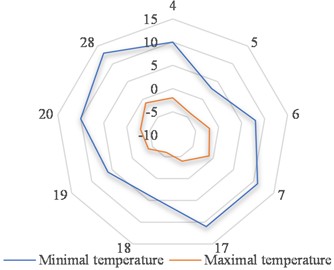
Fig. 8Daily temperature for December 2023
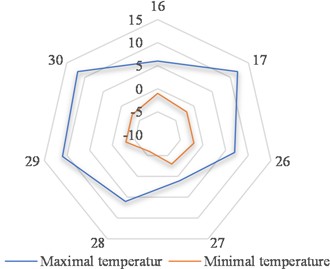
However, these data are taken from the data of Tashkent weather stations, and they do not correspond to the air temperature in real conditions. Real results when measurements are carried out at research facilities are shown as follows (Fig. 7-11).
Fig. 9Daily temperature for January 2024
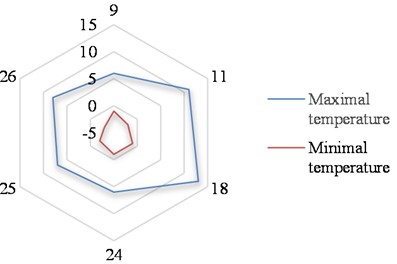
Fig. 10Daily temperature for February 2024
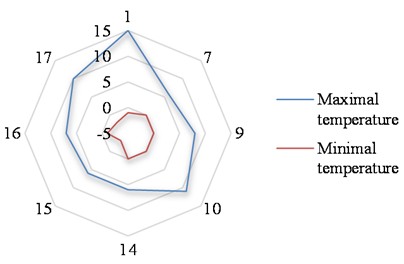
Fig. 11Daily temperature for December 2024
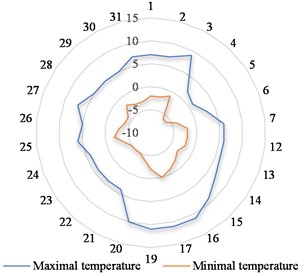
From Fig. 7-11, we can see that during this period, the air temperature remained in the negative state for many days. Especially in January 2023, we see the temperature even drop to –21 °C. This, in turn, creates tensile forces in the pavement and causes cracks to appear in the asphalt concrete pavement. Asphalt-concrete pavements of highways change their physical and mechanical properties due to air temperature.
In addition to air temperature, the following factors also have a significant impact on the appearance of cracks on roads.
Fig. 12Factors causing crack formation on highways
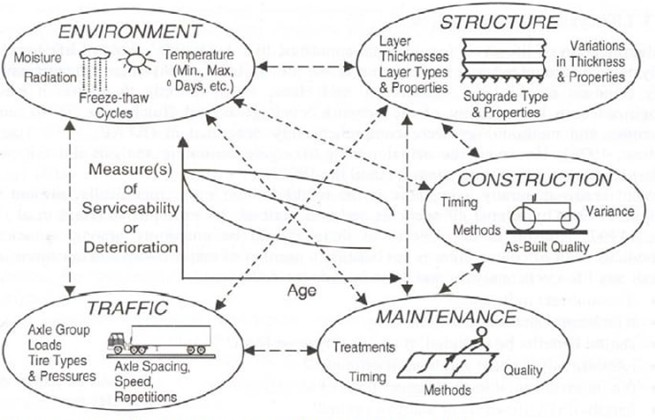
In particular, loads from heavy vehicles on roads accelerate the emergence of cracks on roads.
In most countries of the world, there are restrictions on the weight parameters of vehicles that determine their carrying capacity (Table 1).
Table 1National restrictions on vehicle weight parameters in Europe and the CIS
Estimated axle load of the vehicle | Countries |
9-9,5 t | Poland, England |
10 t | Russia, Moldova, Estonia, Latvia, Lithuania, Kazakhstan, Belarus, Ukraine, Finland, Norway, Denmark, Hungary, Bulgaria, Austria |
11 t | Czech Republic, Germany, Slovakia, Netherlands |
12 t | Portugal, Italy, Belgium |
13 t | Uzbekistan, France, Spain, Greece |
Table 1 shows that 16 out of 31 countries, i.e. 54.5 %, prefer to focus on designing static loads of 10 tons (or 100 kN) per vehicle axle.
Most of these States are located near oceans and seas. Therefore, it is enough for them to design non-rigid road structures up to 100 kN. Other countries, in particular, are landlocked. Single-track structures with a load capacity of more than 130 kN are being designed in Uzbekistan, since the main cargo turnover is accounted for by road transport. That is why in our republic, under the influence of traffic loads and climatic factors, wear, deformation and damage to the road surface are observed. Today, about 70 percent of the country's highways are in need of repair and reconstruction.
4. Results and discussion
Studying the patterns of changes in the temperature of the asphalt concrete pavement in different periods of the year shows that there is a difference between the low air temperature in winter and the asphalt concrete temperature in the pavement, and the sharper the drop in air temperature, the greater this difference. The temperature change of the asphalt concrete pavement has a different character in the summer-autumn period.
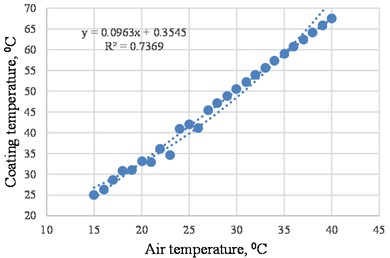
Therefore, we have studied the dependence of the appearance of cracks on the air temperature and presented them in the following Fig. 13-15.
Fig. 13Correlation between air temperature and percentage of cracks for Tashkent region
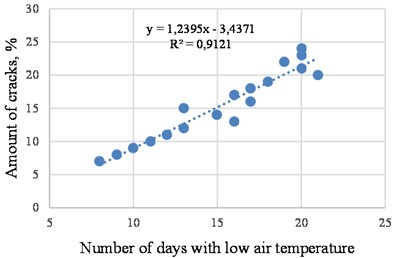
Fig. 14Dependence of pavement temperature on air temperature in Tashkent region
In addition to air temperature, based on this situation, the patterns of dependence of freight vehicles on the strength of the road surface at the research sites were determined and are presented below.
Fig. 15Dependence of pavement temperature on air temperature in Tashkent region
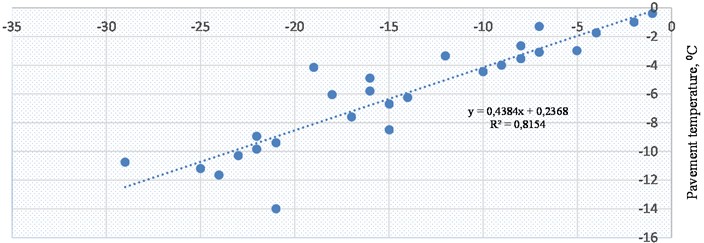
Fig. 16The patterns of road surface strength dependence on traffic flow intensity on the A373a highway
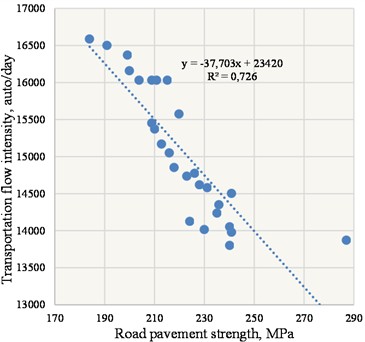
Fig. 17The patterns of road surface strength dependence on traffic flow intensity on the 4R12 highway
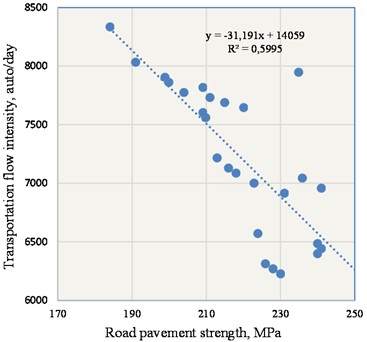
Fig. 18The correlation patterns between cracks and strength indicators in pavements on highway A373a
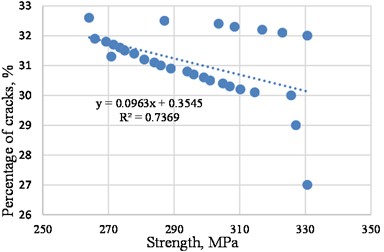
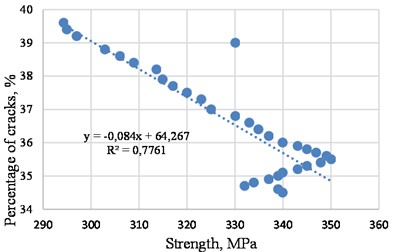
Fig. 19The correlation patterns between cracks and strength indicators in pavements on highway 4R12
5. Conclusion
In the CIS, many researchers have dealt with the problems of road surface cracks, but in the conditions of Uzbekistan, the dependence of cracks on the strength of the road surface and natural climatic factors has not been fully studied. The results of the research show that in order to increase the tensile strength of the lower part of the pavements, it is advisable to strengthen the lower layer with geosynthetic materials, because only the upper part of the pavement tends to stretch more under the influence of temperature when the loads work together, they reduce the tolerance of the bottom part.
Equally important is the ongoing effort to eliminate cracks and prevent their consequences. This involves not only standard repair procedures but also developing advanced strategies for early detection and timely intervention. Creating a unified information system or database that catalogues crack types, severity levels, spatial distribution, and environmental conditions is vital. Such a database serves as a foundation for scientific analysis and practical decision-making, enabling specialists to compare crack behavior across regions, climates, and pavement designs.
References
-
“On the development strategy of new Uzbekistan for 2022-2026,” Decree of the President of the Republic of Uzbekistan, Uzbekistan, Jan. 2022.
-
“On measures for comprehensive reform of the road management system in the Republic of Uzbekistan,” Decree of the President of the Republic of Uzbekistan, Uzbekistan, Dec. 2019.
-
“On measures for further improving the road sector management system,” Decree of the President of the Republic of Uzbekistan, Uzbekistan, Dec. 2019.
-
“On measures to organize the activities of targeted funds for highway development under the Ministry of Finance of the Republic of Uzbekistan, the Ministry of Finance of the Republic of Karakalpakstan, and the main financial departments of regional and Tashkent city administrations,” Resolution No. 123 of the Cabinet of Ministers of the Republic of Uzbekistan, Uzbekistan, Mar. 2020.
-
“On approval of the regulation on the committee for automobile roads under the ministry of transport of the Republic of Uzbekistan,” Resolution No. 295 of the Cabinet of Ministers of the Republic of Uzbekistan, Uzbekistan, May 2020.
-
F. V. Matvienko, Forecasting the Magnitude of Irreversible Deformation of a Road Structure from the Effects of Traffic Flow. Moscow: Transport, 2010.
-
A. P. Vasiliev, Operation of Highways. Part 1. Moscow: Akademiya, 2010.
-
A. P. Vasiliev, “Problems of developing methods for predicting track depth on highways,” in Problems of Construction and Operation of Highways in the Early 21st Century, Moscow: MADI(TU), 2000, pp. 4–32.
-
A. Cubero-Fernandez, F. J. Rodriguez-Lozano, R. Villatoro, J. Olivares, and J. M. Palomares, “Efficient pavement crack detection and classification,” EURASIP Journal on Image and Video Processing, Vol. 2017, No. 1, Jun. 2017, https://doi.org/10.1186/s13640-017-0187-0
-
S. K. Iliopolov, “Development of the fundamentals of integrated accounting of dynamic impacts for the calculation and construction of road clothing,” MADI, 1999.
-
I. S. Sadikov, Forecasting and Management of Transport and Operational Qualities of Highways. Tashkent: Adolat, 2005.
-
“Key transport performance indicators,” Tashkent, Statistical Bulletin of the State Committee of the Republic of Uzbekistan, 2016.
-
A. H. Urakov, “Zoning of the territory of the Republic of Uzbekistan according to the conditions of movement of cars,” Tashkent, 2010.
-
“Ministry of Economic Development and Poverty Reduction of the Republic of Uzbekistan,” 2019, https://regulation.gov.uz/ru/document/4087.
-
“SNK 2.05.02-95 – Highways (Design),” 1995.
-
V. A. Varenko, Deformations and Destruction of Road Surfaces. Causes and Remedies. Minsk, 2008.
About this article

The authors have not disclosed any funding.
The datasets generated during and/or analyzed during the current study are available from the corresponding author on reasonable request.
The authors declare that they have no conflict of interest.

