Abstract
This paper presents research on improving the physical and mechanical properties of crushed stone used in asphalt concrete pavements. The study focuses on parameters such as particle size distribution, dust contamination, and adhesion between aggregate and bitumen. Laboratory tests were conducted using a special additive called “TITAN” to enhance the adhesion of the binder to the stone surface. The results demonstrate that the additive significantly improves bonding and overall pavement performance.
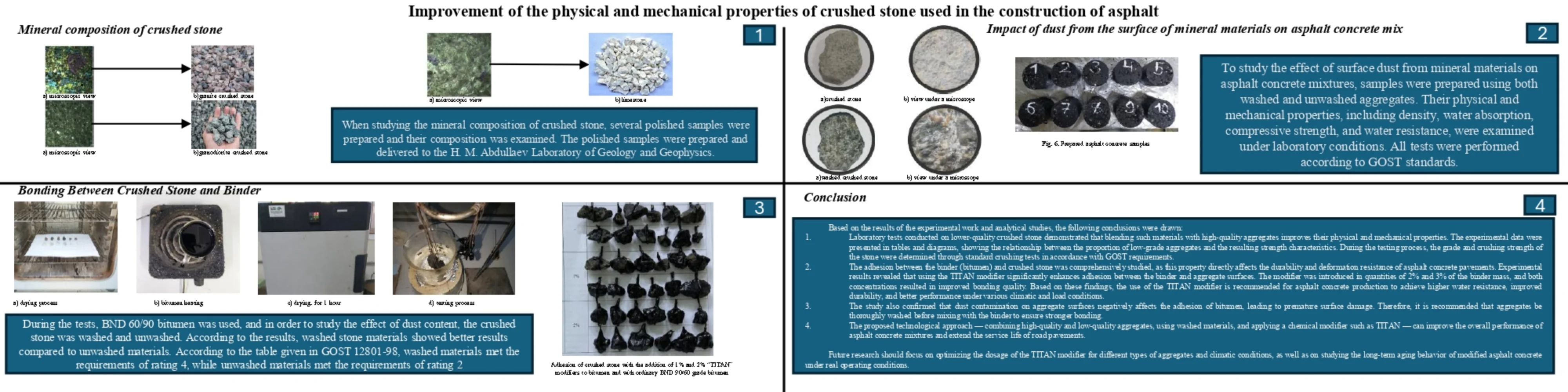
Highlights
- Mineral composition of crushed stone
- Impact of dust from the surface of mineral materials on asphalt concrete mix
- Bonding Between Crushed Stone and Binder
1. Introduction
The development and improvement of transport and communication networks in the Republic of Uzbekistan are currently among the main national priorities. The road network is a crucial element of the country’s transport infrastructure and national economy. Its effective functioning and sustainable development are essential for economic stabilization and growth, ensuring national integrity and security, and improving the population’s standard of living [1].
The quality of roads is greatly influenced by the quality of the materials used in their construction. Today, the most commonly used materials in road construction in Uzbekistan are mineral fillers (crushed stone, gravel, sand), organic and inorganic binders, as well as innovative additives. One of the main construction materials used in road construction is crushed stone.
The durability of asphalt concrete pavement depends on the properties of aggregate materials. This is because the physical and mechanical characteristics of aggregates – such as morphology, strength, water absorption, and wear resistance – directly affect the performance of asphalt concrete pavement. Crushed stone with a complex morphological structure enhances the deformation recovery and resistance of asphalt concrete pavement. Therefore, the use of high-quality materials in highway construction is a key objective for road engineers [2].
2. Literature review
Several literature sources were analyzed to study the adhesion between crushed stone and binder in asphalt concrete mixtures. The adhesion quality plays a crucial role in ensuring pavement durability, as insufficient bonding leads to stripping, cracking, and premature pavement failure. According to Zaripov et al. [3], the SCF (supercritical fluid) impregnation method can be used to modify the surface of crushed stone and improve the bonding between aggregates and petroleum-based binders. Studies [4-5] also confirmed that the use of SCF technology increases adhesion strength and improves the resistance of asphalt concrete to moisture and temperature fluctuations.
Pstrowska et al. [6] studied the relationship between crushed stone and bituminous binders using mechanical, electromagnetic, chemical, and thermodynamic theories. Their research demonstrated that adhesion is influenced by both physical factors – such as surface roughness and mineral composition – and chemical interactions between the binder and aggregate surface. The authors highlighted that improving the surface energy balance between stone and bitumen enhances the overall durability of asphalt concrete mixtures.
In order to study the adhesion between binders and stone materials, the relevant GOST standards were also examined. The adhesion between crushed stone and binder is visually assessed and evaluated on a five-point scale according to GOST 12801-98 [7]. When studying the crushability of crushed stone, the requirements of GOST 8269-93 and related standards were reviewed, and the corresponding laboratory tests were selected [8–10].
Sivacoumar et al. [11] conducted research focused on the environmental aspects of stone-crushing plants. They developed mathematical models to estimate the amount of dust generated during aggregate production and to evaluate its effects on air quality and public health. Their results indicated that airborne dust particles not only pollute the environment but also negatively affect the adhesion between bitumen and aggregate. The authors suggested several effective technical and organizational measures – such as water spraying, enclosure systems, and dust collectors – which can reduce dust emissions by 50-60 % and consequently improve the quality of aggregates used in asphalt concrete.
Overall, the literature review reveals that both the physical characteristics and environmental conditions of crushed stone production have a significant influence on adhesion. Therefore, continuous improvement of aggregate treatment technologies, the introduction of chemical additives such as “TITAN,” and compliance with international and national standards are essential for enhancing the performance and durability of asphalt concrete pavements.
3. Test methods
3.1. Mineral composition of crushed stone
When studying the mineral composition of crushed stone, several polished samples were prepared and their composition was examined. The polished samples were prepared and delivered to the H. M. Abdullaev Laboratory of Geology and Geophysics.
Fig. 1Mineral composition of granite
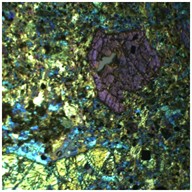
a) Microscopic view
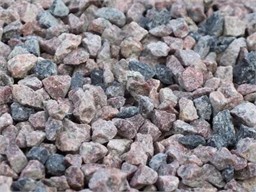
b) Granite crushed stone
Fig. 2Mineral composition of granodiorite
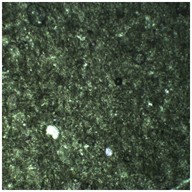
a) Microscopic view
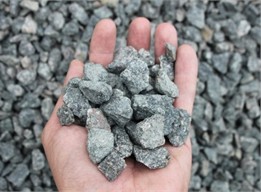
b) Granite crushed stone
Fig. 3Mineral composition of limestone
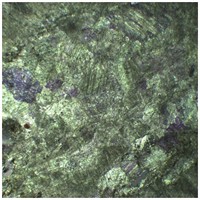
a) Microscopic view
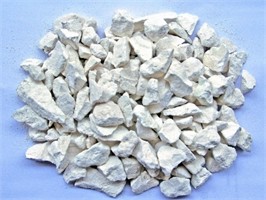
b) Limestone
3.2. Impact of dust from the surface of mineral materials on asphalt concrete mix
To study the effect of surface dust from mineral materials on asphalt concrete mixtures, samples were prepared using both washed and unwashed aggregates. Their physical and mechanical properties, including density, water absorption, compressive strength, and water resistance, were examined under laboratory conditions. All tests were performed according to GOST standards.
Fig. 4Unwashed gravel surface
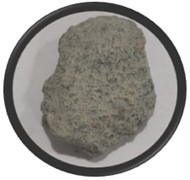
a) Crushed stone
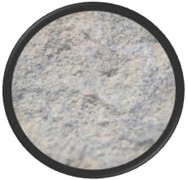
b) View under a microscope
Fig. 5Surface of washed gravel
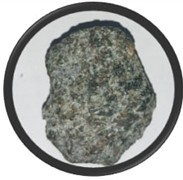
a) Crushed stone
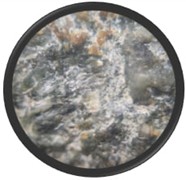
b) View under a microscope
Fig. 6Prepared asphalt concrete samples
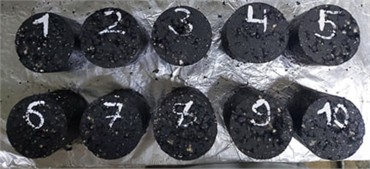
Laboratory analysis demonstrated that dust contamination significantly affects the physical and mechanical properties of asphalt concrete. Samples made from washed aggregates exhibited higher strength and water resistance compared to those made from unwashed materials [12].
3.3. Bonding between crushed stone and binder
One of the main causes of cracking in asphalt concrete pavements is poor adhesion between aggregate and bitumen. For this reason, adhesion properties were studied experimentally. Adhesion refers to the bonding that occurs when the surfaces of two materials come into contact.
Before testing, ten to twenty crushed stone pieces (6-10 mm fraction) were tied with 0.5 mm iron wire and dried in an oven at 120-140 °C for one hour. The bitumen was heated to 140-150 °C in accordance with Table 2 of GOST 12801-98 [7]. The dried aggregates were immersed in the hot bitumen for 15 seconds and then kept at room temperature for one hour.
After cooling, the bitumen-coated stones were placed in boiling distilled water for 30 minutes. If the test was conducted in liquid bitumen, the samples were kept in water for 3 minutes. The vessel was approximately two-thirds full of water, and excessive boiling was avoided to prevent test distortion. Bitumen bubbles formed during boiling were removed using filter paper.
After that, the samples were immersed in cold distilled water for 1-3 minutes, then air-dried at room temperature for 30-60 minutes to complete dehydration. All tests were carried out according to GOST 12801-98 requirements [7].
The results were evaluated visually by determining the percentage of bitumen film remaining on the stone surface. The assessment criteria are presented in Table 1.
Table 1Requirements for assessing the bite of crushed stone and binder
Properties of bitumen layer on crushed stone surface | Quality |
The layer is completely preserved, although its thickness may decrease in some places | 5 points (excellent) |
The layer is completely intact, but has partially separated from sharp corners and edges | 4 points (good) |
More than 50 % of the layer remains on the surface of the crushed stone | 3 points (satisfactory) |
Less than 50 % of the layer remains, and individual drops of bitumen are visible on the exposed surface | 2 points (not good) |
Fig. 7Excerpts from the trial process
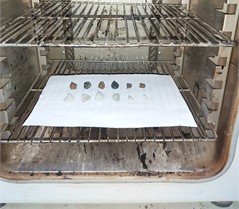
a) Drying process
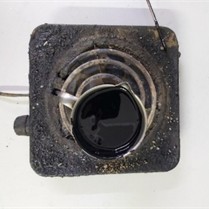
b) Bitumen heating
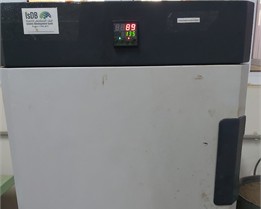
c) Drying, for 1 hour
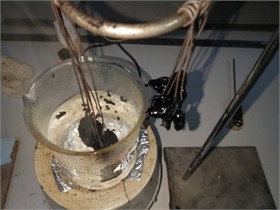
d) Testing process
During the tests, BND 60/90 bitumen was used, and in order to study the effect of dust content, the crushed stone was washed and unwashed. According to the results, washed stone materials showed better results compared to unwashed materials. According to the table given in GOST 12801-98, washed materials met the requirements of rating 4, while unwashed materials met the requirements of rating 2 [7].
Fig. 8Adhesion of crushed stone with the addition of 1% and 2% “TITAN” modifiers to bitumen and with ordinary BND 90/60 grade bitumen
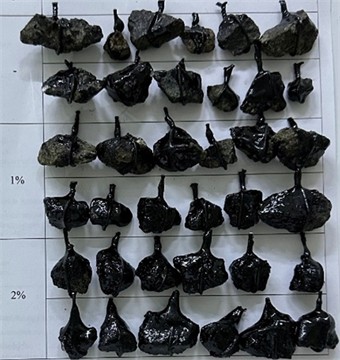
As shown in Fig. 9, the use of the TITAN modifier significantly improves the adhesion between bitumen and crushed stone surfaces, resulting in stronger bonding and higher durability of asphalt concrete pavements.
4. Results
4.1. Study of the mineral composition of crushed stone
The Figs. 2, 3, 4 show that the calcite content in limestone is 90 %-98 %, dolomite – 2 %-8 %, plagioclase in granodiorites – 35 %-50 %, quartz – 20 %-30 %, feldspar – 15 %-25 %, biotite – 5 %-10 %, amphibole – 5 %-10 %, and in granites - quartz – 25 %-35 %, plagioclase – 20 %-40 %, feldspar – 20 %-35 %, biotite – 5 %-10 %, amphibole – 5 %-10 %.
4.2. Study of the influence of surface dust from mineral materials on asphalt concrete mix
As for the test results, the strength and water resistance of samples A/B made from unwashed materials at a temperature of 50°C increased compared to sample A/B made from washed materials. The other physical and mechanical properties are shown in the Table 2.
Table 2Physical and mechanical properties of asphalt concrete samples made from washed and unwashed materials
Properties | Value | Compared to the standard GOST 12801-98 for dense asphalt concrete | ||
Samples made from unwashed materials | Samples made from washed materials | |||
1 | Density (), g/cm3 | 2.47 | 2.45 | – |
2 | Water absorption (), % | 0.35 | 0.63 | – |
3 | Compressive strength (), Mpa | 5.43 | 4.54 | Not less 1.9 |
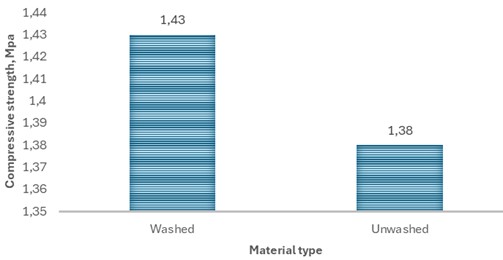
4 | Compressive strength (), Mpa | 1.38 | 1.43 | Not less 0.8 |
5 | Water resistance () | 0.90 | 1.05 | Not less 0.95 |
Fig. 9Water resistance of asphalt samples made from washed and unwashed materials
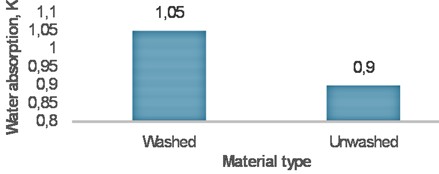
Fig. 10Compressive strength of asphalt samples made from washed and unwashed materials
5. Conclusions
Data availability laboratory tests were conducted in a special “Smart road infrastructure” testing laboratory, as shown in Figs. 6, 7, and 8. In addition, laboratory assistants were asked to help with the tests.
Based on the results of the experimental work and analytical studies, the following conclusions were drawn:
1) Laboratory tests conducted on lower-quality crushed stone demonstrated that blending such materials with high-quality aggregates improves their physical and mechanical properties. The experimental data were presented in tables and diagrams, showing the relationship between the proportion of low-grade aggregates and the resulting strength characteristics. During the testing process, the grade and crushing strength of the stone were determined through standard crushing tests in accordance with GOST requirements.
2) The adhesion between the binder (bitumen) and crushed stone was comprehensively studied, as this property directly affects the durability and deformation resistance of asphalt concrete pavements. Experimental results revealed that using the TITAN modifier significantly enhances adhesion between the binder and aggregate surfaces. The modifier was introduced in quantities of 2 % and 3 % of the binder mass, and both concentrations resulted in improved bonding quality. Based on these findings, the use of the TITAN modifier is recommended for asphalt concrete production to achieve higher water resistance, improved durability, and better performance under various climatic and load conditions.
3) The study also confirmed that dust contamination on aggregate surfaces negatively affects the adhesion of bitumen, leading to premature surface damage. Therefore, it is recommended that aggregates be thoroughly washed before mixing with the binder to ensure stronger bonding.
4) The proposed technological approach – combining high-quality and low-quality aggregates, using washed materials, and applying a chemical modifier such as TITAN – can improve the overall performance of asphalt concrete mixtures and extend the service life of road pavements.
Future research should focus on optimizing the dosage of the TITAN modifier for different types of aggregates and climatic conditions, as well as on studying the long-term aging behavior of modified asphalt concrete under real operating conditions.
References
-
Decree Of Islam Karimov, “On measures for further improvement of architecture and urban planning in the Republic of Uzbekistan,” Apr. 2000.
-
D. R. Yuldashbaev, “Study of the physical and mechanical properties of crushed stone used in the construction of highways (On the example of Tashkent region),” Tashkent State Transport University, 2025.
-
F. M. Gumerov et al., “Impregnation of crushed stone with bitumenous compounds using propane/butane impregnation process carried out in supercritical fluid conditions,” American Journal of Analytical Chemistry, Vol. 5, No. 14, pp. 945–956, Jan. 2014, https://doi.org/10.4236/ajac.2014.514102
-
K. Pstrowska et al., “Adhesion in bitumen/aggregate system: adhesion mechanism and test methods,” Coatings, Vol. 12, No. 12, p. 1934, Dec. 2022, https://doi.org/10.3390/coatings12121934
-
A. Urokov, F. Ubaydullayev, M. Mamatkulov, and R. Soataliyev, “The use of gibberellin in the cultivation of horse chestnut seedlings (Aesculus hippocastanum L.) for the landscaping of highways,” in Asia-Pacific Conference on Applied Mathematics and Statistics, Vol. 2471, p. 030078, Jan. 2022, https://doi.org/10.1063/5.0089747
-
R. Soataliyev, X. Aripov, E. Yuldashev, and Q. Ergashev, “Research on the influence of temperature on the strength of flexible pavement,” in International Scientific Conference on Modern Problems of Applied Science and Engineering: MPASE2024, Vol. 3244, No. 1, p. 040001, Jan. 2024, https://doi.org/10.1063/5.0241892
-
“Materials based on organic bindings for road and airplace construction,” GOST 12801-98, 1998.
-
“Gravel and crushed stone from dense rocks for construction work. Laboratory conditions,” GOST 8269-93, 1993.
-
A. Urakov, D. Tashev, Z. Xametov, and R. Soataliev, “Road maintenance and climate zoning of the territory of the Republic of Uzbekistan,” in Lecture Notes in Networks and Systems, Cham: Springer International Publishing, 2022, pp. 1213–1224, https://doi.org/10.1007/978-3-030-96380-4_133
-
R. R. U. Soataliyev and D. R. Yuldashbaev, “Study of the requirements for local crushed stone used in asphalt concrete and polymer-asphalt concrete mixtures,” Yosh Tadqiqotchi Jurnali, Dec. 2023.
-
D. Yuldashbaev and R. Soataliyev, “Increasing the strength of limestone crushed stone for use in asphalt concrete mixtures,” in Resource-Saving Technologies in Transport, pp. 1–4, Dec. 2024.
-
R. Soataliyev, F. Kholmuminov, and D. Yuldashbayev, “Study of physical and mechanical properties of granite crushed stone materials mined in Akcha quarry of Angren district of Tashkent region,” Science and Innovation Journal, Apr. 2024.
About this article

The authors have not disclosed any funding.
The datasets generated during and/or analyzed during the current study are available from the corresponding author on reasonable request.
The authors declare that they have no conflict of interest.

