Abstract
Railways in Uzbekistan mainly pass through irrigated, desert, and mountainous areas, and the Bukhara–Misken railway line is located in a desert region. Under sandy desert conditions, it is necessary to study the impact of wind on railway subgrade slopes and track superstructure elements. In railway design, operation, and reconstruction, wind speed, direction, single-event duration, and the annual number of windy days are important factors. As a result of wind–sand effects, the cross section of the railway subgrade may be damaged, and sand deposition on track superstructure elements may disturb the ballast layer structure, reduce the freight and passenger carrying capacity of the line, compromise traffic safety, or lead to line closure. This article analyzes experiments and studies conducted in Uzbekistan and other countries on the effects of wind on railways and develops recommendations for mitigating these impacts.
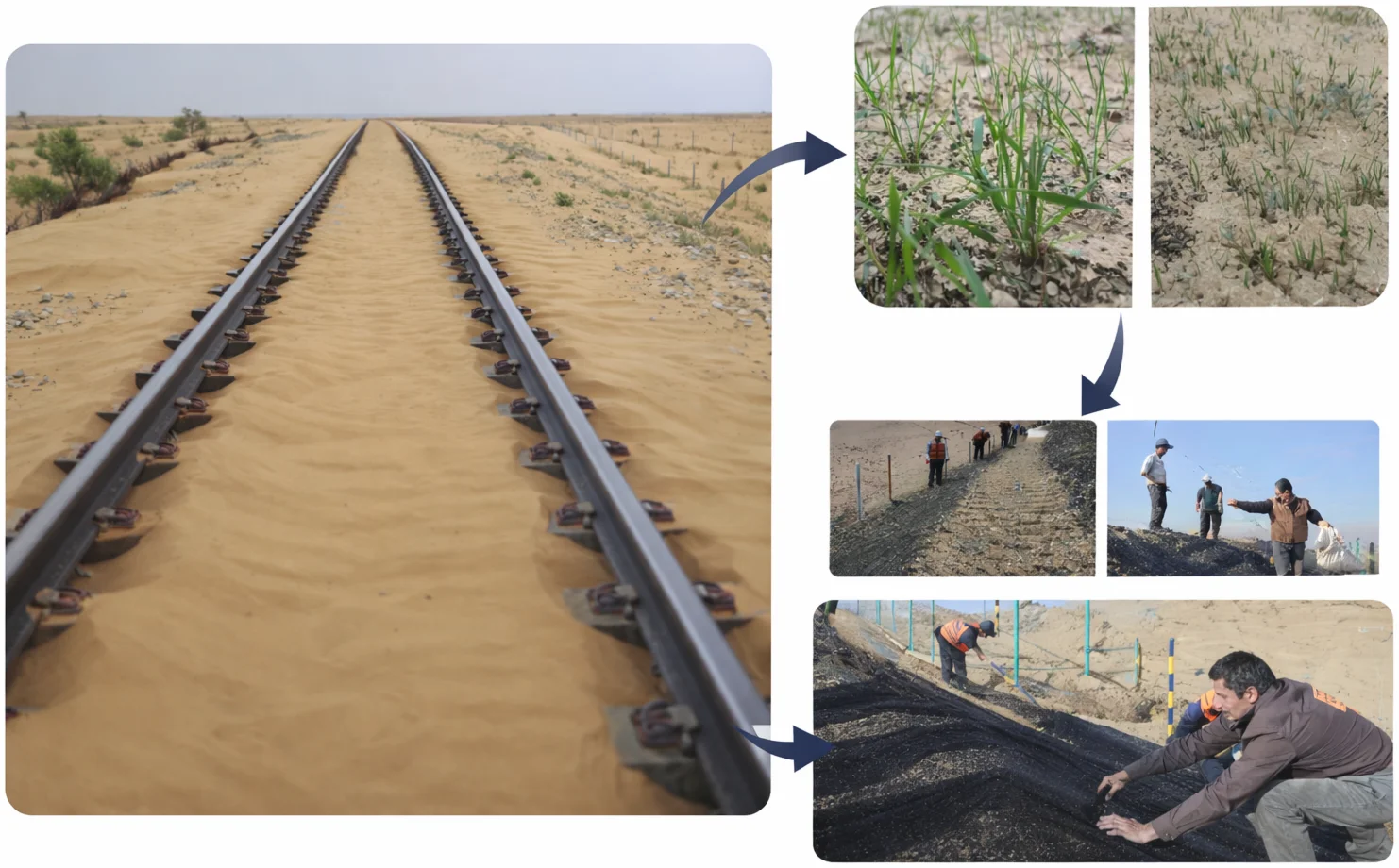
Highlights
- Sand accumulation on the track superstructure
- Sand accumulation in a turnout (switch)
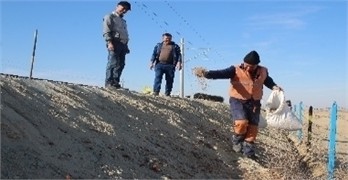
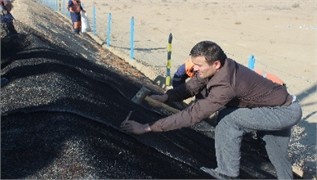
- Installation of anti-erosion geomat November 2024
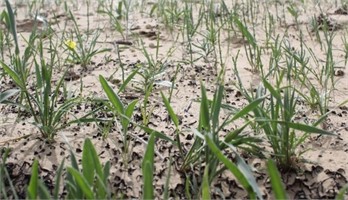
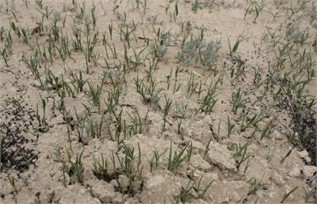
- Observation results obtained in April 2025
1. Introduction
The Uzbekistan-2030 Development Strategy sets the following objectives: increasing the number of foreign tourists, domestic tourists, and pilgrims; expanding domestic freight transit and the length of electrified railways; and addressing climate-related challenges in the country’s desert regions, including the prevention of wind-induced soil and sand erosion and dust storms, as well as the development of effective mitigation measures [1-5].
The main desert regions of Uzbekistan are located within the Republic of Karakalpakstan and the Bukhara, Khorezm, and Navoi regions.
A railway is generally considered to consist of two main components: the lower structure (subgrade) and the upper track structure. The railway subgrade plays a critical role in train operations, providing a smooth, load-bearing, and permeable foundation for the track structure. The upper track structure ensures safe train operation while meeting requirements for track smoothness and standard geometric parameters [6-18]. In addition to various operational loads, erosion processes have a significant impact on railway infrastructure.
Soil erosion is the process of removal or degradation of the surface layers caused by water and wind action. Under wind influence, sands in desert areas are transported from one location to another, resulting in the loss of fertile soil layers on cultivated land, burial of structural elements in sandy areas, or erosion of adjacent soils around engineering structures. Water erosion, in turn, leads to the washing away of surface soil layers, the formation of rills and gullies of varying depths, and deterioration of structural performance due to changes in geometric characteristics [19-25].
During the design, construction, and operation of new railway lines, accurate assessment of wind and sand effects and the implementation of appropriate mitigation measures are essential. Numerous researchers have investigated the impact of wind on highways and railways through field observations and wind tunnel experiments, leading to the development of engineering recommendations for infrastructure design. This paper reviews and analyzes several such studies and, based on their findings, proposes relevant practical recommendations.
2. Materials and methods
The Bukhara-Misken railway line (≈ 356 km) is located in a desert region. A characterization of the climatic zones along this railway line based on the degree of aridity, using data from Uzhydromet for the period 1990-2020, is presented in (Table 1) [40].
Table 1Climatic zone characteristics of the Bukhara-Misken railway line
Climate zone name | Railway section, km | Mean annual precipitation, mm | Mean wind speed, m/s | Wind activity and maximum wind speed | Characteristics of aeolian processes (sand movement) | Engineering-geological condition description |
Weakly arid zone | 0-39 | 120-150 | 2-3 | Low; strong winds are rarely observed | Sand movement is weakly developed and occurs only under local deflation conditions | Soil is relatively stable, vegetation cover is partially preserved, and filtration capacity is moderate |
Moderately arid zone | 40-166 | 80-100 | 4-6 | Stable wind regime, moderate activity | Sand mass displacement is clearly observed in areas with disturbed vegetation cover | Soil granulometric composition is sandy, deflation risk is moderate, and vegetation cover is uneven |
Extremely arid zone | 167-356 | ≤ 70 | ≥ 7 | High; wind speeds up to 12-15 m/s | Intense aeolian processes: sand dunes and large-scale sand migration are widespread | Soil is loose and mobile, deflation intensity is high, and anthropogenic protection is weak |
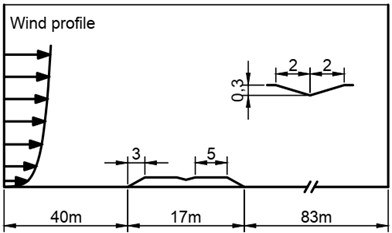
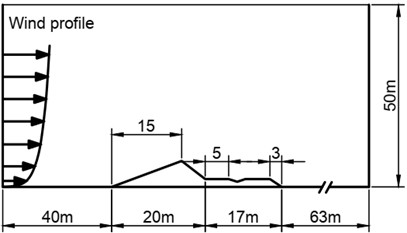
A test area of 40×140 m was selected. Two conditions of the railway subgrade were considered: without a wind barrier and with an installed barrier having a half-width of 15 m and a height of 3 m. The subgrade geometry was modeled with a height of 1 m, a crest width of 14 m, a base width of 17 m, and a side slope of 1:3 (Fig. 1) [28].
Fig. 1a) without wind barrier; b) with wind barrier
a)
b)
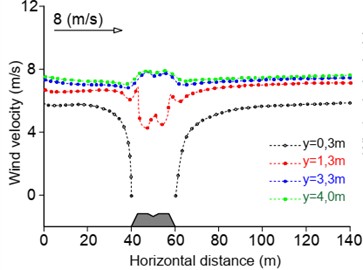
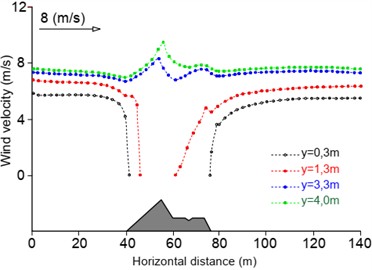
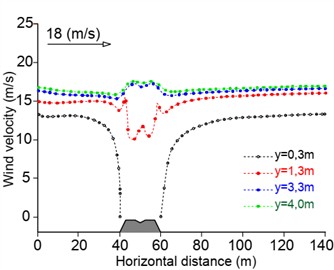
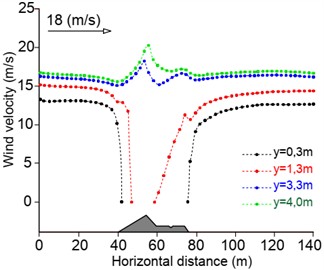
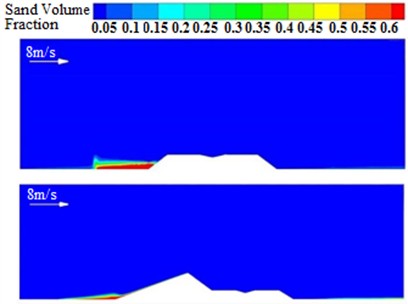
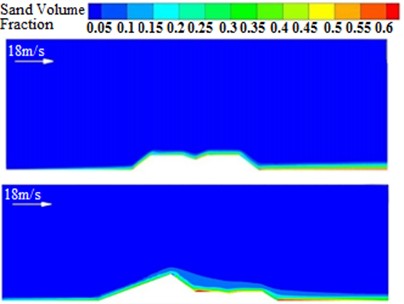
The experiment evaluated wind effects at four different heights (0.3 m, 1.3 m, 3.3 m, and 4 m) and two wind velocities (8 m/s and 18 m/s). The experimental results are presented for wind speeds of 8 m/s (Fig. 2) and 18 m/s (Fig. 3) [28].
These graphs present the wind flow velocity at different heights. Sand accumulation occurs in zones with lower wind velocity (Fig. 4) [28].
Fig. 2v= 8 m/s: a) without wind barrier; b) with wind barrier
a)
b)
Fig. 3v= 18 m/s: a) without wind barrier; b) with wind barrier
a)
b)
Fig. 4a) v= 8 m/s; b) v= 18 m/s
a)
b)
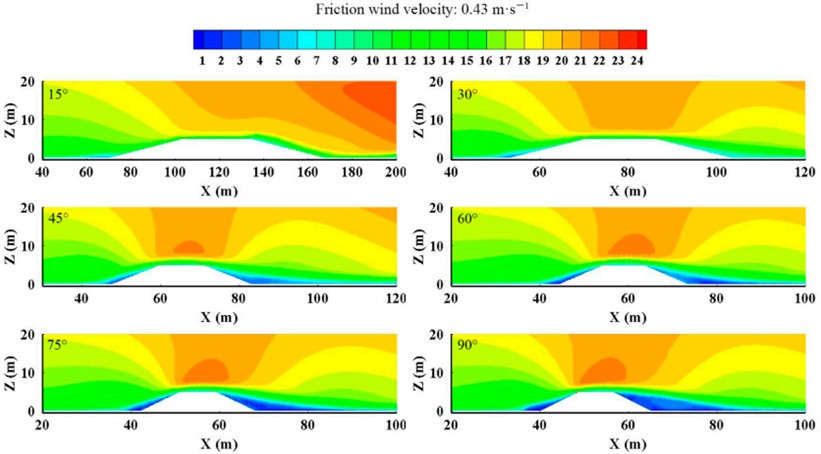
To further investigate wind characteristics, an experiment was conducted to examine the effects of wind acting on the railway at different angles and to identify potential sand accumulation zones. Based on the Euler two-phase flow model, wind was applied to the railway subgrade at angles of 15°, 30°, 45°, 60°, 75°, and 90°, and the resulting wind velocity zones and sand accumulation characteristics around the subgrade were analyzed (Fig. 5) [29].
The results show that when the wind-sand flow approaches the railway subgrade, it impinges on the structure and forms distinct velocity zones. Deceleration zones develop on both side slopes of the subgrade, while an acceleration zone forms above the subgrade crest. Sand accumulation occurs on both sides, and its magnitude increases with increasing wind incidence angle. Under different wind angles, the pattern and amount of sand accumulation around the subgrade differ significantly (Fig. 6) [29].
Fig. 5Sand accumulation under different wind incidence angles
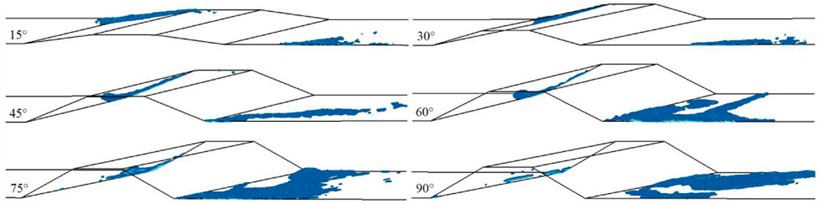
Fig. 6Flow velocity distribution under different wind incidence angles
3. Results and discussion
If a railway passes through desert areas, wind erosion may affect the track superstructure and the subgrade in the following ways:
– Fine sand particles impair the smoothness of the rail surface, thereby reducing the wheel-rail adhesion force.
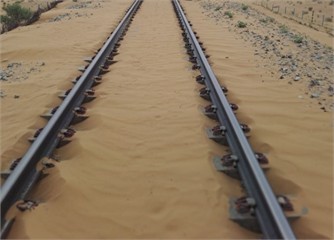
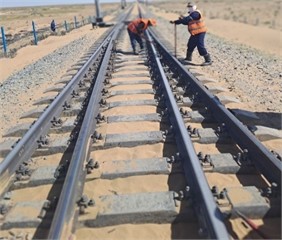
– Sand intrusion into the ballast layer results in non-compliance with the applicable standards [26], reduces its resilient properties, increases the content of fine particles, and leads to ballast fouling and decreased permeability (Fig. 7(a)).
– Sand ingress into the moving components of railway switches restricts their operation and poses a risk to operational safety [27]. The practical manifestation of this process is illustrated in (Fig. 7(b)).
According to [27], three categories of sand encroachment on railways are identified. In the CIS countries, V.A. Obruchev demonstrated that the use of vertical wind barriers along railways leads to increased sand accumulation on the leeward side of the barrier, which can subsequently be transported onto the track under wind action. In addition, protective measures applied in Saudi Arabia and China were reviewed. In general, sand control methods include vegetation planting (biological), construction of barriers (mechanical), and sand stabilization using chemical agents.
Fig. 7a) Sand accumulation on the track superstructure; b) sand accumulation in a turnout (switch). Photos by A.Sh. Uralov, during field research conducted in April 2025 on the Bukhara-Miskin railway line (Qorlitog‘-Kiyikli section)
a)
b)
Among the above approaches, several results obtained from the application of mechanical wind barriers and combined protection methods are discussed below.
An experiment was conducted at a test section of the Wuhai-Maqin highway located in the Tengger Desert to investigate sand formation under wind action. In the experiment, a wind measurement device was installed at a height of 2 m, with a wind speed range of 0-70 m/s (accuracy 0.1 m/s), wind direction measurement up to 359°, and the capability to record precipitation and temperature data [28].
The seasonal characteristics of wind action are as follows:
–In winter, wind velocity is low, and sand flow is easily arrested when encountering barriers; therefore, only a small amount reaches the roadway.
– In spring, increased wind velocity leads to sand accumulation on the road surface.
– In summer, wind velocity is high, and sand particles move along the wind flow direction, resulting in further sand accumulation on the road surface. The corresponding measured values are presented in Table 2 [28].
Table 2Seasonal sand accumulation thickness [28]
Observation period | Sand accumulation area (m²) | Maximum thickness (cm) | Average width (cm) |
December 2020 | 19 | 1,5 | 68 |
April 2021 | 24 | 21 | 70 |
August 2021 | 27 | 50 | 90 |
The graphs indicate that at lower wind velocities, a large proportion of sand particles collide with the barriers and accumulate on the windward side of the barrier. When wind velocity is high, sand accumulation on an unprotected track is limited, as most sand particles are transported away by the wind flow. In the presence of a barrier, a recirculation zone forms on its leeward side, leading to sand accumulation on and around the track structure [28].
In the Gobi Desert of China, the effectiveness of vertical wind barriers for protecting railway subgrades from wind action was investigated. A subgrade with a height of 3 m was considered under two conditions: without a barrier and with a barrier of 3.5 m height. In sandy desert conditions, the installation of windbreak barriers significantly reduced sand intrusion. However, in the Gobi Desert, sand particles were transported at higher elevations, allowing them to pass over the barrier more easily (Fig. 8) [30].
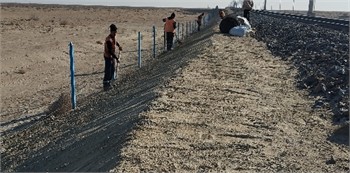
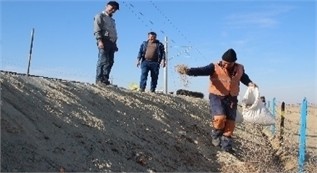
In 2024, an experimental application of wind erosion control technology using geosynthetic materials was implemented on the Bukhara-Misken railway line, combined with a biological protection method (Fig. 9(a)). During the installation of the geomat, seeds of desert plant species such as saxaul, kandym, cherkez, kongirbosh, chogon, kovrak, and jitnyak were sown both beneath and above the material. According to field observations conducted in April 2025, the materials remained in good condition, and the desert vegetation exhibited satisfactory germination and growth performance (Fig. 9(b)). This approach provides reinforcement of railway subgrade slopes against wind action while simultaneously protecting railway structures from laterally transported sand particles caused by wind erosion [41].
Fig. 8a) Without wind barrier; b) with wind barrier
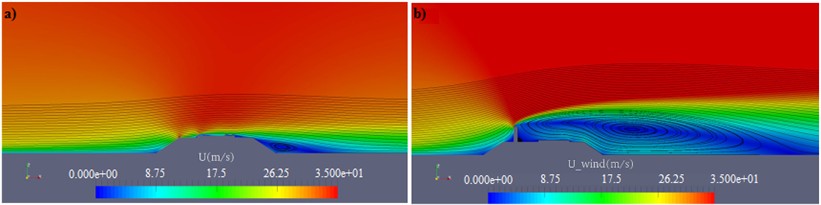
Fig. 9Bukhara-Misken railway line installation of anti-erosion geomat November 2024 and Observation results obtained in April 2025. Photos by A.Sh. Uralov, during field research conducted on the Bukhara-Miskin railway line (Qorlitog‘-Kiyikli section) in November 2024 and April 2025
The economic and environmental aspects of using anti-erosion geomats for protecting railway subgrade slopes from wind action, compared with other methods, can be summarized as follows. Protection using reed mats, despite being widely and long applied, has significant disadvantages, including a short service life (2-3 years), high labor intensity due to predominantly manual installation, and the gradual reduction of reed resources. Covering surfaces with sand-cement mixtures restricts the application of biological methods and depends on the aggressiveness of environmental conditions. In physical-chemical methods, the main limitation is associated with the composition of the binding agents, as their application requires a specific moisture content of the sand and strict compliance with sanitary and environmental standards.
When wind reaches the railway subgrade, distinct velocity zones are formed: wind velocity decreases in front of the windward slope, resulting in sand accumulation. Above the subgrade crest, wind velocity increases. However, since railway rails act as transverse obstacles to airflow, sand may accumulate behind the rails, including between the two rails and downstream of the second rail, which negatively affects the performance of the ballast layer. Sand accumulation is also influenced by the height at which wind flow and velocity act. The effect of wind varies depending on its incidence angle relative to the railway: smaller angles result in less sand accumulation, whereas steeper angles lead to greater accumulation. The use of vertical wind barriers for wind protection has both advantages and disadvantages. At low wind velocities, sand particles striking the barrier settle without passing over it, whereas at high wind velocities, particles may pass over the barrier and enter a reduced-velocity zone downstream, where a recirculation flow forms, causing sand accumulation on railway elements [30-33].
4. Conclusions
The following conclusions can be drawn:
1) At the initial stages of design and construction, wind direction, wind velocity, and local terrain relief should be taken into account.
2) In areas with low wind velocity, the use of vertical wind barriers or volumetric reed cells is advisable.
3) With increasing wind velocity, erosion intensifies on the windward side of the subgrade, while the total area of sand accumulation decreases.
4) The effect of wind velocity also depends on the height of the subgrade; therefore, an optimal average height should be determined to reduce wind erosion and sand accumulation.
5) Wind erosion can be reduced by promoting sand bonding around the subgrade using various chemical agents.
6) Areas most susceptible to wind erosion, particularly side slopes, require reinforcement measures.
7) Accumulated sand should be removed regularly, and maintenance of sand-contaminated ballast should be carried out during scheduled technical servicing.
8) One of the modern erosion protection approaches is the combined use of perennial vegetation and modern geosynthetic materials, such as geomats or geogrids. A geomat is a three-dimensional geosynthetic material made of polypropylene fibers and is considered a promising solution for slope protection due to its environmental compatibility and widespread applicability. However, under severe erosion or anthropogenic impacts, the vegetation layer may be washed away. To prevent such conditions, the formation of a resilient vegetation layer is required. For this purpose, the use of soil-filled geomats incorporating perennial grass seeds is recommended. When this composite is placed on a slope surface, plant roots improve soil fertility, reduce erosion, and interlock with geomat fibers to form a dense and stable layer. As a result, the soil gains increased resistance to high loads [34-39].
References
-
“Decree of the president of the Republic of Uzbekistan No. 11.09.2023 PF – 158 on the strategy Uzbekistan-2030,” President of the Republic of Uzbekistan, Sep. 2023.
-
K. Lesov, A. O. ’Ralov, M. Kenjaliyev, N. Begmatov, and U.B. Ergashev, “Calculation of slope stability against erosion deformations,” in E3S Web of Conferences, Vol. 583, p. 01006, Oct. 2024, https://doi.org/10.1051/e3sconf/202458301006
-
K. S. Lesov and A. S. O’ralov, “Technology of laying geosynthetic materials in the protection of earth’s polotno slopes from erosion.,” Construction and Education Scientific Journal, No. Special Issue 1, p. 193, 2024.
-
K. S. Lesov and A. Sh. O’ralov, “Protect the slopes of the land polo,” Problems of Architecture and Construction, Vol. 1, No. 9, pp. 15–19, Sep. 2024, https://doi.org/10.5281/zenodo.13902343
-
S. Kuvandik, Lesov, and A. S. O’ralov, “Protect the slopes of the land polo,” in Proceedings of Materials of the International Scientific and Technical Conference on the Theme of “Sustainable Architecture and City Planning in the Aral Sea Region”, 2024.
-
M. Mekhmonov and A. Uralov, “Reducing impact of embankment soils on shore support of bridge on the approaches to bridges,” in E3S Web of Conferences, Vol. 401, p. 02040, Jul. 2023, https://doi.org/10.1051/e3sconf/202340102040
-
M. Mekhmonov, S. Makhamadjonov, and A. Uralov, “Efficiency of reinforcement of transition sections on the railroad by the developed constructions,” in E3S Web of Conferences, Vol. 508, p. 08017, Apr. 2024, https://doi.org/10.1051/e3sconf/202450808017
-
M. Mekhmonov, S. Makhamadjonov, and A. Uralov, “Stabilization of embankments and coastal bridges with reinforced concrete piles,” in E3S Web of Conferences, Vol. 508, p. 08018, Apr. 2024, https://doi.org/10.1051/e3sconf/202450808018
-
K. S. Lesov, Z. Z. Ergashev, M. K. Kenjaliyev, and S. A. Tadjibaev, “Quantitative characteristics of construction and reconstruction of railway sections in Uzbekistan,” in E3S Web of Conferences, Vol. 401, p. 03024, Jul. 2023, https://doi.org/10.1051/e3sconf/202340103024
-
K. S. Lesov, A. K. Mavlanov, and M. K. Kenjaliyev, “Load-bearing capacity of pile foundations of contact network supports in the sandy soil subgrade,” in Asia-Pacific Conference on Applied Mathematics and Statistics, Vol. 2471, p. 030027, Jan. 2022, https://doi.org/10.1063/5.0089622
-
A. Abdujabarov, P. Begmatov, F. Eshonov, M. Mekhmonov, and M. Khamidov, “Influence of the train load on the stability of the subgrade at the speed of movement,” in E3S Web of Conferences, Vol. 264, p. 02019, Jun. 2021, https://doi.org/10.1051/e3sconf/202126402019
-
K. Lesov, M. Kenjaliyev, A. Mavlanov, and S. Tadjibaev, “Stability of the embankment of fine sand reinforced with geosynthetic materials,” in E3S Web of Conferences, Vol. 264, p. 02011, Jun. 2021, https://doi.org/10.1051/e3sconf/202126402011
-
A. F. Rasulev, A. N. Ovchinnikov, and I. I. Kuznetsov, Railway Track. Textbook. 2018.
-
S. B. Shayakhmetov, S. B. Kystaubayev, K. S. Lesov, and K. K. Umarov, “Seismic stress state of Earth bed – foundation system,” in E3S Web of Conferences, Vol. 401, p. 01083, Jul. 2023, https://doi.org/10.1051/e3sconf/202340101083
-
N. Begmatov and U. Ergashev, “Determination of the modulus of elasticity of railway track with BF70 sleepers,” in E3S Web of Conferences, Vol. 515, p. 02003, Apr. 2024, https://doi.org/10.1051/e3sconf/202451502003
-
M. Muzaffarova, “Dilatation of the method of the fixation of moveable sands,” Transport Problems, Vol. 17, No. 4, pp. 79–89, Dec. 2022, https://doi.org/10.20858/tp.2022.17.4.07
-
M. Muzaffarova and M. Mirkhanova, “Investigations of damage to the under-rail base on the main routes JSC “Uzbekistan Temir Yullari”,” in E3S Web of Conferences, Vol. 401, p. 05034, Jul. 2023, https://doi.org/10.1051/e3sconf/202340105034
-
K. Lesov, “Effectiveness management of construction production programs with changes in the facilities saturation with means of mechanization,” in The 3rd International Scientific Conference Construction Mechanics, Hydraulics and Water Resources Engineering (CONMECHYDRO 2021 AS), Vol. 2612, p. 040022, Jan. 2023, https://doi.org/10.1063/5.0114462
-
O. V. Petrova, “Wind erosion and wind-erosion research,” Atmospheric and Oceanographic Sciences Library, Vol. 1, pp. 1–11, Dec. 2025, https://doi.org/10.1007/978-1-4020-8895-7_1
-
M. S. Kuznetsov and G. P. Glazunov, Erosion and Soil Protection: Textbook. Moscow State University Publishing House, 2005.
-
B. R. Ramazanov, “Erosion processes, desertification in nature and their main characteristics,” (in Russian), Academic Research in Educational Sciences, Vol. 2, No. 5, pp. 386–396, Jan. 2021.
-
“A review of the state of the environment. Uzbekistan,” United Nations, New York and Geneva, 2010.
-
N. S. Rashidov, “Water erosion and its effect on crop yields,” Educational Research in Universal Sciences (ERUS), Vol. 2, No. 10, pp. 386–388, Oct. 2023.
-
R. R. Abdusalamova and Z. M. Balamirzoeva, “Methods of soil protection from water and wind erosion,” Bulletin of the Socio-Pedagogical Institute, Vol. 40, pp. 30–40, 2021.
-
O. E. Khakberdiev and G. S. Sadykova, Land-Water Resources of Uzbekistan: Problems and Solutions. 2017.
-
“Railways with 1520 mm gauge. Design standards,” Ministry of Construction of the Republic of Uzbekistan, Tashkent, ShNQ 2.05.01-19, 2019.
-
M. Miraxmedov, A. Khudoyorov, K. Abdullaev, and M. Muzaffarova, “Negative impact of wind on the condition of roads (road and rail) in the sandy desert,” in Asia-Pacific Conference on Applied Mathematics and Statistics, Vol. 2471, p. 030051, Jan. 2022, https://doi.org/10.1063/5.0091022
-
F. Han, C. Wang, Z. Liu, L. Li, and W. Yin, “Study on sand-accumulation changes of highway and formation mechanism of sand damage in drifting dunes areas,” Applied Sciences, Vol. 12, No. 19, p. 10184, Oct. 2022, https://doi.org/10.3390/app121910184
-
X. Zhang, S. Xie, and Y. Pang, “Numerical simulation on wind-sand flow field around railway embankment with different wind angles,” Frontiers in Environmental Science, Vol. 10, Jan. 2023, https://doi.org/10.3389/fenvs.2022.1073257
-
N. Huang et al., “Investigations into the law of sand particle accumulation over railway subgrade with wind-break wall,” The European Physical Journal E, Vol. 42, No. 11, Nov. 2019, https://doi.org/10.1140/epje/i2019-11910-0
-
K. Zhang, L.-M. Zhao, H.-L. Zhang, A.-J. Guo, B. Yang, and S. Li, “Numerical simulation on flow field, wind erosion and sand sedimentation patterns over railway subgrades,” Journal of Mountain Science, Vol. 19, No. 10, pp. 2968–2986, Oct. 2022, https://doi.org/10.1007/s11629-022-7396-4
-
J.-J. Cheng, G.-W. Xin, L.-Y. Zhi, and F.-Q. Jiang, “Unloading characteristics of sand-drift in wind-shallow areas along railway and the effect of sand removal by force of wind,” Scientific Reports, Vol. 7, No. 1, p. 41462, Jan. 2017, https://doi.org/10.1038/srep41462
-
H. Dong, J. Cheng, B. Ma, Y. Li, and Y. Chen, “Characteristics of wind-sand transportation along railways in the eastern fringe of the Taklimakan Desert and sand control system,” Transportation Safety and Environment, Vol. 6, No. 3, May 2024, https://doi.org/10.1093/tse/tdad042
-
N. V. Medvedev, “Recommendations for the use of anti-erosion geosynthetic materials,” MIAKOM, St. Petersburg, 2013.
-
“Recommendations on the choice of anti-erosion measures,” Miakom, St. Petersburg, 2015.
-
A. A. Glagolev, “Development of comprehensive protection of the roadbed from waterlogging by atmospheric wastewater,” Voronezh, 2007.
-
S. A. Matveev, “Innovative materials, technologies and constructions: theory and practice of application,” Construction Equipment and Technologies. Geosynthetic Materials, Vol. 2, Nov. 2015.
-
“Recommendations on the use of geosynthetic materials in road construction,” Astana, RK 218-42-2021, 2021.
-
“Methodical recommendations for the selection of the design of reinforcement of slopes of the earth bed of public highways,” Moscow, ODM 218.2.078-2016, 2016.
-
K. Lesov, B. Sarsenbayev, M. Kenjaliyev, N. Begmatov, and A. Uralov, “Engineering protection of the subgrade from sand drifts using geomaterials, as exemplified by the Bukhara-Miskin railway line,” in Vibroengineering Procedia, Vol. 60, pp. 522–526, Dec. 2025, https://doi.org/10.21595/vp.2025.25323
-
K. Lesov, A. Uralov, M. Kenjaliyev, U. Ergashev, and F. Huaiping, “The importance of using geosynthetic materials in ensuring anti-erosion stability of railway embankments,” Vibroengineering Procedia, Vol. 60, pp. 318–324, Dec. 2025, https://doi.org/10.21595/vp.2025.25326
About this article

The authors have not disclosed any funding.
The datasets generated during and/or analyzed during the current study are available from the corresponding author on reasonable request.
The authors declare that they have no conflict of interest.

