Abstract
This study examines the coupled effects of moisture content, salinity, and filtration processes on soil strength within the framework of engineering-geological investigations for buildings and infrastructure. Particular attention is given to soils exposed to prolonged water interaction, where changes in moisture regime and salt migration significantly affect physical and mechanical behavior. The research combines field observations, laboratory testing, and hydrogeological interpretation to assess variations in shear strength, compressibility, and related engineering properties under different soil-moisture and salinity conditions. Supportive aerial and remote-sensing information was used at the preliminary assessment stage to identify areas potentially prone to excessive moisture and salinization. The results indicate that increased moisture and active filtration processes accelerate salt redistribution and may reduce soil strength and compaction performance, thereby affecting foundation reliability. The novelty of the study lies in clarifying the combined influence of moisture, salinity, and filtration on soil behavior in engineering-geological investigations and in formulating practical considerations for safer foundation design in saline areas.
1. Introduction
Large-scale construction activity in Uzbekistan requires reliable engineering-geological investigations, especially in areas characterized by difficult hydrogeological conditions, elevated soil moisture, and salinity. In many parts of the country, foundations are constructed on soils affected by shallow groundwater and soluble salts, which may significantly alter their physical and mechanical properties under prolonged wetting. Such changes directly influence settlement behavior, bearing capacity, and the long-term stability of buildings, roads, bridges, and other infrastructure facilities [1], [3], [6].
Engineering-geological investigations in moisture-affected and saline areas therefore play a critical role in the safe design and operation of structures. These investigations typically include field reconnaissance, soil sampling, laboratory testing, hydrogeological assessment, and interpretation of survey data in order to identify unfavorable ground conditions and predict possible changes in soil behavior during construction and service life [3], [5]. In addition, filtration and leaching processes should be considered during site assessment, since they may control salt migration and the hydrochemical evolution of foundation soils [2]. Engineering-geological investigations in saline areas are also important for transport structures, including bridges, where hydrogeological and soil-related deterioration may directly affect long-term performance [4].
Previous studies have shown that saline soils may undergo substantial changes in strength and deformation properties when exposed to water infiltration, groundwater rise, and leaching. Dissolution and redistribution of salts can weaken soil structure, reduce shear resistance, affect compaction performance, and increase the risk of excessive deformation or local instability [2], [9-11]. These effects are especially important in arid and semi-arid regions, where evaporation, capillary rise, and shallow mineralized groundwater promote the accumulation and migration of soluble salts within the soil profile [1], [6].
Although the influence of moisture and salinity on soil behavior is generally recognized, insufficient attention has been given to their combined effect together with filtration processes within the framework of engineering-geological investigations. In practical site evaluation, these factors are often considered separately, whereas their interaction may determine the actual engineering performance of saline soils under natural and technogenic water impact [2], [10], [11]. At the same time, recent studies also indicate the importance of stabilization and protective measures for reducing the adverse effects of salinity and moisture on soil performance [7], [8], [12].
The aim of this study is to evaluate the coupled effects of moisture, salinity, and filtration on soil strength and related engineering properties using field observations, laboratory testing, and hydrogeological interpretation. The novelty of the study lies in clarifying how these factors jointly influence soil behavior in engineering-geological investigations and in identifying practical considerations for improving foundation assessment and construction reliability in saline areas. The remainder of the paper is organized as follows. Section 2 describes the materials and methods used in the investigation. Section 3 presents the main results and their engineering interpretation. Section 4 summarizes the principal conclusions and outlines directions for future research.
2. Materials and methods
This study was carried out to evaluate the coupled influence of moisture, salinity, and filtration on soil strength and related engineering properties under conditions relevant to engineering-geological investigations in Uzbekistan. The methodological framework combined field observations, soil sampling, laboratory testing, hydrogeological assessment, and interpretation of supporting survey data. Such an integrated approach makes it possible to identify unfavorable ground conditions and to assess the potential impact of moisture and salinity on foundation performance [2], [3], [5], [6].
2.1. Field investigations
Field investigations were conducted in areas characterized by elevated soil moisture, saline conditions, and variable hydrogeological settings. The program included route inspections, reconnaissance surveys, and field observations aimed at identifying the distribution of problematic soils and the main factors controlling their engineering behavior. Particular attention was paid to the occurrence of shallow groundwater, visible signs of salinization, moisture accumulation zones, and terrain conditions that could affect foundation stability.
Soil sampling was performed using lightweight drilling and manual sampling equipment suitable for site-specific field conditions. Samples were taken at representative depths depending on local geological conditions and the expected influence zone of foundations. Where possible, undisturbed monolith samples were collected to preserve the natural soil structure for subsequent laboratory testing. Disturbed samples were used for determination of basic physical and chemical characteristics. Continuous processing of field information allowed the investigation program to be refined as additional site conditions were identified during the survey [3], [5].
2.2. Laboratory testing
Laboratory investigations were performed to determine the physical, mechanical, and hydrochemical properties of the sampled soils. The testing program included the determination of moisture content, density, porosity, compressibility, and shear strength parameters. Special attention was given to the influence of moisture increase and salt presence on strength behavior, because these factors are critical for engineering-geological evaluation of saline foundation soils [1], [6], [9-11].
Moisture content is one of the key factors influencing soil compaction and, consequently, engineering performance. For reference, Table 1 summarizes recommended moisture ranges for compaction of representative soil types.
Table 1Recommended moisture ranges for compaction of representative soil types (background reference)
Ground | Moisture content corresponding to the required density coefficient | ||
1.00-0.98 | 0.95 | 0.90 | |
Coarse, dusty sands and light sandy loam | < 1.36 | 1.7 | Not specified |
Light, dusty sandy loam | 0.82-1.27 | 0.77-1.37 | 0.72-1.8 |
Heavy dusty sandy loam and light dusty sandy loam | 0.85-1.15 | 0.9-1.3 | 0.76-1.5 |
Heavy loam with dense, dusty aggregates | 0.98-1.2 | 0.91-1.12 | 0.86-1.3 |
Minor/less frequent types | 0.9-1.21 | 0.72-1.26 | 0.8-1.4 |
Note: “Not specified” indicates that no standard reference value was established for this soil category at the corresponding density coefficient | |||
The values presented in Table 1 are used here as background reference data for interpreting the effect of excessive moisture on compaction quality and strength characteristics of soils encountered during engineering-geological investigations.
Direct shear and compression-based analyses were used to assess changes in soil resistance and deformation under different moisture conditions. In addition, chemical analyses were carried out to determine the type and relative content of soluble salts, including sulfate, chloride, and carbonate components, which may significantly affect soil structure, filtration behavior, and engineering performance. The obtained laboratory data formed the basis for subsequent interpretation of strength changes under moisture and salinity effects.
2.3. Hydrogeological and salinity assessment
Hydrogeological assessment focused on the role of groundwater depth, capillary rise, and filtration processes in the development of saline soil conditions. Special consideration was given to zones where groundwater can approach the surface and intensify moisture accumulation and salt migration in the aeration zone. Under such conditions, filtration and leaching processes may alter the distribution of soluble salts and contribute to degradation of soil properties [2], [6], [10], [11].
The salinity assessment was based on combined interpretation of field observations and laboratory results. This made it possible to identify conditions under which moisture and filtration are likely to accelerate the redistribution of salts and thereby reduce soil strength or impair compaction quality. Such evaluation is especially important for engineering-geological investigations in arid and semi-arid regions, where evaporation and shallow mineralized groundwater intensify salinization processes.
2.4. Data integration and supporting survey information
To improve the reliability of the engineering-geological interpretation, field and laboratory results were considered together with available archival information and supportive survey materials. Aerial and remote-sensing information was used only at the preliminary assessment stage to help identify potentially problematic zones associated with excessive moisture, salinity, and unfavorable drainage conditions. These data were not treated as the main source of quantitative results, but as supportive background information for site characterization.
The integration of field observations, laboratory measurements, hydrogeological interpretation, and supportive survey information allowed the development of a more consistent understanding of soil behavior under combined moisture-salinity-filtration effects. This approach supports more reliable engineering decisions regarding site assessment, compaction requirements, drainage measures, and foundation design [3], [5], [7], [8].
2.5. Methodological summary
The adopted methodology made it possible to assess how moisture content, salinity, and filtration processes jointly influence soil strength and related engineering properties. By combining field investigations with laboratory testing and hydrogeological interpretation, the study provides a practical basis for evaluating foundation conditions in saline and moisture-affected areas. The methodological approach is particularly relevant for engineering-geological investigations intended to reduce the risks of settlement, loss of bearing capacity, and long-term instability in difficult ground conditions.
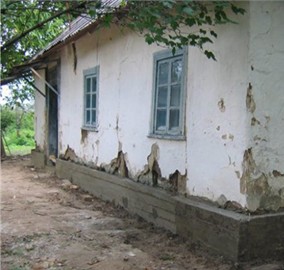
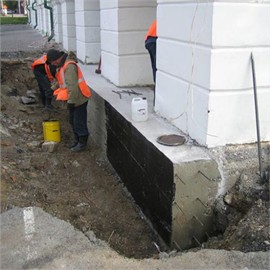
Fig. 1 shows an example of technical measures applied to reduce soil salinization and moisture-related deterioration in the foundation zone of buildings at the “Bog’don dalalari” farm, Pakhtakor district, Jizzakh region. The figure illustrates drainage-related and protective interventions used to improve hydrogeological conditions and reduce salt accumulation near structures.
Fig. 1Technical measures used to reduce soil salinization in the building area at the “Bog’don dalalari” farm, Pakhtakor district, Jizzakh region, Uzbekistan. Photos by the authors, 2024
3. Results and discussion
3.1. Distribution and engineering significance of saline soils
The collected and analyzed data indicate that saline soils are widely distributed across different regions of Uzbekistan and show considerable variation in the degree of salinity. These differences are important for engineering-geological investigations because the type and intensity of salinization influence moisture regime, filtration behavior, soil structure, and ultimately foundation performance. In regions with shallow mineralized groundwater and insufficient natural drainage, saline soils are more likely to experience progressive deterioration under prolonged wetting and water migration [1], [3], [6].
Table 2 summarizes the regional distribution of saline soils under natural conditions. The data show that moderately and strongly saline soils occupy a substantial share in several regions, including Jizzakh, Syrdarya, Khorezm, and the Republic of Karakalpakstan. This confirms the practical importance of considering salinity as a key engineering-geological factor during site investigation and foundation assessment.
The engineering significance of these data lies in the fact that increased salinity is commonly associated with reduced soil stability under wetting, especially when moisture variation is accompanied by active filtration and redistribution of soluble salts. Therefore, regional salinity distribution should be treated not only as a descriptive geological characteristic but also as an indicator of possible changes in soil behavior under construction and operation conditions [3], [6], [11].
Table 2Salinity-based distribution of saline soils by region in Uzbekistan (%)
Region | Slightly saline | Moderately saline | Strongly saline | Very strongly saline |
Soils of the Republic of Karakalpakstan | 1.1 | 26.2 | 38.6 | 34.1 |
Soils of Andijan region | 42.8 | 33 | 15.1 | 8.1 |
Soils of Bukhara region | 54.4 | 33.8 | 8.7 | 3.1 |
Soils of Jizzakh region | 18.7 | 39.8 | 30.2 | 13.6 |
Soils of Kashkadarya region | 22.6 | 55.3 | 16.4 | 5.7 |
Soils of Navoi region | 20.0 | 52.5 | 21.0 | 6.5 |
Soils of Namangan region | 58.3 | 26.1 | 9.2 | 6.4 |
Soils of Samarkand region | 51.0 | 39.8 | 7.8 | 1.4 |
Soils of Surkhandarya region | 73.0 | 21.1 | 4.3 | 1.6 |
Soils of Syrdarya region | 0.0 | 61.0 | 26.0 | 13.0 |
Soils of Tashkent region | 71.5 | 22.6 | 4.5 | 1.4 |
Soils of Fergana region | 28.1 | 35.9 | 22.4 | 13.6 |
Soils of Khorezm region | 0.0 | 60.0 | 28.5 | 11.5 |
3.2. Influence of moisture on compaction and soil strength
The field and laboratory observations indicate that soil strength is strongly affected by moisture content. With increasing moisture, soils become less resistant to shear and more susceptible to deformation, particularly when natural structure is disturbed or when the soil contains soluble salts. Excess water reduces interparticle bonding and may impair compaction efficiency, which is critical for the performance of foundations and earth structures [1], [6], [9].
At the same time, the results confirm that moisture cannot be evaluated separately from the hydrogeological setting. In areas with shallow groundwater, repeated wetting and capillary rise intensify the weakening effect, while in better-drained conditions soils may retain more stable engineering characteristics. This observation is consistent with previous studies showing that prolonged soaking and increased water content can reduce the strength of saline and gypsum-bearing soils, especially when the initial structure depends on salt-related bonding [9], [10].
3.3. Role of salinity and filtration processes
The obtained results also show that salinity and filtration processes significantly influence soil behavior. Moisture migration through the soil profile promotes dissolution, redistribution, and in some cases partial leaching of salts, which changes the internal structure of the soil mass and may reduce its mechanical stability. The effect is especially pronounced in soils with soluble sulfate and chloride components, where hydrochemical transformation can accelerate the degradation of engineering properties [2], [10], [11].
From an engineering-geological point of view, filtration should be treated as an active process that modifies the state of saline soils over time rather than as a secondary background factor. In areas with higher permeability or more intensive groundwater movement, salt redistribution may occur faster, producing local differences in density, compaction response, and shear resistance. By contrast, in less permeable soils these changes may be slower but still significant over long periods of exposure. Similar behavior has been reported in studies on leaching-affected clayey and saline soils, where hydrochemical changes were accompanied by measurable variations in strength parameters [10], [11].
3.4. Engineering interpretation and mitigation measures
The combined analysis of field observations and laboratory results indicates that engineering-geological investigations in saline and moisture-affected areas should include not only the determination of basic physical and mechanical properties, but also evaluation of groundwater conditions, filtration paths, and salt migration potential. Without such integrated analysis, the actual risk of settlement, softening, or local instability may be underestimated [3], [5], [6].
The results also suggest that practical mitigation measures should focus on controlling both moisture regime and hydrochemical impact. These measures may include drainage improvement, protection against capillary rise, reduction of uncontrolled infiltration, and selective stabilization of soils in zones with unfavorable salinity and groundwater conditions. In related infrastructure studies, filtration-based protective systems and sorption barriers have also been considered as supportive engineering solutions for limiting the adverse consequences of water-related pollutant and salt transport near structures [7], [8], [13], [14]. In addition, recent international studies indicate that stabilization approaches for sulfate-bearing saline soils can improve engineering performance when properly selected with regard to soil composition and wetting conditions [12].
3.5. Limitations and future research
The present study has several limitations. First, the results are linked to site-specific engineering-geological conditions and should therefore be interpreted with caution when transferred to other regions with different lithology, groundwater chemistry, or climatic regime. Second, the analysis is primarily based on field observations and laboratory interpretation, while long-term in situ monitoring of seasonal groundwater and salinity changes remains limited. Third, supportive aerial and remote-sensing information was used only at the preliminary stage and was not the main source of quantitative assessment.
Future research should therefore focus on long-term monitoring of moisture and salinity dynamics, quantitative evaluation of filtration-controlled strength degradation, and comparison of different stabilization techniques for saline soils under natural and technogenic water impact. Particular attention should also be given to seasonal groundwater fluctuations and the long-term effectiveness of drainage and protective engineering measures [9], [10], [12].
4. Conclusions
This study examined the coupled effects of moisture, salinity, and filtration on soil strength within the framework of engineering-geological investigations for buildings and infrastructure in Uzbekistan. Based on field observations, laboratory testing, and hydrogeological interpretation, the following conclusions can be drawn.
1) Soil strength is strongly influenced by moisture conditions. An increase in moisture content reduces resistance to deformation and shear, especially in soils affected by shallow groundwater and prolonged wetting.
2) Salinity is an important engineering-geological factor that should be considered together with moisture conditions. The presence and redistribution of soluble salts may alter soil structure and contribute to a decrease in mechanical stability under water impact.
3) Filtration processes play an active role in the transformation of saline soils. Moisture migration, salt dissolution, and leaching may gradually change the engineering properties of soils and lead to unfavorable foundation conditions if such processes are not taken into account during site investigation.
4) The combined influence of moisture, salinity, and filtration is more significant than the isolated effect of each factor considered separately. For this reason, engineering-geological investigations in saline areas should include integrated assessment of soil properties, groundwater regime, and hydrochemical conditions.
5) From a practical point of view, the results highlight the importance of timely drainage measures, control of uncontrolled infiltration, protection against capillary moisture rise, and selective stabilization in problematic zones. These measures can improve foundation reliability and reduce the risk of settlement and long-term degradation in saline and moisture-affected soils.
6) The study also shows that regional salinity conditions in Uzbekistan have direct engineering significance and should be considered in the interpretation of site-specific risks for construction and infrastructure development.
7) Future studies should focus on long-term field monitoring, seasonal groundwater fluctuations, quantitative analysis of filtration-controlled strength degradation, and comparison of stabilization techniques for saline soils under different hydrogeological conditions.
References
-
A. Kayumov, O. Zafarov, and D. Kayumov, “Changes of mechanical properties in humidification saline soil based in builds and constructions,” in AIP Conference Proceedings, Vol. 2789, No. 1, p. 040086, Jan. 2023, https://doi.org/10.1063/5.0145759
-
R. Hudaykulov, D. Makhmudova, D. Kayumov, and O. Zafarov, “Filter leaching of salt soils of automobile roads,” E3S Web of Conferences, Vol. 264, p. 02032, Jun. 2021, https://doi.org/10.1051/e3sconf/202126402032
-
Z. Maxkamov, O. Zafarov, J. Xudoyberdiyev, E. Urishbayev, and J.R. Ravshanov, “Conducting engineering and geological research on the design and construction of buildings and structures in saline areas,” in AIP Conference Proceedings, Vol. 2789, No. 1, p. 040080, Jan. 2023, https://doi.org/10.1063/5.0145757
-
O. Zafarov, D. G.’Ulomov, and Z. Murodov, “Conducting engineering-geological researches on bridges located in our country and diagnosing their super structures, methods of eliminating identified defects,” in AIP Conference Proceedings, Vol. 2789, No. 1, p. 040079, Jan. 2023, https://doi.org/10.1063/5.0145756
-
R. Bobojonov, O. Zafarov, and J. Yusupov, “Soil composition in the construction of engineering structures, their classification, assessment of the impact of mechanical properties of soils on the structure,” in AIP Conference Proceedings, Vol. 2789, No. 1, p. 040081, Jan. 2023, https://doi.org/10.1063/5.0145758
-
A. Qayumov, B. Tovboyev, O. Zafarov, and X. Ergashev, “Assessment of influence of strength and deformation properties of saline soils on foundations of structures distributed in Uzbekistan (in example of Pakhtakor district of Jizzakh Region),” in AIP Conference Proceedings, Vol. 3317, No. 1, p. 030007, Jan. 2025, https://doi.org/10.1063/5.0267152
-
M. Talipov, O. Ilyasov, O. Kovaleva, B. Begmatov, and Z. Ismailova, “Environmental protection of railway wastewater using natural diatomite sorbents: development and validation of a three-layer filtration strip,” Vibroengineering Procedia, Vol. 60, pp. 473–478, Dec. 2025, https://doi.org/10.21595/vp.2025.25627
-
O. Ilyasov, M. Talipov, I. Khurramov, and M. Tirkasheva, “Technical and ecological evaluation of a diatomite-based filter strip for cleaning polluted runoff from a railway embankment,” Vibroengineering Procedia, Vol. 60, pp. 515–521, Dec. 2025, https://doi.org/10.21595/vp.2025.25269
-
S. S. Razouki and D. Kuttah, “Improving strength by increased compaction of gypsum-enriched soil under long-term soaking conditions,” Geotechnics, Vol. 4, No. 2, pp. 415–429, 2024, https://doi.org/10.3390/geotechnics4020023
-
Y. Song, H. Li, Y. Geng, L. Xia, and R. Yan, “Study of ion adsorption and shear strength of red clay under leaching action,” Sustainability, Vol. 15, No. 2, p. 959, Jan. 2023, https://doi.org/10.3390/su15020959
-
W. Geng, W. Han, J. Yin, and Z. Lu, “Salinity effects on the strength and morphological indices of soft marine clay,” Scientific Reports, Vol. 12, No. 1, Oct. 2022, https://doi.org/10.1038/s41598-022-22627-w
-
A. Bazarbekova, C.-S. Shon, A. Kissambinova, D. Zhang, and J. Kim, “Evaluating the efficacy of limestone powder as a partial replacement of ordinary Portland cement for the sustainable stabilization of sulfate-bearing saline soil,” Sustainability, Vol. 16, No. 21, p. 9224, Oct. 2024, https://doi.org/10.3390/su16219224
-
M. M. Talipov, O. T. Aliev, O. R. Ilyasov, and O. V. Kovaleva, “Modern method for purifying wastewater from railway embarking using diatomite in a filter band,” in ICTEA: International Conference on Thermal Engineering, Vol. 1, No. 1, 2024.
-
S. Sulaymanov, M. Talipov, R. S. Razikov, O. R. Ilyasov, and O. V. Kovaleva, “Protection of the environment from pollution by wastewater from railway transport using natural sorbents,” in ICTEA: International Conference on Thermal Engineering, Vol. 1, No. 1, 2024.
About this article

The authors have not disclosed any funding.
The datasets generated during and/or analyzed during the current study are available from the corresponding author on reasonable request.
The authors declare that they have no conflict of interest.

