Abstract
Mathematical modeling makes it possible to optimize various technological processes and to analyze research results from a theoretical perspective. In this paper, the effect of modifying malleable cast iron with nickel on its hardness is mathematically modeled. For this purpose, cast iron was first modified with nickel in induction furnaces and samples were cast. The obtained samples were then subjected to heat treatment to produce malleable cast iron. The hardness of the samples produced with different nickel contents was measured using an HXS-1000Z hardness tester. Based on the obtained results, a graph was constructed showing the relationship between the nickel content introduced into the cast iron and the measured hardness values. This graph served as the basis for mathematical modeling. Using the polynomial function developed in the mathematical model, it becomes possible to determine the hardness of cast iron modified with various amounts of nickel. This, in turn, allows the hardness of the alloy to be theoretically predicted using this formula without conducting further experiments.
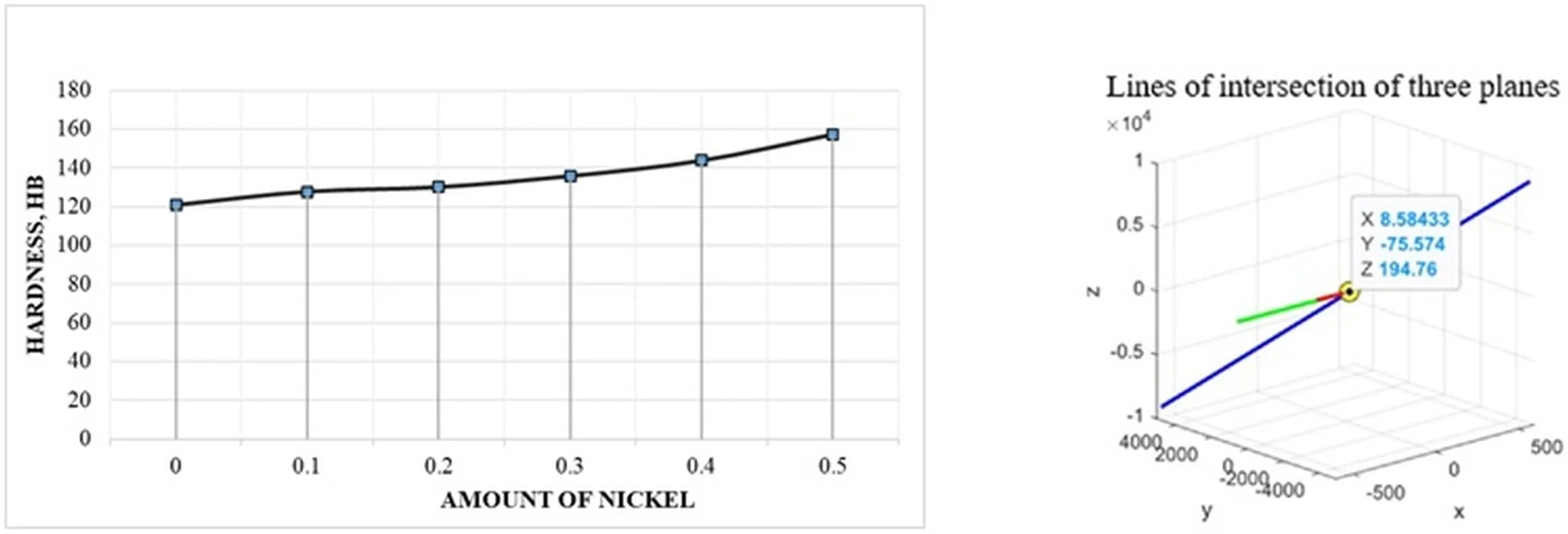
Highlights
- The effect of nickel content on hardness of malleable cast iron was investigated.
- A mathematical model describing hardness variation was developed.
- A correlation between nickel concentration and hardness was established.
- Optimal nickel content for maximum hardness was determined.
- The model shows good agreement with experimental results.
1. Introduction
At present, the development of the mechanical engineering manufacturing industry is leading to an increased demand for ferrous and non-ferrous alloys, which are considered the main materials for producing components by various methods [1-5]. Researchers from leading scientific institutions around the world are conducting studies on these alloys aimed at improving their mechanical, service, and casting properties [6-9]. Naturally, cast irons used in mechanical engineering also occupy an important place in this field. Numerous studies have been carried out to improve the properties of cast irons. In particular, Toshiro Kobayashi and Hironobu Yamamoto [10] conducted research aimed at increasing the toughness of au tempered ductile irons by strengthening the sites of fracture initiation, such as graphite-matrix interfaces and eutectic cells, through micro segregation of alloying elements. The optimum fracture toughness is achieved by applying QB' or B' heat treatment during heating. The cast iron developed by them exhibits a diverse microstructure with unusual elongation associated with the TRIP effect (transformation-induced plasticity) at a temperature of about 198 K, which may be caused by the formation of deformation twins.
According to V. Z. Kutsova and their colleagues from Ukraine, by influencing the heterogeneity of the alloy structure and applying various heat treatment regimes, as well as rational alloying depending on the functional purpose, it is possible to purposefully form the required properties of chromium–manganese cast irons obtained from three pilot-industrial heats [11].
Scientists from Finland, E. Pagounis et al., investigated the effect of the matrix structure on the mechanical characteristics of a composite based on white cast iron produced by hot isostatic pressing (HIP) [12]. A high-chromium white iron composite was tested to evaluate its wear resistance and toughness after the addition of a higher amount of strengthening elements. Nine white cast iron composites with 10 vol.% titanium carbide (TiC) and three unreinforced alloys were manufactured using a standard hot isostatic pressing process. The results show that a higher austenitizing temperature leads to increased hardness, wear resistance, and impact toughness, primarily due to a lower content of reinforcing elements and a more uniform matrix distribution.
A study by German researchers D. Franzen et al. [13] shows that the silicon content in ductile cast iron can be partially replaced in order to improve impact energy characteristics and reduce the ductile-to-brittle transition temperature without deteriorating the static mechanical properties. Four different series of castings made from SGI 500-14 alloy were produced, each containing a different amount of silicon. The main objective was to increase impact toughness without compromising static mechanical properties. By investigating the microstructure as well as the static and dynamic properties of these alloys, the study was aimed at evaluating the effect of partial substitution with molybdenum.
Each experimental study is considered an economically costly process. However, this problem can be overcome by using an alternative approach based on mathematical modeling [14]. In the above-mentioned experimental studies, mathematical modeling was not presented [15]. In this paper, the effect of nickel on the hardness of cast iron is described by means of mathematical calculations using a polynomial function, and the developed formula makes it possible to link experimental and theoretical investigations.
2. Materials and methods
For conducting the experiments, malleable cast iron grade KCh30-6 was selected as the research object. Cast iron of grade KCh30-6 is an alloy containing about 94 % iron with additions of carbon, silicon, manganese, and other elements. The percentage content of these alloying elements is determined by the standard GOST 1215-79. Malleable cast iron exhibits enhanced ductility compared to gray cast iron and is produced from white cast iron. The KCh30-6 grade has found application in the manufacture of less critical components. This is due to the fact that this alloy contains a relatively high amount of flake-shaped graphite, which, although stronger than lamellar graphite, makes the metallic structure of the cast iron more brittle.
The alloy is melted in a cupola furnace, which makes it possible to avoid significant changes in the chemical composition of the cast iron. Its physical properties include damping capacity, wear resistance, heat resistance, and others. Heat treatment operations aimed at improving various characteristics may include annealing, soaking, and prolonged holding. Unlike gray cast iron, which contains lamellar graphite, in malleable cast iron the graphite is fully or partially present in the form of flakes. Owing to this, the strength characteristics of malleable cast iron are significantly higher. In addition to carbon in the form of graphite, this alloy also contains silicon, manganese, sulfur, phosphorus, and chromium. Additional surface treatment or coating processes are also possible.
3. Experimental studies
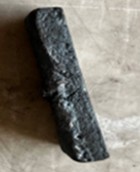
During the study, low-temperature annealing with preliminary cooling of the castings was applied. Compared to other annealing methods, the lower the temperature at which preliminary cooling is carried out, the more pronounced is the ability of low-temperature annealing to increase the number of graphite inclusions [16]. In order to obtain malleable cast iron with the maximum number of graphite inclusions, the method of low-temperature treatment of white cast iron, also referred to as artificial aging, was used [17]. The chemical composition of the casting is given in Table 1. In this case, it is also necessary to take into account the burn-off and pick-up of elements in order to obtain the desired composition of the cast iron: +10 % for C, –12 % for Si, and –20 % for Mn. Modification was carried out with nickel in the range from 0.1 to 0.5%, and the samples had a rectangular shape (Fig. 1). Before pouring the liquid white cast iron into the sand-clay mold, 0.1 to 0.5 wt.% Ni was added to the ladle at a temperature interval of 1550-1620 °C. This process lasted for one minute, after which the melt was poured into the mold.
Table 1Mass fraction of elements, %
Fe | C | Si | Mn | S | Other elements |
till 94 | 2.49-2.57 | 1.29-1.42 | 0.43-0.49 | 0.129-0.14 | 0.5-1.0 |
Fig. 1Cast sample. Photo by B. Ibrohimov in the Metals Technologies Laboratory on January 8, 2025
After casting, the samples were removed from the molds and mechanically machined for hardness testing. The hardness was measured using an HXS-1000Z hardness tester [18].
4. Results and analysis
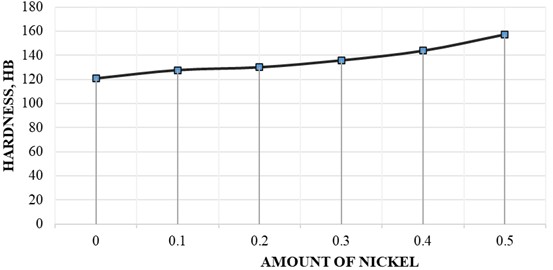
Based on the hardness results, a relationship graph between the sample hardness and the nickel content introduced into the alloy was constructed (Fig. 2). In the next stage, a mathematical model of the effect of nickel on the hardness of malleable cast iron KCh30-6 was developed. For the purpose of mathematical modeling, the graph presented in Fig. 2 was taken as the basis.
Fig. 2Dependence of hardness on nickel content
To determine the relationship between the nickel content (, %) and the hardness of malleable cast iron (y, HB), a mathematical model was developed based on experimental data. The functional relationship between these parameters can be expressed as: ; Ni content, %; Hardness (HB).
In order to approximate the experimental results, a second-order polynomial regression model was adopted. Polynomial models are widely used in materials science to describe nonlinear relationships between alloying elements and mechanical properties. The general form of the adopted model is: , where , , and are unknown coefficients determined from the experimental data.
Using the experimental hardness values obtained at different nickel concentrations, a system of linear algebraic equations was formed. The coefficients of the polynomial were determined by solving this system, which is written as:
The system of equations represents mathematical conditions derived from experimental measurements and allows the determination of coefficients describing the dependence of hardness on nickel content. Solving this system provides the parameters of the regression equation that characterizes the influence of nickel on the hardness of malleable cast iron. The obtained model makes it possible to theoretically predict hardness values without conducting additional experiments, thereby simplifying the optimization of alloy composition.
Using Cramer’s method, equation system Eq. (1) was solved to determine three unknown coefficients corresponding to nickel contents of 0.1 %, 0.3 %, and 0.5 %. First, the determinant of the system () was calculated based on the coefficient matrix of the equations:
The determinant of system Eq. (2) must not be equal to zero ( 0); in this case, the system has a unique solution for determining the unknowns, which satisfies the conditions of Cramer’s method:
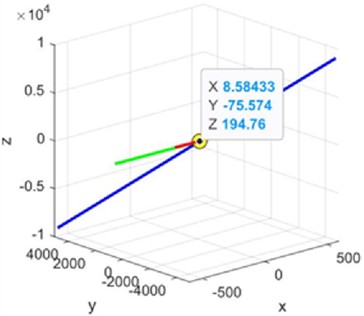
Fig. 3Visualization of the intersection of three planes in MATLAB
After solving the above system of equations for the unknowns, the relationship between the hardness of malleable cast iron KCh30-6 and the nickel content can be expressed as follows:
This equation represents a third-order polynomial model describing the relationship between hardness and nickel content in the alloy. The function enables theoretical prediction of the hardness of malleable cast iron KCh30-6 for different nickel concentrations and helps determine the optimal nickel content during the modification process.
The graphical interpretation of the solution obtained by Cramer's method was illustrated in MATLAB R2021b (Fig. 3). The red, green, and blue lines represent the intersections of the corresponding pairs of equations, while the yellow point indicates the common intersection of all three planes, confirming the solution of the system.
5. Conclusions
Based on the experimental investigations and mathematical modeling of nickel-modified malleable cast iron, the following conclusions can be drawn:
1) Modification with nickel increases the hardness of malleable cast iron by approximately 28-30 % compared to the unmodified alloy, confirming the effectiveness of nickel as a modifying element.
2) The addition of nickel increases the number of crystallization centers during solidification, resulting in microstructure refinement and a more uniform distribution of structural phases.
3) The developed mathematical model (Eq. (3)) allows the prediction of the influence of nickel content on hardness without additional experiments, reducing experimental time and cost.
4) Experimental results show that the optimal nickel content for modification is 0.3-0.5 % of the charge. Higher nickel content may increase brittleness and negatively affect mechanical reliability.
5) The combined use of experimental studies and mathematical modeling provides an effective approach for optimizing alloy composition and improving the mechanical properties of malleable cast iron.
References
-
J. Martínez Alcón, M. Pascual Guillamón, L. Solano García, and F. Salas Vicente, “Mechanical and microstructural analysis in the welding of ductile cast iron by TIG procedure, with different filler materials and air cooling,” Revista de Metalurgia, Vol. 57, No. 2, p. e194, Jun. 2021, https://doi.org/10.3989/revmetalm.194
-
A. Bedolla-Jacuinde, F. V. Guerra, A. J. Guerrero-Pastran, M. A. Sierra-Cetina, and S. Valdez-Medina, “Microstructural effect and wear performance of high chromium white cast iron modified with high boron contents,” Wear, Vol. 476, p. 203675, Jul. 2021, https://doi.org/10.1016/j.wear.2021.203675
-
N. Saidmakhamadov et al., “Improving the design of the lining of the ball mill used to improve the quality of grinding,” in E3S Web of Conferences, Vol. 525, p. 02017, May 2024, https://doi.org/10.1051/e3sconf/202452502017
-
X. Zhou, J. Mo, X. M. Li, and X. D. Li, “Optimization of casting process of malleable iron connector,” The Zhuzao/Foundry Journal, Vol. 73, No. 1, pp. 91–97, 2024.
-
S. Tursunbaev, N. Turakhodjaev, S. Mardonakulov, and S. Toshmatova, “Effect of germanium oxide on the properties of aluminum casting details in agricultural machinery,” in BIO Web of Conferences, Vol. 85, p. 01024, Jan. 2024, https://doi.org/10.1051/bioconf/20248501024
-
S. Tursunbaev, N. Turakhodjaev, L. Zhang, Z. Wang, U. Mardonov, and M. Saidova, “Mechanical properties and evolution of the microstructure of Al-Cu-Mg system alloys under the influence of alloying elements (GE AND SI),” International Journal of Mechatronics and Applied Mechanics, No. 18, pp. 164–169, Dec. 2024, https://doi.org/10.17683/ijomam/issue18.19
-
D. Boldyrev, S. Nefed’Ev, R. Amirov, and A. Koldin, “Ductile iron with nodular and compact graphite as a rational alternative to malleable cast iron,” in E3S Web of Conferences, Vol. 389, p. 02019, May 2023, https://doi.org/10.1051/e3sconf/202338902019
-
I. Riposan and T. Skaland, “Modification and inoculation of cast iron,” in Cast Iron Science and Technology, ASM International, 2017, pp. 160–176, https://doi.org/10.31399/asm.hb.v01a.a0006315
-
N. V. Vodolazskaya and O. A. Sharaya, “Modifying of the surface of products from cast iron as the element of production modernization,” Solid State Phenomena, Vol. 299, pp. 588–593, Jan. 2020, https://doi.org/10.4028/www.scientific.net/ssp.299.588
-
T. Kobayashi and H. Yamamoto, “Development of high toughness in austempered type ductile cast iron and evaluation of its properties,” Metallurgical Transactions A, Vol. 19, No. 2, pp. 319–327, Feb. 1988, https://doi.org/10.1007/bf02652541
-
Y. M. Koval, V. Z. Kutsova, M. A. Kovzel, and P. Y. Shvets, “Features of structure formation, kinetics of phase transformations, mechanical and tribological properties of the Fe-Based Cr-Mn-Ni alloys,” Uspehi Fiziki Metallov, Vol. 20, No. 2, pp. 180–248, Jun. 2020, https://doi.org/10.15407/ufm.21.02.180
-
E. Pagounis, V. K. Lindroos, and M. Talvitie, “Influence of matrix structure on the abrasion wear resistance and toughness of a hot isostatic pressed white iron matrix composite,” Metallurgical and Materials Transactions A, Vol. 27, No. 12, pp. 4183–4191, Dec. 1996, https://doi.org/10.1007/bf02595666
-
D. Franzen, B. Pustal, and A. Bührig-Polaczek, “Mechanical properties and impact toughness of molybdenum alloyed ductile iron,” International Journal of Metalcasting, Vol. 15, No. 3, pp. 983–994, Oct. 2020, https://doi.org/10.1007/s40962-020-00533-z
-
N. Turakhodjaev, M. Akramov, S. Turakhujaeva, S. Tursunbaev, A. Turakhujaeva, and J. Kamalov, “Calculation of the heat exchange process for geometric parameters,” International Journal of Mechatronics and Applied Mechanics, No. 9, pp. 90–95, Jul. 2021, https://doi.org/10.17683/ijomam/issue9.13
-
S. Turakhujaeva, K. Karimov, N. Turakhodjaev, and A. Akhmedov, “Mathematical modeling of quantitative changes in hydrogen and oxide inclusions in aluminum alloy,” in E3S Web of Conferences, Vol. 365, p. 05016, Jan. 2023, https://doi.org/10.1051/e3sconf/202336505016
-
S. N. Ulanovskaya, M. N. Monastyrskaya, G. K. Vanzha, and V. I. Yaroshenko, “Low-temperature heat treatment of high-strength cast iron articles,” Metal Science and Heat Treatment, Vol. 27, No. 9, pp. 712–713, Sep. 1985, https://doi.org/10.1007/bf00701074
-
A. A. Zhuravlev, V. F. Mysik, and A. V. Zhdanov, Calculations of Material and Energy Balances in Steel Smelting in Electric Arc Furnaces: Educational and Methodological Manual. Yekaterinburg: Ural University Press, 2016.
-
T. Sarvar, T. Nodir, U. Mardonov, B. Saydumarov, D. Kulmuradov, and M. Boltaeva, “Effects of germanium (GE) on hardness and microstructure of AL-MG, AL-CU, AL-MN system alloys,” International Journal of Mechatronics and Applied Mechanics, No. 16, pp. 179–184, Jun. 2024, https://doi.org/10.17683/ijomam/issue16.21
About this article

The authors have not disclosed any funding.
The datasets generated during and/or analyzed during the current study are available from the corresponding author on reasonable request.
The authors declare that they have no conflict of interest.

