Abstract
This paper presents a conceptual design of a robotic exoskeleton for active correction of spinal deformities. Unlike existing support-based systems, the proposed approach is correction-oriented and uses a multi-segment structure with linear electric actuators. A comparative analysis of actuation systems was conducted, and the FOCOTECK LA14C actuator was selected for wearable application. The exoskeleton is designed as a vest-based system with actuators mounted via articulated joints to improve kinematic compatibility. A CAD model was developed to evaluate the feasibility of the design. Future work will include simulation and experimental validation using a 3D-printed prototype
Highlights
- A conceptual robotic exoskeleton was developed for active correction of spinal deformities using a multi-segment wearable architecture.
- Linear electric actuators were integrated into a vest-based structure to provide controlled corrective forces while maintaining kinematic compatibility.
- A comparative analysis of actuator technologies identified the FOCOTECK LA14C actuator as the most suitable solution for wearable rehabilitation.
- A CAD model was developed to evaluate the structural feasibility and mechanical configuration of the proposed exoskeleton.
- Future work will include finite element analysis, control system development, and experimental validation using a 3D-printed prototype.
1. Introduction
Spinal deformities such as scoliosis, kyphosis, and hyperlordosis remain a major challenge in orthopedics and rehabilitation [1]. These conditions affect spinal biomechanics and posture, and in severe cases may impact respiratory and cardiovascular function. Scoliosis is a complex three-dimensional deformity characterized by lateral curvature and axial rotation of the spine (Fig. 1).
Fig. 1Anatomical structure of the human spine
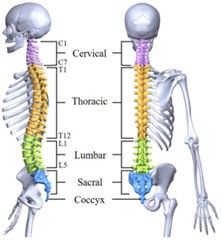
a) Overall spinal column
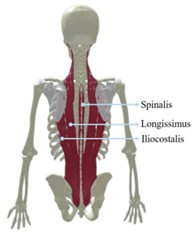
b) Paravertebral muscles
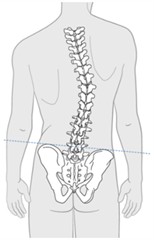
c) Example of spinal deformity (scoliosis)
Conventional treatments include bracing, physiotherapy, and surgery; however, they have notable limitations such as restricted mobility, invasiveness, and lack of precise control of corrective forces. Robotic rehabilitation systems offer a promising alternative, but most existing exoskeletons remain support-oriented and do not provide active correction [2]. Key limitations include insufficient corrective torque, poor kinematic compatibility, and energy losses in cable-driven systems.
To address these challenges, this study proposes a correction-oriented spine exoskeleton using linear electric actuators. The system is based on a segmental mechanical structure that improves kinematic compatibility and enables controlled, distributed force application, including asymmetric correction. A conceptual CAD model is developed to evaluate the feasibility of the proposed design.
2. Literature review and problem statement
Exoskeletons for spinal deformity correction have attracted increasing attention; however, most existing systems are primarily support-oriented and do not provide active correction. As a result, their ability to deliver controlled corrective forces remains limited.
Spine exoskeletons can be broadly classified into passive, soft-actuated, and electrically driven systems [3-5] (Table 1). Passive devices are simple but lack corrective torque, while soft systems improve comfort at the expense of force output and precision. Electrically actuated systems offer higher controllability but introduce increased mass, power consumption, and complexity. Linear electric actuators are particularly promising due to their capability for direct force transmission and asymmetric correction.
Table 1Comparison of actuation types in spine exoskeletons
Actuation type | Advantages | Limitations | Application |
Passive (springs, cables) | Lightweight, no external power | No corrective torque | Support only |
Soft-actuated | Flexible, comfortable | Low force, limited precision | Light assistive use |
Electric motors | High force, precise control | Heavy, high-power consumption | Complex systems |
Linear electric actuators | Direct force transmission, high precision, asymmetric correction | Moderate mass, requires power | Correction-oriented systems |
Despite these developments, several limitations remain, including insufficient corrective capability, poor kinematic compatibility with the multi-link structure of the spine, and energy losses in cable-driven mechanisms. In addition, the controlled distribution of corrective forces in real time is still not well addressed.
Therefore, there is a need for systems that combine kinematically compatible segmental structures with direct and controllable force transmission. In this context, this study proposes a correction-oriented spine exoskeleton based on a segmental architecture and linear electric actuation.
3. Analysis of actuation systems in spine exoskeletons
The performance of a spine exoskeleton largely depends on the actuation system, which defines force generation, transmission, and control. Existing systems employ passive, cable-driven (Bowden), or electrically actuated mechanisms. Passive systems are simple but cannot provide active correction, while cable-driven systems suffer from friction, backlash, and nonlinear force transmission. Electrically actuated systems offer higher precision but introduce increased weight, energy consumption, and complexity.
For effective spinal correction, the actuation system must provide controllable force, direct transmission, kinematic compatibility with the multi-segment spine, and support for both symmetric and asymmetric actions. Linear electric actuators satisfy these requirements by enabling direct force transmission and improved control while remaining suitable for integration into wearable structures.
The RoSE (Robotic Spine Exoskeleton) system [6-8] demonstrates high-precision multi-DOF control of force and displacement and serves as a representative example of an advanced actuation strategy for spine correction.
Based on this analysis, linear electric actuators combined with a segmental mechanical structure are identified as a suitable solution for correction-oriented spine exoskeletons.
4. Comparative analysis of linear electric actuators
Actuators in spine exoskeletons must ensure accurate and controllable force delivery with sufficient output, compact size, and low weight. Several linear electric actuators were evaluated (Fig. 3).
High-force tubular actuators (Fig. 2(a)) provide up to 2500 N but are too large and stiff for wearable use. The FOCOTECK LA14C (Fig. 2(b)) offers about 100 N with a 20-200 mm stroke, combining compact design and safety features. Micro actuators such as SHANGLINMOTOR L9 (Fig. 2(c)) are lightweight but insufficient in force, while standard DC actuators (Fig. 2(d)) lack control accuracy and feedback.
The analysis shows that a balance between force, size, safety, and controllability is required. Based on this, the FOCOTECK LA14C was selected as the most suitable option for the proposed wearable system.
Fig. 2Examples of linear electric actuators for spine exoskeletons:
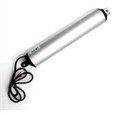
a) Mini tubular actuator
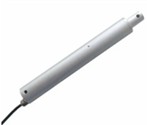
b) FOCOTECK LA14C
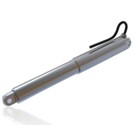
c) SHANGLINMOTOR L9
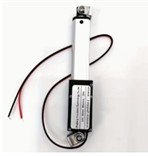
d) DC linear actuator
5. Proposed spine exoskeleton design
Based on the conducted analysis, a conceptual design of a robotic spine exoskeleton for active deformity correction is proposed. Unlike conventional support-oriented devices, the system is designed to deliver controlled corrective forces to spinal segments.
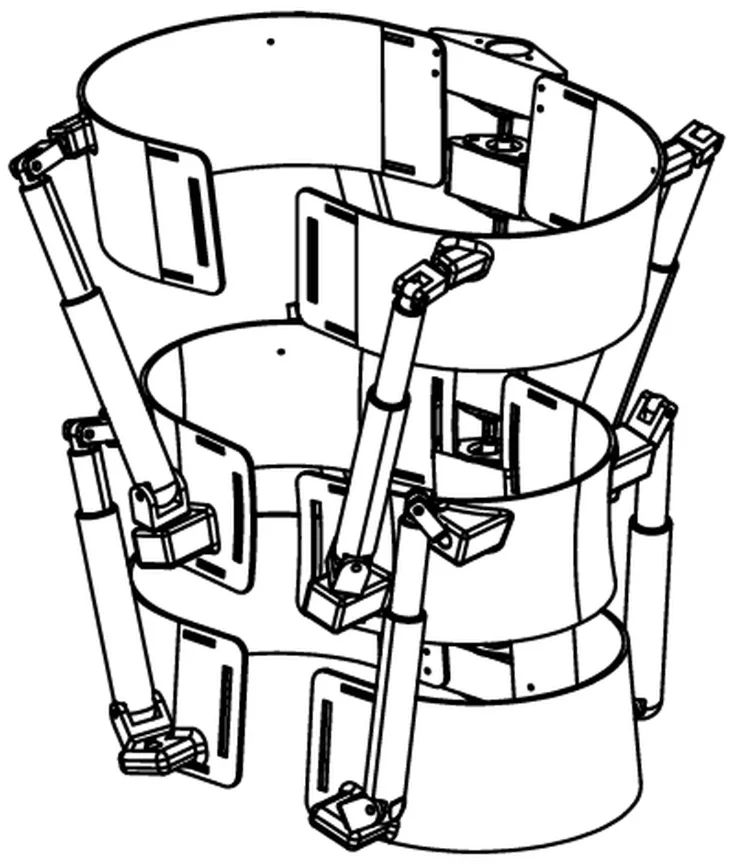
The exoskeleton is implemented as a wearable vest-based structure with a multi-segment mechanical chain reflecting spinal kinematics (Fig. 3). This approach enables distributed motion and improves kinematic compatibility while allowing localized corrective actions within physiological limits.
Fig. 3Conceptual model of the spine exoskeleton
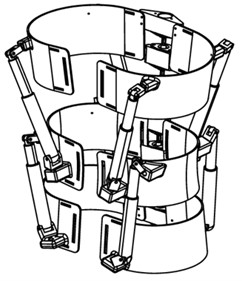
The system consists of four main subsystems: a segmental spine mechanism, linear electric actuators (FOCOTECK LA14C), a vest-based structure, and a sensor-control unit. The segmental chain enables multi-link motion and more effective force distribution compared to rigid designs.
Actuators are positioned along the posterior-lateral regions and connected via articulated joints (Fig. 4), ensuring direct force transmission while reducing misalignment and parasitic loads. This configuration enables both symmetric and asymmetric correction.
The vest structure provides stable attachment, while shoulder and pelvic elements distribute loads and improve comfort. Motion and interaction forces are monitored using IMUs and pressure sensors, with a hybrid position–force control strategy.
Fig. 4Structural layout of the exoskeleton
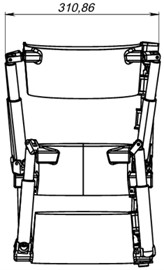
a) Front view
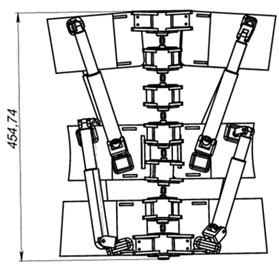
b) Rear view with actuator placement and segmental structure
The modular design allows adaptation to different users and supports further development. Overall, the system provides a kinematically compatible and actuator-driven solution for active spinal correction.
6. CAD model description
A conceptual CAD model of the proposed spine exoskeleton was developed to assess its structural layout, geometric compatibility, and force transmission.
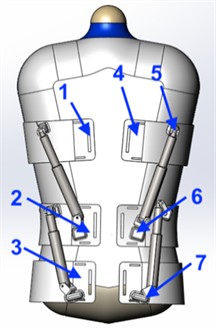
Fig. 5 shows the front view of the system. Points 1 and 4, as well as 2 and 3, indicate the front fastening elements used to tighten and secure the vest. Points 5, 6, and 7 represent universal (cardan-type) joints connecting the linear actuators to the structure, allowing angular misalignment compensation and efficient force transfer.
Fig. 5Front view of the spine exoskeleton showing actuator placement and attachment points
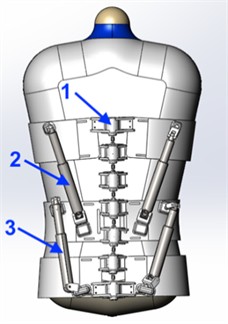
The segmented spine structure enables controlled flexion and extension, approximating natural spinal motion (Fig. 6). In Fig. 6, point 1 denotes the central flexible support element that holds the segmented structure together. Points 2 and 3 correspond to the linear actuators (FOCOTECK LA14C), which generate the motion. The vest is closed at the front using a soft fastening mechanism.
The actuators are placed in posterior-lateral regions and connected via joints to ensure stable force transmission. The design distributes loads across multiple contact points and improves overall comfort and stability.
Fig. 6Rear view of the exoskeleton showing the segmental structure and actuator–spine interaction
7. Discussion
Actuator selection is critical for the performance and usability of spine exoskeletons. High-precision systems such as RoSE [6-8] provide advanced multi-DOF control but are limited to laboratory use due to their complexity, mass, and energy requirements.
Simpler linear actuator systems are more suitable for wearable applications but may suffer from reduced accuracy and kinematic mismatch if rigidly mounted. Similar issues have been observed in systems such as AlmatyAnkleExo [9, 10], where misalignment introduces parasitic loads.
The proposed design addresses these limitations by using articulated joints between actuators and the vest, improving kinematic compatibility and reducing parasitic forces. Posterior-lateral actuator placement further enhances force direction and enables both symmetric and asymmetric correction.
Overall, the proposed system balances precision and practicality, offering a more wearable solution with improved force transmission and biomechanical alignment. This study is limited to conceptual design and CAD-based evaluation; future work will include kinematic modeling, force analysis, and experimental validation.
8. Conclusions
This paper presented a conceptual design of a robotic spine exoskeleton for active deformity correction. Unlike conventional support-oriented systems, the proposed approach focuses on controlled force application using a kinematically compatible, actuator-driven architecture.
Linear electric actuators (FOCOTECK LA14C) were identified as a suitable solution due to their ability to provide direct and controllable force transmission. The proposed design combines a segmental spine mechanism with a vest-based structure and articulated actuator mounting, improving biomechanical alignment and reducing parasitic forces while enabling symmetric and asymmetric correction.
A CAD model was developed as a preliminary validation tool, confirming the feasibility of the design and actuator placement. Overall, the system offers a balance between simplicity, controllability, and wearability.
The current study is limited to conceptual design; future work will include kinematic and force modeling, simulation in SolidWorks, and experimental validation using a physical prototype.
References
-
J. Bettany-Saltikov, D. Turnbull, S. Y. Ng, and R. Webb, “Management of spinal deformities and evidence of treatment effectiveness,” The Open Orthopaedics Journal, Vol. 11, No. 1, pp. 1521–1547, Dec. 2017, https://doi.org/10.2174/1874325001711011521
-
N. Sato, M. Sekiguchi, S. Kikuchi, H. Shishido, K. Sato, and S. Konno, “Effects of long-term corset wearing on chronic low back pain,” Fukushima Journal of Medical Science, Vol. 58, No. 1, pp. 60–65, 2012, https://doi.org/10.5387/fms.58.60
-
S. K. D. Mak and D. Accoto, “Review of current spinal robotic orthoses,” Healthcare, Vol. 9, No. 1, p. 70, Jan. 2021, https://doi.org/10.3390/healthcare9010070
-
C. Luo et al., “The biomechanics of spinal orthoses for adolescent idiopathic scoliosis: a systematic review of the controlling forces,” Bioengineering, Vol. 11, No. 12, p. 1242, Dec. 2024, https://doi.org/10.3390/bioengineering11121242
-
P. K. Jamwal, S. Hussain, and M. H. Ghayesh, “Robotic orthoses for gait rehabilitation: an overview of mechanical design and control strategies,” Proceedings of the Institution of Mechanical Engineers, Part H: Journal of Engineering in Medicine, Vol. 234, No. 5, pp. 444–457, Jan. 2020, https://doi.org/10.1177/0954411919898293
-
R. Ray, L. Nouaille, B. Colobert, L. Calistri, and G. Poisson, “Design and position control of a robotic brace dedicated to the treatment of scoliosis,” Robotica, Vol. 41, No. 5, pp. 1466–1482, Jan. 2023, https://doi.org/10.1017/s0263574722001825
-
R. Ray, L. Nouaille, B. Colobert, L. Calistri, and G. Poisson, “Design of a robotic brace with parallel structure for spine deformities correction,” in Mechanisms and Machine Science, Vol. 103, Cham: Springer International Publishing, 2021, pp. 159–167, https://doi.org/10.1007/978-3-030-75271-2_17
-
R. Ray, L. Nouaille, B. Colobert, and G. Poisson, “Design of robotic braces for patients with scoliosis,” in Advances in Service and Industrial Robotics, Vol. 84, pp. 30–37, 2020, https://doi.org/10.1007/978-3-030-48989-2_4
-
N. Zhetenbayev, G. Sergazin, and D. Seisenova, “Almaty ankle exoskeleton: comparative analysis and structural improvements of versions V.1 and V.2,” Vibroengineering Procedia, Vol. 58, pp. 147–153, May 2025, https://doi.org/10.21595/vp.2025.24972
-
D. Seisenova, N. Zhetenbayev, G. Sergazin, and K. Ozhikenov, “Design of an ankle joint exoskeleton: importance of anatomical and biomechanical analysis (Experience from AlmatyAnkleExo V1/V2),” in 2025 6th International Conference on Communications, Information, Electronic and Energy Systems (CIEES), pp. 1–4, Nov. 2025, https://doi.org/10.1109/ciees66347.2025.11300154
About this article

The authors have not disclosed any funding.
The datasets generated during and/or analyzed during the current study are available from the corresponding author on reasonable request.
Dr. Nursultan Zhetenbayev is a scientific committee member; Dr. Gani Sergazin is a chair of the 77th International Conference on Vibroengineering and were not involved in the editorial review and/or the decision to publish this article.

