Abstract
Urban elevated roads increase noise pollution from high-rise buildings due to the sound source lift effect, posing a serious threat to residents' health. This study takes the Guangzhou Huangsha Avenue – Inner Ring Road Elevated bridge as the empirical object, establishes a three-dimensional noise propagation model, quantifies the intensity of vehicle sound sources, and verifies the reliability of the model through nighttime measured data. The study found that the noise peak on the building facade reached 73.4 dB(A), exceeding the standard limit by 18.4 dB, and the high floor area (7-10 floors) was particularly affected by the elevated bridge sound source. To address this issue, a synergistic solution of "5m high sound barrier (elevated bridge) + porous asphalt pavement (ground road)" was proposed. The simulation results show that the combined measures have reduced the building facade noise to A maximum of 18.8 dB(A), and the noise levels at all monitoring points have dropped below 55 dB(A). The research results provide a reusable technical paradigm for traffic noise control in high-density cities and have significant practical value for promoting the construction of quiet and livable cities.
Highlights
- A three-dimensional noise propagation model was established
- Noise impact mechanism of elevated and ground composite transportation systems on high-rise buildings was explored
- Noise peak in the 7-10 floor area exceeded the standard
1. Introduction
Urban traffic noise pollution has become a global environmental health threat. Long-term exposure to road traffic noise above 55 dB causes Europe to lose more than 1.6 million healthy life years each year [1]. Elevated roads, in particular, have a distinctive “three-dimensional pollution” feature due to their sound source lifting effect, where noise travels longer distances and has a more significant impact on high-rise buildings. Danish studies have confirmed that for every 10 dB increase in traffic noise, the risk of Alzheimer’s disease increases by 16 % [2]. Basner et al. reported further indicates that such noise can cause a 28 % decline in sleep quality and lead to cardiovascular disease and cognitive impairment [3].
In the process of urbanization in China, the elevated road system is developing rapidly. Take the Guangzhou Inner Ring Road Elevated Bridge as an example. There is a large volume of traffic at night, which, when combined with the ground traffic on Huangsha Avenue, forms a composite sound field and has a significant impact on the surrounding residents [4]. This persistent noise exposure creates a sharp contradiction with the goal of building an environment where humans and nature coexist in harmony. The current mainstream noise reduction technology has obvious limitations. Sound barriers are effective for low-rise buildings, but the noise reduction efficiency in high-rise areas decreases due to the diffraction of sound waves [5]; Noise-reducing pavement can only reduce noise at the source by 3 to 5 dB, and it is difficult to independently solve the problem of severe over-limit [6]. Existing studies have mostly focused on the effect of a single measure, lacking a synergistic solution for elevated and ground-level composite transportation systems and high-rise sensitive buildings.
To break through this technical bottleneck, this paper establishes a high-precision noise propagation model, conducts an empirical study on the Guangzhou Huangsha Avenue - Inner Ring Road Elevated Bridge, verifies the validity of the numerical model based on field test data, and studies the impact of noise reduction measures on surrounding high-rise buildings. The research results will provide a reusable technical paradigm for traffic noise control in high-density cities and promote the realization of the goal of "quiet and livable" cities.
2. Method
2.1. Study area and data collection
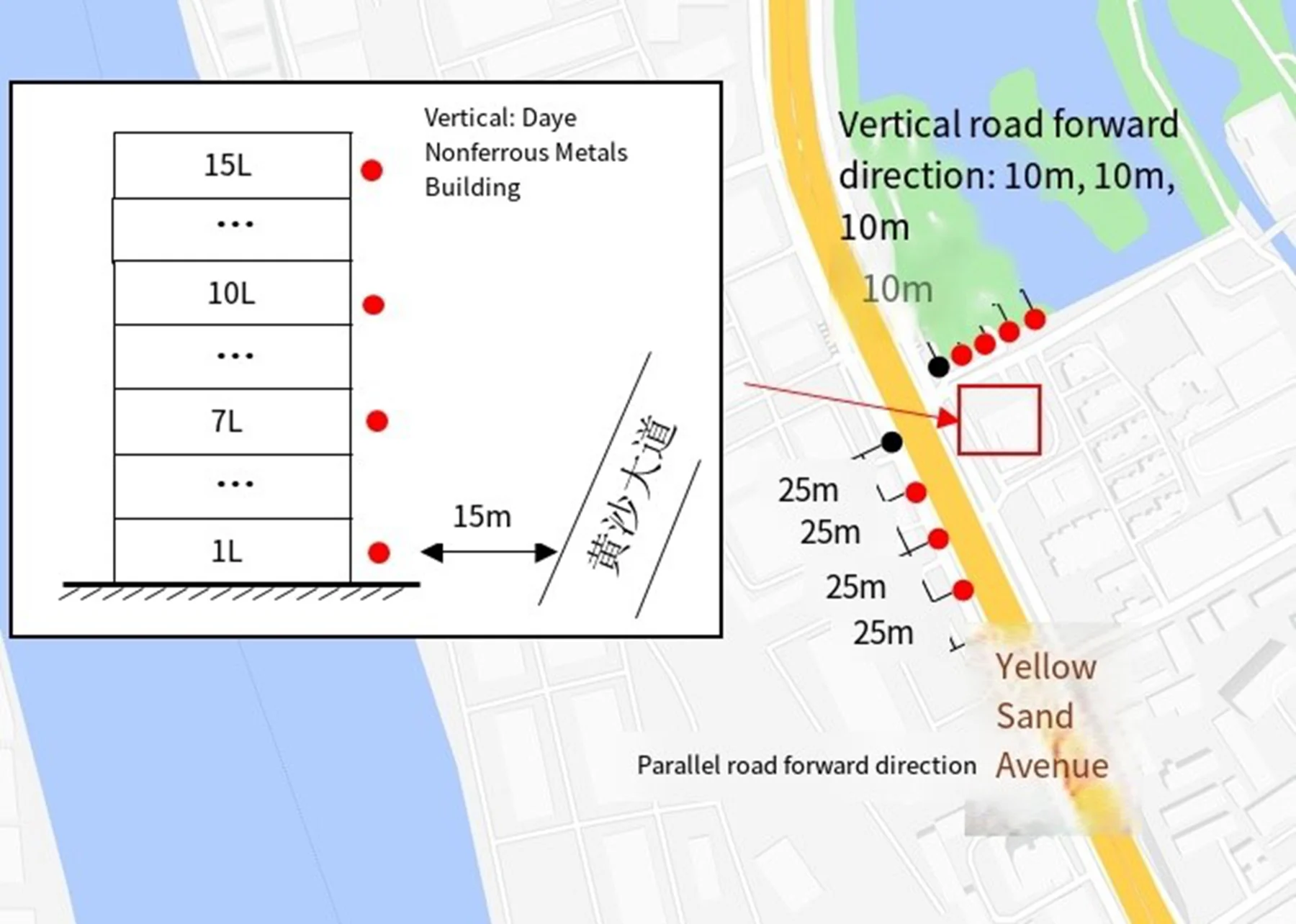
In this study, the Huangsha Avenue - Inner Ring Road elevated bridge system in Guangzhou City was selected as the research object. This area is a typical urban elevated - ground composite transportation hub. Huangsha Avenue is a two-way six-lane ground road, and the Inner Ring Road elevated bridge spans over it (two-way six-lane). The vertical projections of the two overlap to form a three-dimensional noise diffusion field (Fig. 1). The basic data were obtained through on-site measurements and traffic management records.
Fig. 1Schematic diagram of the layout of measurement points on the Huangsha Avenue – Inner Ring Road elevated Bridge
Table 1Traffic flow on Huangsha Avenue (Unit: veh/20 min)
Time period | Small cars | Medium-sized vehicle | Large car | |||
West side | East | West side | East | West side | East | |
Daytime flat peak | 161 | 255 | 58 | 43 | 1 | 10 |
Daytime peak | 220 | 319 | 25 | 26 | 4 | 3 |
Night | 81 | 152 | 28 | 35 | 5 | 8 |
Table 2Traffic flow on the Inner loop (Unit: veh/20 min)
Time period | Small cars | Midsize car | Large vehicle | |||
West side | East | West side | East | West side | East | |
Daytime flat peak | 1319 | 756 | 98 | 104 | 1 | 0 |
Daytime peak | 1439 | 727 | 26 | 15 | 1 | 1 |
Night | 818 | 690 | 86 | 74 | 6 | 9 |
The traffic flow was monitored continuously by video counting for three typical time periods (daytime peak, daytime peak, and nighttime), and the east-west two-way flow was classified and counted by small vehicles (≤ 3.5T), medium vehicles (3.5-12 t), and large vehicles (≥ 12 t) (see Tables. 1 and 2). The data showed that the night traffic volume on the elevated Inner Ring Road reached 1,514 vehicles per 20 minutes (95.3 % for small vehicles), and the proportion of large vehicles on Huangsha Avenue at night was significantly higher than that on the elevated road (6.5 % vs 0.8 %), suggesting that heavy vehicles made a significant contribution to ground noise. The elevated bridge is 8.5m above ground, with a longitudinal slope of no more than 4 percent; Ground road longitudinal slope ≤ 2 percent. The weather conditions on the test day were stable, with a temperature of 25±2 °C, humidity of 65±5 percent, and wind speed ≤ 1.5 m/s.
2.2. Construction of noise prediction models
Build a three-dimensional acoustic propagation model based on a professional noise simulation platform. Among them, the sound source model uses the British CRTN calculation specification to determine the vehicle sound power level. The intensity of noise sources for different types of vehicles is calculated according to Eq. (1):
where the base speed is 60 km/h, the small car coefficient 28.5, 30.0, the large car coefficient 33.2, 33.7; is the asphalt pavement correction value (–1.5 dB(A)) [7].
By importing the topographic map, precisely construct the calculation domain of length × width × height = 400 m × 300 m × 50 m (Fig. 2). Set the sound reflection coefficient of the building facade at 0.8, the surface sound absorption coefficient at 0.05, and the sound propagation algorithm using the mixed mode of Ray Noise and Virtual Source to calculate the grid resolution of 1.0 m × 1.0 m.
Fig. 2Floor plan of the noise model of the Huangsha Avenue – Inner Ring Road Elevated Bridge
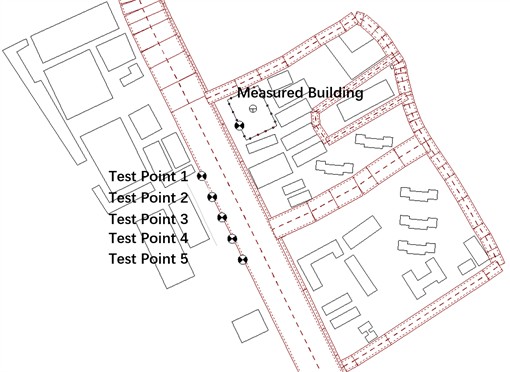
Five parallel monitoring points are set up along Huangsha Avenue (7.5 meters away from the curb), and 15 vertical monitoring points are set up on the facade of the adjacent Daye Metal Building (with a height of 3 meters, numbered 1L-15L), covering the monitoring height from 4.5 meters to 49.5 m.
The reliability of the model was verified using nighttime measurement data. Among them, A sound level meter (grade 1 accuracy) was used in conjunction with a calibrator, and time weighting “Fast” and frequency weighting “A” were set. Eight characteristic measurement points (5 parallel points +3 elevation points 1L/7L/15L) were selected, and three consecutive nighttime periods (22:00-06:00) were measured. The maximum LAeq at each point was taken as the verification benchmark.
The final three-dimensional model diagram is shown in Fig. 3.
2.3. Model validation
To verify the accuracy of the model, the nighttime noise measured at the measured parallel measurement points and the vertical measurement points of the building were selected for verification. The comparison tables of the noise results are shown in Tables 3 and 4.
Fig. 33D image of the noise model of the Huangsha Avenue – Inner Ring Road Elevated Bridge
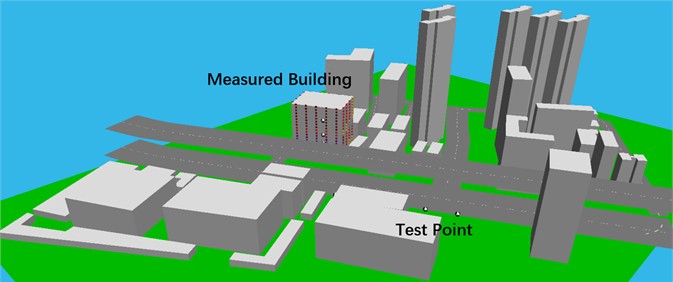
Table 3Comparison of measured and calculated results of parallel measurement points on the Huangsha Avenue – Inner Ring Road Elevated Bridge (Unit: dB (A))
Measurement points | Time periods | Measured data | Calculation results | Difference |
Measuring Point 1 | Night | 72.0 | 73.0 | 1.0 |
Test Point 2 | Night | 72.1 | 73.0 | 0.9 |
Test Point 3 | Night | 72.0 | 73.0 | 1.0 |
Test Point 4 | Night | 72.5 | 72.7 | 0.2 |
Test Point 5 | Night | 76.0 | 72.8 | 3.2 |
Table 4Comparison of measured and calculated results of the vertical measurement points of the Huangsha Avenue – Inner Ring Road Elevated Bridge building (Unit: dB (A))
Measurement points | Time periods | Measured data | Calculation results | Difference |
1L | Night | 68.1 | 70.4 | 2.3 |
7L | Night | 73.4 | 72.6 | 0.8 |
10L | Night | 72.8 | 73.1 | 0.3 |
15L | Night | 72.4 | 71.8 | 0.6 |
As shown in the table, the calculated results fit well with the measured data as a whole, with a minimum error of 0.2 dB and a maximum error of 3.2 dB, which occurred at parallel measurement point 5.
From the measured results, it is known that the maximum noise value at the parallel measurement point at night is 76 dB(A), exceeding the limit (65 dB(A)) by 11 dB, and the minimum noise value is 72.0 dB(A), exceeding the limit (65 dB(A)) by 7dB; The maximum noise at the building measurement point was 73.4 dB, which exceeded the limit (55 dB(A)) by 18.4 dB, and the minimum noise was 68.1 dB(A), which exceeded the limit (55 dB(A)) by 13.1 dB. The measured noise at night exceeded the limit.
According to the calculation results, the maximum noise value at the parallel measurement point at night was 73.0 dB(A), which exceeded the limit (65 dB(A)) by 8 dB, and the minimum noise value was 72.7 dB(A), which exceeded the limit (65 dB(A)) by 7.7 dB. The noise levels at the measurement points were all above the limit; The maximum noise at the building measurement point at night was 73.1 dB(A), exceeding the limit (55 dB(A)) by 18.1 dB, and the minimum noise was 70.4 dB(A), exceeding the limit (55 dB(A)) by 15.4 dB.
In the case of road noise, the noise planar distribution map is shown in Fig. 4.
2.4. Design of noise reduction measures
The traffic noise on Huangsha Avenue and the elevated bridge of the Inner Ring Road is the main source of noise. Through the prediction of the selection of noise control measures, the results show that the noise in this section exceeds the standard relatively high. Huangsha Avenue may need to adopt both noise reduction pavement and sound barriers as noise reduction measures, and the Inner Ring Road needs to adopt sound barriers. A 5-meter-high sound barrier was used for Huangsha Avenue and the Inner Ring Road elevated bridge, and a porous asphalt pavement was adopted for Huangsha Avenue to increase the porosity of asphalt concrete to absorb noise, and a model was established for noise simulation calculation. The noise results after setting the noise reduction measures are shown in Fig. 5.
Fig. 4Map of the noise results of the Huangsha Avenue – Inner Ring Road Elevated Bridge
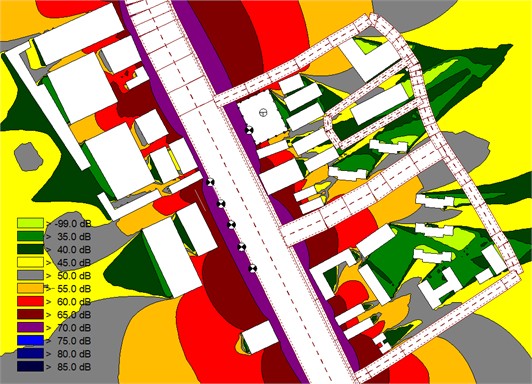
Fig. 5Map of the night noise results of the Huangsha Avenue – Inner Ring Road Elevated Bridge with noise reduction measures in place
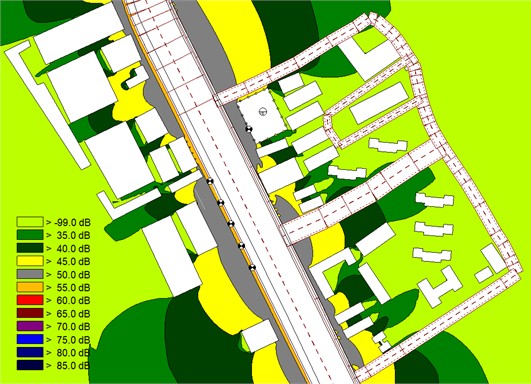
To better compare the noise reduction effect, the predicted values of each floor of Daye Metal Building without noise reduction treatment were compared with those of Daye Metal Building with noise reduction measures, as shown in Table 5.
Table 5Predicted building noise of Huangsha Avenue – Inner Ring Road Elevated Bridge after noise reduction measures were set (Unit: dB (A))
Floors | Nighttime peak | Nighttime Excess | Noise reduction |
1L | 51.8 | 0 | 18.6 |
7L | 54.6 | 0 | 18 |
10L | 54.3 | 0 | 18.8 |
15L | 53.7 | 0 | 18.1 |
The results show that the sound barriers and noise-reducing pavement have a significant effect. The maximum noise reduction at each measurement point and building floor can reach 18.8 dB, and the impact on buildings is particularly significant. This indicates that noise reduction measures for elevated Bridges can greatly improve the noise impact on high-rise buildings.
3. Conclusions
This study systematically elucidates the noise impact mechanism of elevated and ground composite transportation systems on high-rise buildings through high-precision noise propagation models and empirical data analysis. The conclusions are as follows:
1) The sound source lifting effect of the elevated bridge caused noise to form a distribution pattern of “high in the middle and low at both ends” on the building facade. The noise peak in the 7-10 floor area exceeded the standard by 18.1 dB at night, making it a major pollution area.
2) The proposed “sound barrier – noise reduction pavement” synergistic governance scheme breaks through the limitations of traditional technologies. The sound barrier effectively blocks the vertical transmission of noise from the elevated bridge, and the porous asphalt pavement reduces the intensity of ground traffic sources by 3-5 dB. Together, they achieve a maximum noise reduction of 18.8 dB on the building facade. After the treatment, 100 % of the monitoring points in the entire area met the standards.
3) It is recommended to increase the height of the sound barrier to 5 meters when promoting in buildings over 30 meters along the street to optimize the control effect of the sound diffraction zone.
References
-
S. Khomenko et al., “Impact of road traffic noise on annoyance and preventable mortality in European cities: A health impact assessment,” Environment International, Vol. 162, p. 107160, Apr. 2022, https://doi.org/10.1016/j.envint.2022.107160
-
P. Wang, Y. Wang, C. Zou, and J. Guo, “A preliminary investigation of noise impact within metro stations in the urban city of Guangzhou, China,” Environmental Science and Pollution Research, Vol. 24, No. 12, pp. 11371–11382, Mar. 2017, https://doi.org/10.1007/s11356-017-8776-0
-
M. Basner and S. McGuire, “WHO environmental noise guidelines for the European region: a systematic review on environmental noise and effects on sleep,” International Journal of Environmental Research and Public Health, Vol. 15, No. 3, p. 519, Mar. 2018, https://doi.org/10.3390/ijerph15030519
-
E. A. Etzler, H. M. Ter Hofstede, D. T. Gwynne, and J. M. Ratcliffe, “Road noise exposure over development increases baseline auditory activity and decision-making time in adult crickets,” Communications Biology, Vol. 8, No. 1, Feb. 2025, https://doi.org/10.1038/s42003-025-07643-6
-
X. Li, Z. Hu, and C. Zou, “Noise annoyance and vibration perception assessment on passengers during train operation in Guangzhou Metro,” Environmental Science and Pollution Research, Vol. 29, No. 3, pp. 4246–4259, Aug. 2021, https://doi.org/10.1007/s11356-021-15896-x
-
W. He, K. He, C. Zou, and Y. Yu, “Experimental noise and vibration characteristics of elevated urban rail transit considering the effect of track structures and noise barriers,” Environmental Science and Pollution Research, Vol. 28, No. 33, pp. 45903–45919, Apr. 2021, https://doi.org/10.1007/s11356-021-14015-0
-
G. Cerrato, “Automotive sound quality-powertrain, road and wind noise,” Sound and Vibration, Vol. 43, No. 4, 2009.
About this article

The paper was funded by Internal Research Project of Guangzhou Urban Planning & Design Survey Research Institute Co., Ltd. “Research on the Composite Reconstruction of Interchanges under the Background of Spatial Governance in Megacities” (2024 Research (Institute) 109). Finally, many thanks for the support of Academic Specialty Group for Urban Sensing in Chinese Society of Urban Planning.
The datasets generated during and/or analyzed during the current study are available from the corresponding author on reasonable request.
The authors declare that they have no conflict of interest.

