Abstract
In the territories of the Republic of Uzbekistan, where sandy soils are widespread, it is important to forecast and eliminate the consequences of possible accidents that may arise under the influence of oscillatory movements, taking into account engineering-geological and hydrogeological conditions, during the period of their use as a foundation for the construction of buildings and structures. Therefore, a number of scientists have studied and expressed their opinions on the change in resistance of sandy soils when exposed to vibration. One of the main objectives of the article was to determine the quantitative values of the design resistance of sandy soils under the influence of vibration movements in natural conditions. To solve this problem, a DU-62 vibratory roller was used to vibrate sandy soils at a test site located in the Termez and Jarkurgan districts of the Surkhandarya region. Before and after the application of vibration using a vibratory roller, vibration behavior data were obtained using a UNI-T UT315A portable vibration meter and the measurement results were processed. As a result, it became clear that when designing buildings and structures in areas with widespread sandy soils, it is necessary to take into account that the calculated resistance of sand under the action of vibration forces decreases by 1.18 times compared to the absence of vibration movements. In this case, if the earthquake results in ground movement, then when designing buildings and structures, the calculated resistance of sandy soils should be increased by 1.18 times.
1. Introduction
A number of scientists have studied the change in the resistance of sandy soils to vibrational motion, including D. D. Barkan, B. M. Baxtin, M. D. Braja, E. A. Voznesenski, M. N. Golubsova, V. M. Goldeshteyn, P. L. Ivanov, K. Kubo, N. N. Maslov, T. Mogami, Sh. G. Napotvaridze, Sh. Okamoto, Y. M. Perle, Z. Rasulov, A. V. Ermolinskiy, and others [1, 2], who have expressed their opinions (Table 1).
According to their data, the change in the resistance of sandy soils under the influence of vibrational motion depends on the stress generated in the soil by the applied load. If the intensity of the vibratory load is small, the resistance to sliding is restored after the vibration stops. However, if the intensity of the oscillatory movement is high, the soil structure may be damaged, and the shear resistance may not be fully restored.
At the same density and moisture content of the sands, the shape of the particles, as well as the characteristics of their adjacent areas, also changes [4, 5]. As a result, after the oscillatory motion ceases, the resistance of soils to creep, in particular the internal friction force (), decreases. This reduction can be quantified using the oscillatory motion effect factor .
Table 1Effect of oscillatory motion on the coefficient of resistance to sliding of sands
Author information | Drag resistance coefficient | Vibration speed | Effect of vibration frequency | Effect of normal pressure |
T. Mogami, K. Kubo | 3.9 1.04 | 1.0 g 0.4 g | – 23 … 43 Gs | |
E. M. Perleya | 2.5 ... 3.5 | 0.4 g | ||
N. A. Preobrajenskiy | 1.75 ... 2.8 | 1.0 g | ||
D. D. Barkan | 1.3 | 0.2 g | ||
Sh. G. Napetvaridze | 1.1 (1.3 ... 1.55 not larger than) | 0.1 g | + | |
V. M. Goldshteyn | 10 ... 15 Gs greater than frequency | |||
X. Sid | - | + | ||
P. L. Ivanov | - | + | ||
M. N. Golubsova | - | + | ||
B. M. Baxtin | 50 ... 200 Gs greater than frequency | |||
Note: – coefficient of internal friction of soil under static load; – coefficient of internal friction of soil under dynamic load | ||||
The values of the and listed in Table 1 are given for the fixed values of a given density and humidity of the Sandy grunts. Their values should also change if the density and humidity change. That is, the angle of internal friction of Sandy grunts will depend on their density and humidity [9].
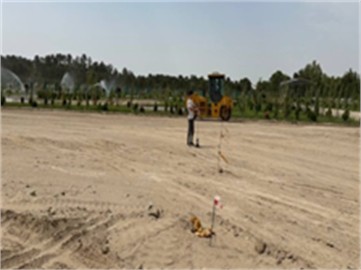
The computational resistance of the base grunt () was determined based on the style outlined in SHNQ 2.02.01-19 [19]. The accuracy indicators that will be needed to determine it were determined mainly by the internal friction angle and bonding strength in field conditions using a special portable instrument (Fig. 2).
The oscillation was determined by the following expression:
where: is the calculated resistance of the sandy soil not affected by the vibratory motion, is the calculated resistance after the sandy soil is affected by the vibratory motion [6, 7].
2. Methods
The sandy soils were initially not affected by oscillatory motion. To investigate the changes in their resistance under the influence of vibration, a series of field experiments were conducted. The field work took place was carried by Ruziyev Islam on June 15, 2025 (Fig. 1), at specially prepared experimental sites located in the Termez and Jarkurgan districts of the Surkhandarya region.
During these experiments, the soils were subjected to controlled vibratory loads to simulate the effects of oscillatory movements on their structural properties. Detailed measurements were taken before, during, and after the application of vibration to accurately assess changes in the soils’ resistance. The purpose of this work was to establish quantitative relationships between vibratory intensity and the reduction in shear and sliding resistance of sandy soils, which are critical for safe and reliable foundation design in regions with widespread sandy soils.
These observations provide valuable data for understanding the behavior of sandy soils under dynamic conditions and form the basis for improving the accuracy of engineering calculations related to the stability of structures built on such soils.
Fig. 1Schematic view of the “Oqtepa” experimental plot: 1-6 – soil layers; 7 – vibratory roller
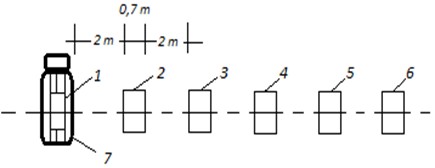
Fig. 2Determination of the calculated parameters of sandy soils in the field before the effect of vibration
The Termez and Jarkurgan districts are located in the southwestern part of Uzbekistan. The geomorphological structure of the area consists mainly of mountainous and lowland forms. The landscape has developed in response to the geological and hydrogeological conditions of the Earth’s surface. The region includes arable land suitable for agriculture, while river valleys and flat terrain allow effective use of the land.
The geological formations of the Termez and Jarkurgan districts possess distinct characteristics. Located in the southern part of the country, these districts are part of the broader geographical region of Central Asia. Although the geological formations in both districts are generally similar, each region exhibits unique features. Both areas have sedimentary layers dating back to the Neogene period, but tectonic processes have manifested differently in each location. Moreover, the composition of rocks and geological processes significantly influence the availability of natural resources and the economic development of the area.
The strength and density of foundations for buildings and structures are closely related to the porosity and other physical properties of the sandy soils. Numerous studies on the porosity characteristics of sandy soils demonstrate their complex behavior under different conditions.
To study the effects of oscillatory motion on sandy soils, a DU-62 vibratory roller was applied at the experimental site was carried by Ruziyev Islam on June 15, 2025 (Fig. 2). Indicators such as soil density, moisture content, and permeability were measured under the influence of vibration. Was carried by Ruziyev Islam on June 15, 2025 six test pits were dug along the axis of the vibratory roller and at an intermediate distance of 2 meters from it to determine the bond strength and the angle of internal friction of the soils (Fig. 3).
The experimental plot, in particular the “Oqtepa” plot, consists of sandy soils with specific physical and mechanical properties, as listed in Table 2.
In the area, the groundwater table is located at a depth of 10-15 meters from the surface. Therefore, the moisture content of sandy soil up to 2 meters from the surface remained practically unchanged during the experiment, measured at 1.90 %, with a density of 1.50 g/cm3.
After the sand was subjected to vibration using a vibratory roller, detailed measurements were taken with a portable UNI-T UT315A vibrometer (Fig. 3) to record the dynamic response of the soil. The collected data were carefully processed to evaluate the characteristics of the induced vibrations. As a result of this analysis, it was determined that the frequency of the vibrations ranged from 12 to 25 Hz, while the vibration acceleration reached 6000 mm/s2. These measurements provide a quantitative understanding of the intensity of the vibratory forces applied to the sandy soil and allow for the assessment of changes in its physical and mechanical properties under dynamic loading conditions. Such detailed data are essential for analyzing the behavior of sandy soils under oscillatory motion and for ensuring the reliability and safety of structures constructed on these soils.
Fig. 3Determination of strength indicators using a single-plane circular chisel. The figure shows the DU-62 vibratory roller
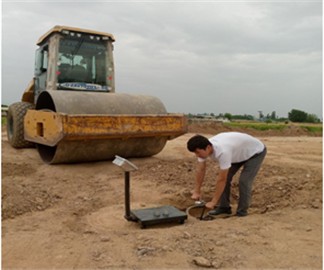
Table 2“Oqtepa” average physical and mechanical properties of sandy soils in the experimental plots (1-6) during and after the vibrational treatment of the soil surface
Name of properties | Schurf number | |||||
No. 1 | No. 2 | No. 3 | No. 4 | No. 5 | No. 6 | |
Moisture, % | 1.91 | 1.91 | 1.91 | 1.91 | 1.91 | 1.91 |
Natural density, kN/m3 | 1.50 | 1.51 | 1.50 | 1.52 | 1.50 | 1.51 |
Porosity, % | 40.2 | 39.8 | 40.1 | 39,7. | 39.9 | 39.8 |
Porosity coefficient | 0.652 | 0.648 | 0.649 | 0,647. | 0.648 | 0.649 |
Internal friction angle, degrees | 38 | 38 | 38 | 38 | 38 | 38 |
Bonding strength, MPa | 0.005 | 0.005 | 0.005 | 0.005 | 0.005 | 0.005 |
During the experiment, the vibration frequency was set to 12.5 Hz and 23.5 Hz, while the duration of vibration was set to 30 and 90 seconds. After applying oscillations with a frequency of 12.5 Hz and a vibration time of 30 seconds, the acceleration, velocity, and displacement of the sand at a depth of 2 meters were determined using the portable UNI-T UT315A vibrometer (Fig. 3).
Table 3Results from the vibrometer instrument
Measurement indicators | Measurement results, at a distance from the vibratory roller, m | |||||
0 | 2 | 4 | 6 | 8 | 10 | |
Acceleration of the sandy soil (m/s2) | 8.1 | 7.61 | 6.83 | 5.40 | 4.02 | 2.92 |
8.7 | 7.8 | 7.1 | 6.04 | 5.50 | 3.92 | |
Velocity of the sandy soil (m/s) | 10.11 | 9.04 | 7.72 | 6.81 | 4.42 | 3.34 |
11.33 | 10.97 | 9.02 | 7.80 | 6.35 | 4.24 | |
Displacement of the sand dune (mm) | 0.492 | 0.319 | 0.273 | 0.197 | 0.109 | 0.012 |
0.792 | 0.606 | 0.462 | 0.357 | 0.243 | 0.071 | |
Note: The image shows the result obtained from the surface itself, and the denominator shows the results obtained after the pile is stuck | ||||||
These measurements allowed for the precise evaluation of the dynamic response of sandy soils under controlled vibratory conditions. By recording the acceleration, velocity, and displacement, it was possible to assess the impact of oscillatory motion on the soil’s physical and mechanical properties at a depth relevant to foundation design. The data obtained from these experiments are essential for understanding how sandy soils behave under dynamic loads, which is crucial for designing safe and reliable structures on such soils.
3. Results and discussion
During the experiment, the properties of the sandy soil were determined at the location directly beneath the vibratory roller both before and after exposure to vibrational impact. Additionally, measurements were taken at intervals of 2, 4, 6, 8, and 10 meters from the roller along the soil surface, as well as at a depth of 2 meters. The parameters assessed included moisture content, density, internal friction angle, and bonding strength (Fig. 2).
These measurements provided a comprehensive understanding of the spatial variation in soil properties caused by oscillatory motion and allowed for a detailed evaluation of how vibration affects the physical and mechanical characteristics of sandy soils at different distances from the source of vibration.
Table 4Average indicators of internal friction angle, bonding strength, and calculated resistance coefficient of sandy soils in test pits No. 1-6 at the “Oqtepa” experimental plot, under maximum vibration frequency f= 23.5 Hz and duration t= 90 s
Test pit, No. | Specification | Depth, m | ||
0.5 | 1.0 | 2.0 | ||
1 | , grad | 29 | 30 | 31 |
, MPa | 0.007 | 0.006 | 0.005 | |
1.18 | 1.16 | 1.12 | ||
2 | , grad | 30 | 31 | 31 |
, MPa | 0.007 | 0.006 | 0.005 | |
1.16 | 1.16 | 1.12 | ||
3 | , grad | 30 | 31 | 31 |
, MPa | 0.007 | 0.006 | 0.005 | |
1.16 | 1.12 | 1.12 | ||
4 | , grad | 31 | 32 | 33 |
, MPa | 0.007 | 0.006 | 0.005 | |
1.12 | 1.09 | 1.06 | ||
5 | , grad | 34 | 34 | 34 |
, MPa | 1.006 | 1.006 | 1.006 | |
1.03 | 1.03 | 1.03 | ||
6 | , grad | 34 | 34 | 34 |
, MPa | 0.006 | 0.006 | 0.005 | |
1.01 | 1.01 | 1.01 | ||
As the distance from the bottom of the test pits and the vibratory roller in Table 4 increases, changes in the bonding strength and internal friction angle of the sandy soils under dynamic loading become clearly observable. After the sandy soil was vibrated using the DU-62 vibratory roller, the soil density at depth increased compared to its natural state, while the increment in density with depth was accompanied by a gradual decrease in balance.
Along with these observations, the mechanical properties of the sandy soil under dynamic exposure can be assessed. Specifically, changes in bonding strength and internal friction angle were recorded, as well as variations in the calculated resistance coefficient of the sandy soil, which decreased from 1.18 to 1.01. These results indicate that the application of vibratory forces significantly influences the physical and mechanical behavior of sandy soils, which must be taken into account when designing foundations and structures on such soils.
4. Conclusions
Thus, it follows from the above data that when designing buildings and structures in areas with scattered sandy soils, it is essential to consider that under the influence of vibratory forces, the calculated resistance value of the soil decreases. In this context, it is important to account for the fact that the maximum value of the computational resistance coefficient is 1.18, which must be incorporated into the planning and design process of buildings and structures.
Moreover, when constructing in regions with sandy or weakly cohesive soils, it is crucial to carry out detailed engineering-geological investigations to determine the degree of soil liquefaction and potential deformation under dynamic loads. Proper consideration of these factors ensures structural stability, prevents uneven settlement, and reduces the risk of foundation failure during seismic or vibrational impacts.
The results obtained can be applied to improve normative design parameters and enhance the safety and reliability of constructions in seismically active or vibration-prone areas.
References
-
A. Kayumov, O. Zafarov, and D. Kayumov, “Changes of mechanical properties in humidification saline soil based in builds and constructions,” in Problems in the Textile and Light Industry in the Context of Integration of Science and Industry and Ways to Solve Them: (PTLICISIWS-2022), Vol. 2789, No. 1, p. 040086, Jan. 2023, https://doi.org/10.1063/5.0145759
-
R. Hudaykulov, D. Makhmudova, D. Kayumov, and O. Zafarov, “Filter leaching of salt soils of automobile roads,” in E3S Web of Conferences, Vol. 264, p. 02032, Jun. 2021, https://doi.org/10.1051/e3sconf/202126402032
-
Z. Maxkamov, O. Zafarov, J. Xudoyberdiyev, E. Urishbayev, and J.R. Ravshanov, “Conducting engineering and geological research on the design and construction of buildings and structures in saline areas,” in Problems in the Textile and Light Industry in the Context of Integration of Science and Industry and Ways to Solve Them: (PTLICISIWS-2022), Vol. 2789, No. 1, p. 040080, Jan. 2023, https://doi.org/10.1063/5.0145757
-
O. Zafarov, D. G. ’Ulomov, and Z. Murodov, “Conducting engineering-geological researches on bridges located in our country and diagnosing their super structures, methods of eliminating identified defects,” in Problems in the Textile and Light Industry in the Context of Integration of Science and Industry and Ways to Solve Them: (PTLICISIWS-2022), Vol. 2789, No. 1, p. 040079, Jan. 2023, https://doi.org/10.1063/5.0145756
-
R. Bobojonov, O. Zafarov, and J. Yusupov, “Soil composition in the construction of engineering structures, their classification, assessment of the impact of mechanical properties of soils on the structure,” in Problems in the Textile and Light Industry in the Context of Integration of Science and Industry and Ways to Solve Them: (PTLICISIWS-2022), Vol. 2789, No. 1, p. 040081, Jan. 2023, https://doi.org/10.1063/5.0145758
-
Qayumov et al., “Assessment of influence of strength and deformation properties of saline soils on foundations of structures distributed in Uzbekistan (in example of Pakhtakor district of Jizzakh Region),” in AIP Conference Proceedings, Vol. 3256, No. 1, p. 030007, 2025.
-
X. Qoraqulov et al., “Innovative solutions for design and construction of modern cement concrete roads in dry-hot climate of Republic of Uzbekistan,” in AIP Conference Proceedings, Vol. 3256, No. 1, p. 040009, 2025.
-
K. Mingboyev et al., “Evaluation of engineering-geological and hydrogeological conditions in mining industry facilities,” in American Institute of Physics Conference Series, Vol. 3256, No. 1, p. 040010, 2025.
-
Qurbonov, Axunjanov, and O. Zafarov, “Analysis of engineering-geological and hydrogeological processes in underground mining (illustrated by Nilu coal mine),” in E3S Web of Conferences, Vol. 583, p. 01004, 2024.
-
Qurbonov et al., “Assessment of engineering-geological conditions in the mining of deposits by the underground method,” in AIP Conference Proceedings, Vol. 3045, No. 1, 2024.
-
N. N. Maslov, Fundamentals of Engineering Geology and Soil Mechanics. Textbook for High Schools. Moscow: Higher School, 1982.
-
V. V. Dmitriev and L. A. Yarg, Methods and Quality of Laboratory Study of Soils: Textbook. Moscow: KDU, 2008.
-
V. T. Trofimov and V. A. Koroleva, Laboratory Work on Soil Science. Moscow: KDU, University book, 2017.
-
V. T. Trofimov and Et Al., “Ground science,” Publishing House of Moscow State University, 2005.
-
A. A. Muzaffarov and P. A. Fanarev, Engineering and Geological Support for the Construction of Highways, Airfields and Special Structures. Moscow: MADI, 2016.
-
V. P. Petrukhin, Construction of Structures on Saline Soils. Moscow: Stroyizdat, 1989.
-
A. D. A. D. Kayumov, O. Z. Zafarov, and N. D. Saidbaxromova, “Basic parameters of physical properties of the saline soils in roadside of highways,” Central Asian Problems of Modern Science and Education, Vol. 4, No. 2, pp. 30–35, 2019.
-
K. N. Irisqulova and O. Z. Zafarov, “Construction of highways in saline soils,” Academy, No. 8 (71), pp. 27–29, 2021.
-
O. Z. Zafarov and K. N. Q. Irisqulova, “Modern technologies of road construction,” Science and Education, Vol. 3, No. 2, pp. 312–319, 2022.
Cited by
About this article

The authors have not disclosed any funding.
The datasets generated during and/or analyzed during the current study are available from the corresponding author on reasonable request.
The authors declare that they have no conflict of interest.

