69th International Conference on VIBROENGINEERING is an integral part of Vibroengineering Series Conferences and will be held in Lviv, Ukraine.
The conference provides a global platform for researchers, scientists, engineers and practitioners to showcase their latest research results, stimulate debate, generate fresh concepts and foster collaboration. Vibroengineering Procedia is included in major scientific databases such as Scopus, EI Compendex, Gale Cengage, Google Scholar and EBSCO. Vibration Engineering conferences include various cutting-edge technical presentations, lively discussions, and worldwide participation from renowned experts and scientists. The conference provides an opportunity to share recent advances in research, exchange ideas on cutting-edge engineering technologies, and take advantage of extensive networking opportunities.
Keynote speakers
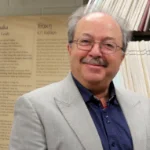
Seismic isolation has a significant worldwide application in which most currently used isolators are in the form of lead-rubber bearings and friction pendulum bearings of the single, double, and triple concave configurations. The behavior of these isolators is affected by frictional heating or heating of the lead core. Understanding of the heating behavior is fundamental in the development of performance-based testing specifications of isolators, and in the development of scaling principles in the testing of isolators.
The presentation will first introduce seismic isolation, discuss issues of qualification, prototype and production testing, and then briefly present validated theories for predicting the behavior of isolators with due consideration of heating effects. Based on these theories, principles of scaling and similarity for lead-rubber and sliding isolators will be introduced. The presentation will then describe efforts to develop performance-based specifications for the testing of seismic isolators, and present results for two tests: a) a test to determine the bounding properties of isolators for analysis, and b) a test to determine the effects of the maximum earthquake on isolators. Examples of application will be presented.
While the presentation concentrates on testing of seismic isolators, the issues of scaling and similarity addressed in the presentation are applicable to all elements, structural and non-structural, that need to be tested.
Michael C. Constantinou is the Samuel P. Capen Professor and a SUNY Distinguished Professor in the Department of Civil, Structural and Environmental Engineering at the University at Buffalo, State University of New York. He previously served as the Chair of the department over a period of six years and as the Director or the Deputy Director of the Structural Engineering and Earthquake Simulation Laboratory at the University at Buffalo over a period of nine years. He serves as editor of the Journal of Earthquake Engineering and Structural Dynamics.
His research interests concentrate on seismic protective systems on which he authored or co-authored over 300 papers, books and book chapters and reports. He is best known for contributions in the development, understanding of behavior and modeling of sliding seismic isolation systems; on contributions in the understanding of the lifetime behavior of elastomeric and sliding isolators; on the development of the concept of property modification factors for performing bounding analysis of structures with seismic protective systems; on the development and verification of theories for the hysteretic heating of lead-rubber and sliding isolators; on the development of principles of scaling and similarity for the testing of seismic isolators; on the analysis and design of structures with seismic isolation and damping systems; on the development of semi-active damping systems; on the development of practical large scale negative stiffness systems; on the development of computer software for the analysis of structures with seismic protective systems, and for his continuous participation in the development of codes and specifications, including the ASCE 7, AASHTO and NEHRP-all related to seismic protective systems.
He has four US patents issued. He received a 1988 Presidential Investigator Award and a 1991 Best Paper Award from the American Concrete Institute, was co-recipient of the 2005 American Society of Civil Engineers (ASCE) Civil Engineering Research Foundation Pankow Award for Innovation in the application of “coupled truss walls with damped linked elements in the Torre Mayor building” in Mexico City, was co-recipient of three professional practice awards: the 1994 United States General Services Administration Design Award for the structural strengthening of the US Court of Appeals Building in San Francisco, the 2002 Diamond Award and the 2002 Grand Award of the American Council of Engineering Companies, both for the retrofit design of the Ataturk International Airport in Istanbul, Turkey, was co-recipient of the 2015 ASCE Moisseiff Award and was the 2015 ASCE Nathan M. Newmark Medal recipient. In 2019 he received an honorary doctorate degree from the University of Patras, Greece, and in 2022 the Rensselaer Polytechnic Institute Distinguished Alumni Award.
He has lectured and consulted extensively on the analysis and design of structures with seismic protective systems for engineers and owners in Azerbaijan, Canada, Chile, China, Cyprus, Ecuador, Germany, Greece, Italy, Korea, Mexico, Panama, Russia, Saudi Arabia, Switzerland, Taiwan, Turkey, UK, and US. He has been involved as consultant, inspector, or peer reviewer in over 100 structures with seismic protective systems worldwide.
Conference Chairs



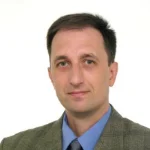
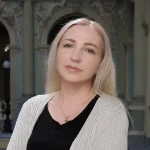

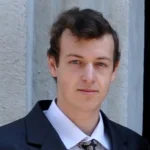
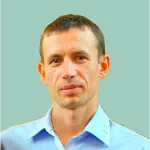













Conference Program
Fees
For those participating live: Publication in Vibroengineering Procedia, Conference materials, lunch and coffee breaks.
For those participating online: Participation in online conference event, publication in Vibroengineering Procedia and certificate.
Sponsors and Partners
Conference in Lviv, Ukraine was organized by Extrica with the partnership of Lviv Polytechnic National University.
Lviv Polytechnic National University is the oldest technical higher educational institution in Ukraine and East Europe. It was founded in 1816. University consists of 17 institutes, more than 100 departments; autonomous, additional and general subdivisions. From its early establishment Lviv Polytechnic has proved to be a powerful center of science and education in Europe, the generator of technical ideas and inventions. Based on many years of theoretical and experimental activities at the University were developed the scientific schools that are well known in Ukraine and abroad. They have leading positions in Ukraine in the following scientific and technical areas: nanomaterials and nanotechnology, new materials and technologies; energy- and resource-saving technologies; basic research of the most important natural, social and human sciences; advanced computer systems and information technologies; instrumentation and measuring equipment, etc.
Kingston University London is where creativity meets innovation. Nestled in the lively Kingston upon Thames, this forward-thinking university is renowned for its hands-on approach to learning and strong industry ties. With top programs in art, design, business, and engineering, and a vibrant community of students from over 140 countries, Kingston University is a hub of diversity and inspiration, shaping the next generation of leaders and innovators.
